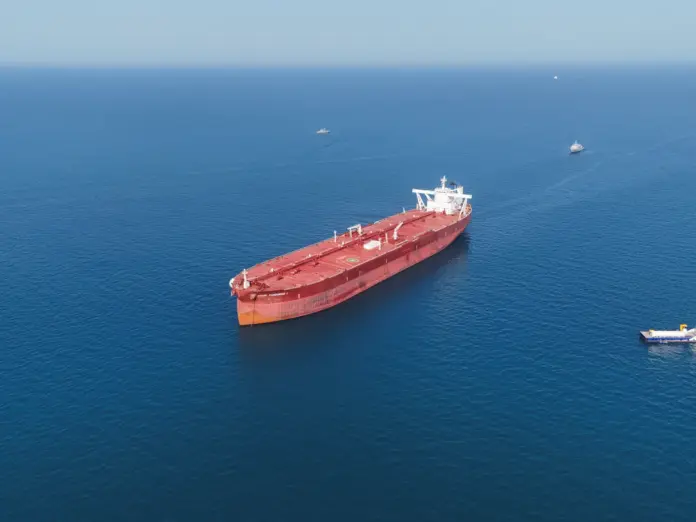
Iran closed the Strait of Hormuz on Saturday, declaring the critical waterway off-limits to commercial shipping for as long as the United States maintains its naval blockade of Iranian ports — a dramatic escalation that sent shockwaves through global energy markets and cast fresh doubt over fragile peace negotiations.
The announcement came in a whiplash sequence of events. Earlier Saturday, the strait had been reopened following a US-mediated 10-day ceasefire between Israel and Lebanon that took effect Friday. Iranian Foreign Minister Abbas Araghchi declared the waterway ‘completely open’ to commercial vessels, and MarineTraffic data confirmed a significant uptick in crossings. By 10:30 GMT, at least eight oil and gas tankers had transited the strait. Yet by that same hour, roughly as many vessels had turned back, their operators seeking clarification before committing to passage.
The window proved short-lived. The Islamic Revolutionary Guard Corps (IRGC) announced the closure hours later, characterising the US naval blockade as ‘acts of piracy and maritime theft’ and asserting that the strait is ‘under the strict management and control of the armed forces.’ Iranian gunboats fired on at least one merchant vessel that attempted to cross after the closure order was issued.
![Houthi supporters in Yemen rally round a Lebanese flag during a demonstration in Sanaa to show solidarity with Lebanon [Khaled Abdullah/Reuters]](https://world-tension.s3.us-east-2.amazonaws.com/articles/463/f512546ac9b64de3a4085a04b483923c.webp)
The stakes could scarcely be higher. Roughly one-fifth of the world’s oil supply passes through the Strait of Hormuz, the narrow chokepoint between Iran, the United Arab Emirates, and Oman. The near-total closure of the waterway since the conflict began has already triggered one of the worst energy shocks in modern history. Oil prices surged to a post-conflict peak of $119 a barrel on March 19, though Brent crude fell more than 9 percent to $90.38 a barrel on Friday — its lowest level since March 10 — on cautious optimism that a deal might be imminent.
John-Paul Rodrigue, a maritime shipping specialist at Texas A&M University, noted that the confusion surrounding transit conditions was itself driving vessels away. ‘Many ships are heading back because the situation is simply unclear,’ he said. Shipping firms had been seeking formal clarifications before risking passage, and Iran had previously allowed only a limited number of vetted vessels to use the waterway since the conflict began on February 28, when the US and Israel launched coordinated strikes on Iran.
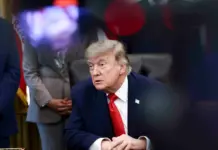
President Donald Trump struck a contradictory tone on Friday, declaring that a peace deal was ‘very close’ while simultaneously warning that US attacks would resume if Tehran failed to reach an agreement covering its nuclear programme. ‘So you’ll have a blockade, and unfortunately we’ll have to start dropping bombs again,’ Trump told reporters, adding that he believed a deal ‘is going to happen’ within the short timeframe available. He also cast doubt on whether the ceasefire would be extended, saying bluntly: ‘Maybe I won’t extend it.’ Trump insisted the US naval blockade would remain in ‘full force’ until any agreement was ‘100 percent complete,’ and said he saw no remaining ‘sticking points’ preventing a deal.
![A drone view shows the Malta-flagged tanker Agios Fanourios I, an oil tanker that sailed through the Strait of Hormuz, arriving in Iraq’s territorial waters off Basra, Iraq, on April 17, 2026 [Mohammed Aty/Reuters]](https://world-tension.s3.us-east-2.amazonaws.com/articles/463/1b18db99af6a40afb0ca671fa3d87efb.webp)
Tehran’s position is considerably more complex. Iran is demanding a comprehensive end to hostilities across the region, binding security assurances, sweeping sanctions relief, the unfreezing of frozen assets, and a resolution of the nuclear dossier — including the fate of its stockpile of highly enriched uranium. Iran’s foreign ministry has flatly rejected any suggestion that its enriched uranium would be transferred out of the country, and officials have stated that no date has been agreed for a further round of peace talks. Iran also accused Washington of ‘betraying’ diplomacy in all negotiations conducted so far.
The diplomatic calendar is pressing. Pakistani officials are actively working to arrange additional talks between Washington and Tehran before the April 22 ceasefire deadline expires. The current 10-day ceasefire between Israel and Lebanon, which took effect Friday, provides a narrow window for progress — but the reimposition of the Hormuz closure signals that Iran is prepared to use its most powerful economic lever if it believes the US is not negotiating in good faith.
![Houthi supporters demonstrate in solidarity with Iran, in Sanaa, Yemen, on Friday [Khaled Abdullah/Reuters]](https://world-tension.s3.us-east-2.amazonaws.com/articles/463/bf4fdf4c127b40ea86a10f41f3b37d4d.webp)
Iran said it will not impose traditional transit fees in the strait, and Araghchi maintained that the waterway remains ‘fully open to commercial vessels subject to conditions’ — language that maritime analysts noted leaves significant room for selective enforcement. Michelle Wiese Bockmann, an analyst at maritime intelligence firm Windward, has been tracking vessel movements through the strait as the situation evolved through Saturday.
The conflict, now in its fiftieth day, has reshaped global energy flows and tested the limits of coercive diplomacy. With Trump threatening renewed bombardment, Iran threatening prolonged economic disruption, and a ceasefire clock ticking toward late April, the coming days will determine whether the world’s most strategically vital waterway reopens — or remains a flashpoint at the centre of an unresolved war.