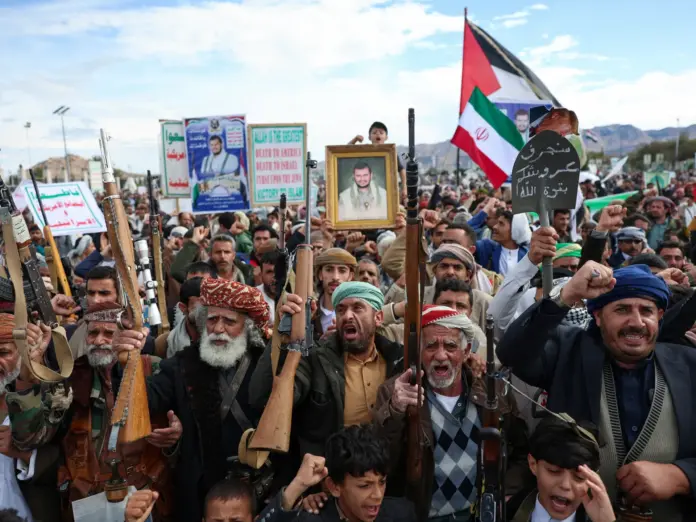
Yemen’s Houthi movement placed the world on notice Friday, threatening to enter the widening regional war directly if further nations align with the United States and Israel against Iran — or if the Red Sea is weaponised for strikes on Tehran.
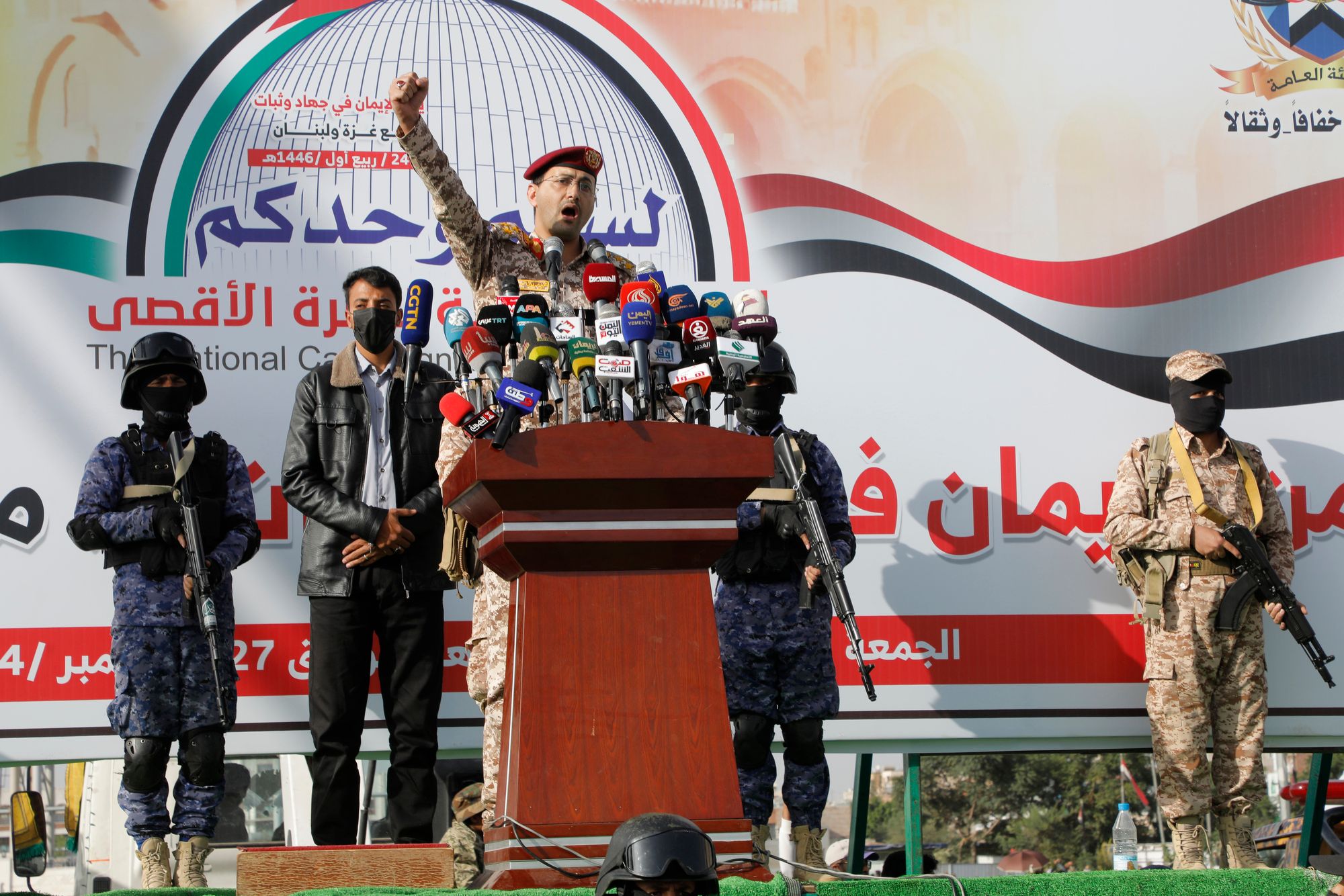
Yahya Saree, the group’s military spokesperson, delivered the warning in a nationally televised address on March 27, 2026, declaring that the Houthis’ ‘fingers are on the trigger for direct military intervention.’ The statement marks a significant escalation in rhetoric from a movement that, despite its formidable military capabilities and commanding geographic position overlooking the Red Sea, had not previously declared formal entry into the conflict ignited by U.S. and Israeli strikes on Tehran.
Saree’s message was unambiguous: any expansion of the coalition backing Washington and Israel against Iran would trigger a Houthi response. The group would not, he said, permit the Red Sea to serve as a corridor for hostile operations against Iran or any Muslim country. He also warned against further tightening of what he characterised as a blockade on Yemen, and demanded an immediate halt to U.S. and Israeli military operations targeting Iran, the Palestinian territories, Lebanon, and Iraq.
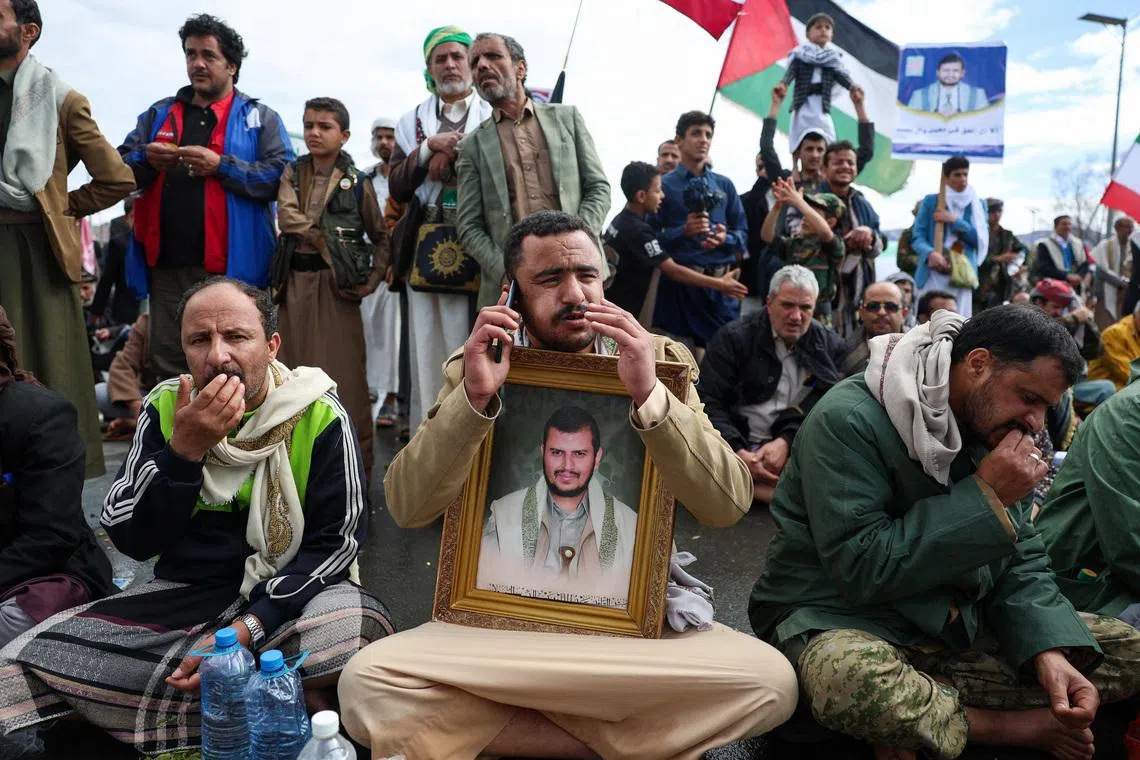
The threat carries tangible strategic weight. The Houthis control the capital Sanaa and much of Yemen’s northwest — territory they have held since 2014 — and their forces overlook some of the world’s most critical maritime chokepoints. Their demonstrated ability to strike targets far beyond Yemen’s borders, disrupt shipping lanes around the Arabian Peninsula, and launch long-range drones and missiles has already reshaped global trade patterns in recent years.
The group’s history of maritime disruption is well established. Following Hamas‘s October 7, 2023 attack on Israel and the subsequent Israeli military campaign in Gaza, the Houthis launched a sustained campaign against international shipping in the Red Sea, framing the attacks as solidarity with Palestinians. They also fired drones and missiles directly at Israel, drawing retaliatory Israeli airstrikes and U.S. military operations against Houthi targets inside Yemen — strikes that hit civilian infrastructure including residential buildings and the main international airport.
A fragile calm eventually took hold. In May 2025, the Houthis reached a truce with Washington under which they agreed to cease attacks on U.S. shipping. Following a U.S.-brokered ceasefire between Israel and Hamas in October 2025, the group also halted its strikes on Israel and Israeli-linked vessels. Saree’s Friday address included a call for the full implementation of that Gaza ceasefire agreement — a signal that the Houthis view its erosion as a key driver of renewed regional tension.
The broader context is one of rapidly escalating conflict. Iran’s allies in both Lebanon and Iraq have already joined the fighting triggered by U.S. and Israeli strikes on Tehran, deepening what analysts describe as an ‘axis of resistance’ response to Western and Israeli military pressure. The Houthis, until now, remained the notable exception — a powerful actor that had refrained from formally declaring war even as it maintained an active military posture.
Friday’s statement suggests that calculus may be shifting. Saree’s warning that the group would act if escalation against Iran and the axis of resistance continued positions the Houthis as a potential tipping point in a conflict that has already drawn in multiple state and non-state actors across the Middle East.
The prospect of Houthi entry into direct hostilities carries profound implications for global commerce. The Red Sea accounts for a substantial share of international maritime trade, and any sustained Houthi campaign targeting shipping lanes around the Arabian Peninsula would compound disruptions already felt by global supply chains. Insurance premiums on vessels transiting the region have surged in recent months, and major shipping companies have rerouted cargo around the Cape of Good Hope to avoid the threat.
For now, the Houthis have issued a warning rather than an order to attack. But with Iran’s regional allies already engaged, Yemen’s battle-hardened movement in a state of declared readiness, and no diplomatic off-ramp visible, the conditions for a dramatic widening of the conflict are firmly in place.