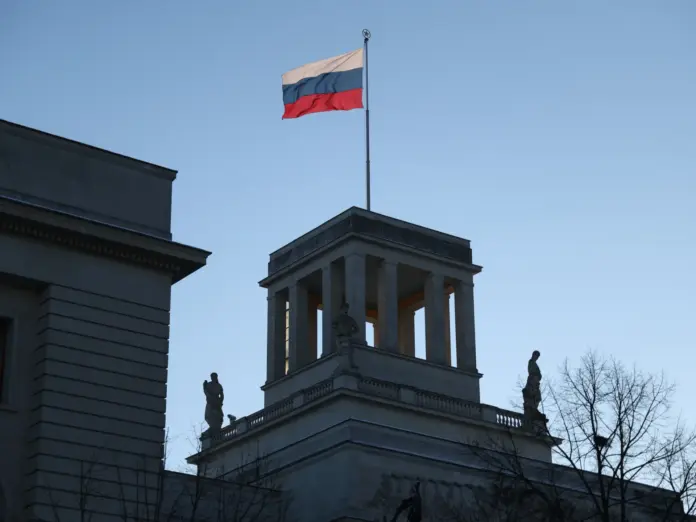
German authorities have arrested a Kazakh national in Berlin on suspicion of spying for Russia, with the suspect allegedly feeding sensitive information about German military support for Ukraine directly to a Russian intelligence handler. The German Federal Prosecutor’s Office announced the arrest on Wednesday, a day after it was carried out.
The suspect, identified under German legal convention only as Sergej K, had maintained continuous contact with a Russian intelligence service since at least May of the previous year. During that period, he allegedly transmitted photographs of NATO military convoys and public buildings in Berlin to his handler, while also providing detailed information about German arms deliveries to Ukraine and the activities of companies engaged in developing drones and robotic systems.
Investigators further allege that Sergej K offered to recruit additional espionage agents operating within Germany — a disclosure that underscores the breadth of the suspected operation. Neither Kazakhstan nor Russia issued an immediate response to the arrest.
The case represents the most recent episode in what German security services describe as a sustained and escalating campaign of Russian covert activity on German soil. Since Russia’s full-scale invasion of Ukraine in February 2022, authorities have uncovered a succession of Moscow-linked espionage and disinformation plots, many of them targeting Germany’s role as a key supplier of military equipment to Kyiv.
In 2024, two German-Russian dual nationals were arrested on suspicion of plotting sabotage attacks against United States military installations in Germany. The alleged objective was to disrupt Western logistical support for Ukraine. German police have also detained a number of so-called ‘disposable’ agents — individuals recruited to carry out low-level sabotage or surveillance tasks in exchange for modest financial payments, reflecting a broader Russian strategy of using expendable operatives to maintain plausible deniability.
The diplomatic fallout has been considerable. Earlier this month, Berlin’s Federal Foreign Office summoned the Russian ambassador to formally condemn what it characterised as direct threats against targets on German territory, stating that the intimidation was designed to erode Germany’s commitment to supporting Ukraine. Moscow, as it has done consistently, denied any involvement.
The tensions extend into the digital domain. Germany has accused state-sponsored Russian hackers of conducting a cyberattack in 2023 targeting members of the Social Democratic Party, the senior partner in the then-governing coalition. Russia’s embassy in Berlin categorically rejected the allegation. Moscow has also effectively banned Deutsche Welle, Germany’s international public broadcaster, claiming the outlet produces what it describes as hostile anti-Russian propaganda.
The arrest of Sergej K arrives at a moment of acute sensitivity for Germany’s security establishment. Berlin has emerged as one of the most significant contributors of military hardware to Ukraine, and Russian intelligence services appear to have prioritised mapping the networks — corporate, logistical, and governmental — that sustain that support. The alleged collection of information on drone and robotic systems development points to a particular Russian interest in understanding the technological pipeline feeding the Ukrainian military.
The pattern of operations — combining human intelligence assets, cyber intrusions, sabotage plots, and diplomatic pressure — reflects what Western security analysts have characterised as a hybrid warfare campaign waged by Moscow against European nations aligned with Kyiv. Germany, as both a major arms supplier and a central node in NATO’s eastern flank logistics, has become a primary target.
Moscow has repeatedly denied orchestrating or sanctioning any espionage activity within Germany, a position it has maintained even as German courts have convicted individuals for carrying out Russian-directed operations on German soil.