![Ina’am Al-Dahdouh holds the photo of her eldest detained son, Mahmoud, at her tent in Tal el hawwa southwest of Gaza city [Omar Ashtawy/ Al Jazeera]](https://www.world-tension.com/app/uploads/2026/04/wt-image-105-696x522.webp "wt-image-105")
For Inaam al-Dahdouh, Palestinian Prisoners’ Day is not a date on a calendar — it is a mirror held up to two years of silence, fragments, and grief. The 62-year-old mother from Gaza City has not seen her three sons since Israeli forces detained them on December 15, 2023, following an attack on al-Shifa Hospital that preceded a five-day siege of her family home.
Her sons — Mahmoud, 30, Alaa, 27, and Diaa, 24 — were taken in a single sweep. The family had been bracing for a different kind of milestone: Alaa and Diaa were both engaged and had planned their weddings for October 2023, a month before the war consumed everything. Alaa had just completed a law degree. Diaa was preparing to begin adult life after finishing high school. All three brothers worked together at a petrol station their father, Naeem, had owned.
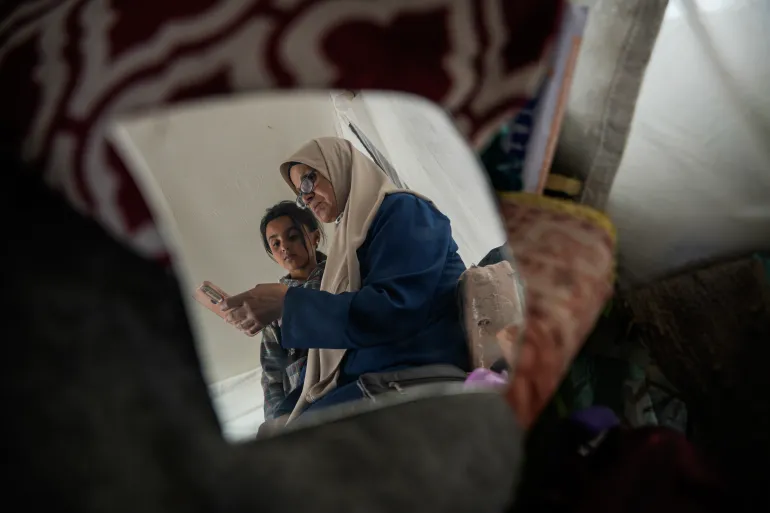
Naeem, who was 65 at the time of the detention, did not survive the chaos that followed. After the family fled their besieged home, his body was found ten days later. Inaam has since pieced together what little she knows about her sons through accounts from prisoners who have been released — fragments of information that confirm they are alive but offer little else. Mahmoud, a father of six whose youngest child was born during the war, was reportedly seen at Ofer prison. Alaa and Diaa were transferred to Negev prison. In the absence of certainty, Inaam spends her days teaching her grandchildren the Quran.
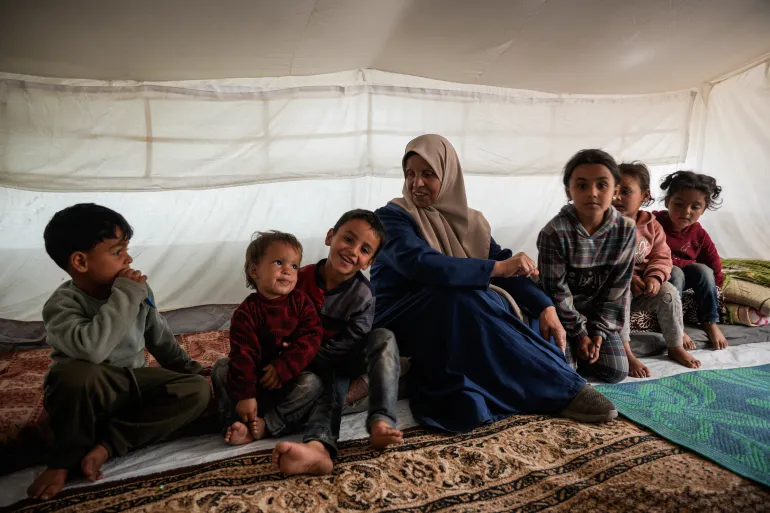
Her story is one of thousands. As Palestinian Prisoners’ Day is marked on April 17, 2026, the scale of detention has reached levels without precedent in the conflict’s modern history. More than 9,600 Palestinians are currently held in Israeli prisons — a figure that represents a near-83 percent increase from the approximately 5,250 held before the war began in October 2023. Among those detained are 350 children. More than 3,530 individuals are held under administrative detention, meaning they face imprisonment without charge or trial. Since the war’s outbreak, more than 100 prisoners have died in custody.
The legal landscape surrounding Palestinian detainees shifted sharply on March 30, 2026, when the Israeli parliament passed a law permitting the execution of Palestinian prisoners convicted in military court of killing Israelis. National Security Minister Itamar Ben-Gvir publicly celebrated the legislation’s passage. Human rights advocates and Palestinian officials condemned the move as a dangerous escalation, warning it sets a precedent that could further erode protections for a prison population already facing documented abuses.
The death penalty law arrives at a moment when international scrutiny of Israeli detention practices is intensifying. The deaths of more than a hundred prisoners since October 2023 have drawn repeated calls for independent investigations, with families and advocacy groups alleging mistreatment and denial of medical care. Israel has maintained that its detention operations target individuals with links to militant activity.
For families like Inaam’s, such distinctions offer little comfort. Her sons were workers at a petrol station, not combatants — or so she insists, with the quiet certainty of a mother who has had two years to rehearse the argument. The youngest, Diaa, had barely stepped beyond the threshold of adolescence when he was taken. The eldest, Mahmoud, has a child who has never known a world in which his father was free.
Palestinian Prisoners’ Day has been observed annually on April 17 since it was first established to draw attention to the conditions of Palestinians held in Israeli jails. This year, the commemoration carries a weight that advocates describe as unmatched in recent decades. The combination of record detainee numbers, mass administrative detention, in-custody deaths, and the newly enacted death penalty law has transformed the day from a moment of remembrance into an urgent political flashpoint.
Inaam al-Dahdouh does not speak in the language of politics. She speaks in the language of a mother counting days. Two years, four months, and two days since her sons were taken from a hospital courtyard in a city that no longer resembles the one she knew. She waits for more fragments — a name mentioned by a released prisoner, a rumour passed through displacement camps — and she teaches her grandchildren to recite verses she hopes will hold the family together until the men who should be saying them come home.