Forty Palestinians died in Gaza in a single week, Israeli settler violence intensified across the West Bank, and East Jerusalem faced what one rights group described as potentially the largest wave of forced expulsions since 1967 — all while Palestinian voters cast ballots in municipal elections for the first time in two decades in parts of the territory.
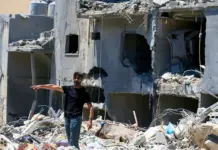
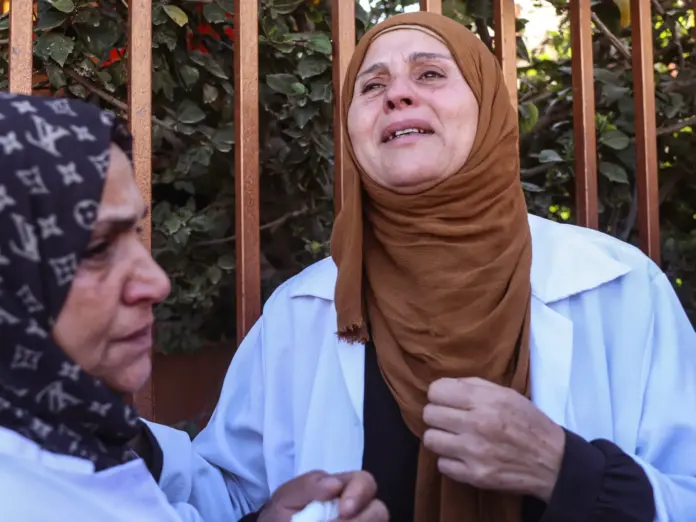
The week’s bloodshed in Gaza began on April 21, when a drone strike in Khan Younis killed three police officers. The following day, an air strike on a mosque courtyard in Beit Lahiya killed five people, among them three children. On April 24, eight more people died in an attack on a police vehicle in Khan Younis, and two additional officers were killed in a separate strike in Gaza City. On Saturday, Islam Karsou — pregnant with twins — and her two young children were killed in artillery shelling near Kamal Adwan Hospital. A 15-year-old, Ayham al-Omari, was shot dead by Israeli forces in Beit Lahiya on Monday.
Since a ceasefire took effect on October 11, 817 Palestinians in Gaza have been killed and more than 2,200 injured, according to the Gaza Ministry of Health. The cumulative death toll in the territory since October 7, 2023, now stands at 72,593. Israel has formally agreed to ceasefires in Gaza, Lebanon, and Iran, though the figures document sustained lethal activity on the ground.
Against this backdrop, Palestinian municipal elections were held Saturday in the West Bank and, for the first time since 2006, in part of Gaza. Turnout in Deir el-Balah reached 23 percent, a figure that underscored both the significance of the vote and the constraints under which it took place.
In the West Bank, the week brought its own cascade of deaths. On April 21 in al-Mughayyir, east of Ramallah, a gunman in military fatigues shot and killed two people, including a teenager. That same day, a vehicle from the security detail of National Security Minister Itamar Ben-Gvir struck and killed a 16-year-old boy near Hebron. On April 23, 15-year-old Youssef Ishtayeh was shot dead by Israeli forces in Nablus while walking home from school. A day later, 25-year-old Oudeh Awawdeh died from wounds sustained in a settler attack on Deir Dibwan; Israeli forces subsequently arrested approximately 30 residents of the village.
Settler violence spread across multiple communities during Israel’s Independence Day celebrations, with settler chat groups circulating calls to "cancel Oslo with your feet." Attacks were recorded in Masafer Yatta, Qusra, Rafat, Birzeit, and Jalud. In Beit Imrin, settlers set fire to two vehicles and attempted to burn a home, injuring eight people including an infant.
On April 20, settlers demolished a school and residential structures in Hammamat al-Maleh in the northern Jordan Valley, fully displacing the three households that remained there. The school had been co-funded by more than a dozen Western donor countries. The United Nations Office for the Coordination of Humanitarian Affairs documented 925 movement obstacles across the West Bank — the highest figure in 20 years and 43 percent above the two-decade average. Nine Palestinian communities have been fully displaced in 2026 alone.
The pressure on East Jerusalem is equally acute. Israeli NGO Ir Amim documented 17 homes demolished in Silwan’s al-Bustan neighbourhood so far in 2026, compared with 13 demolitions in all of 2025. The organisation warned that more than 2,000 Palestinians face displacement in what it characterised as potentially one of the largest waves of expulsions in East Jerusalem since 1967. In Silwan’s Batn al-Hawa neighbourhood, the Rajabi family received final eviction notices for seven apartments, with a vacate deadline of May 17. Israeli authorities separately approved construction of an 11-storey ultra-Orthodox yeshiva in Sheikh Jarrah, directly opposite the local mosque.
On the Israeli political front, former Prime Ministers Naftali Bennett and Yair Lapid announced they would merge their parties under Bennett’s leadership ahead of elections expected in October. Bennett has stated he would exclude Arab parties from any future coalition government.