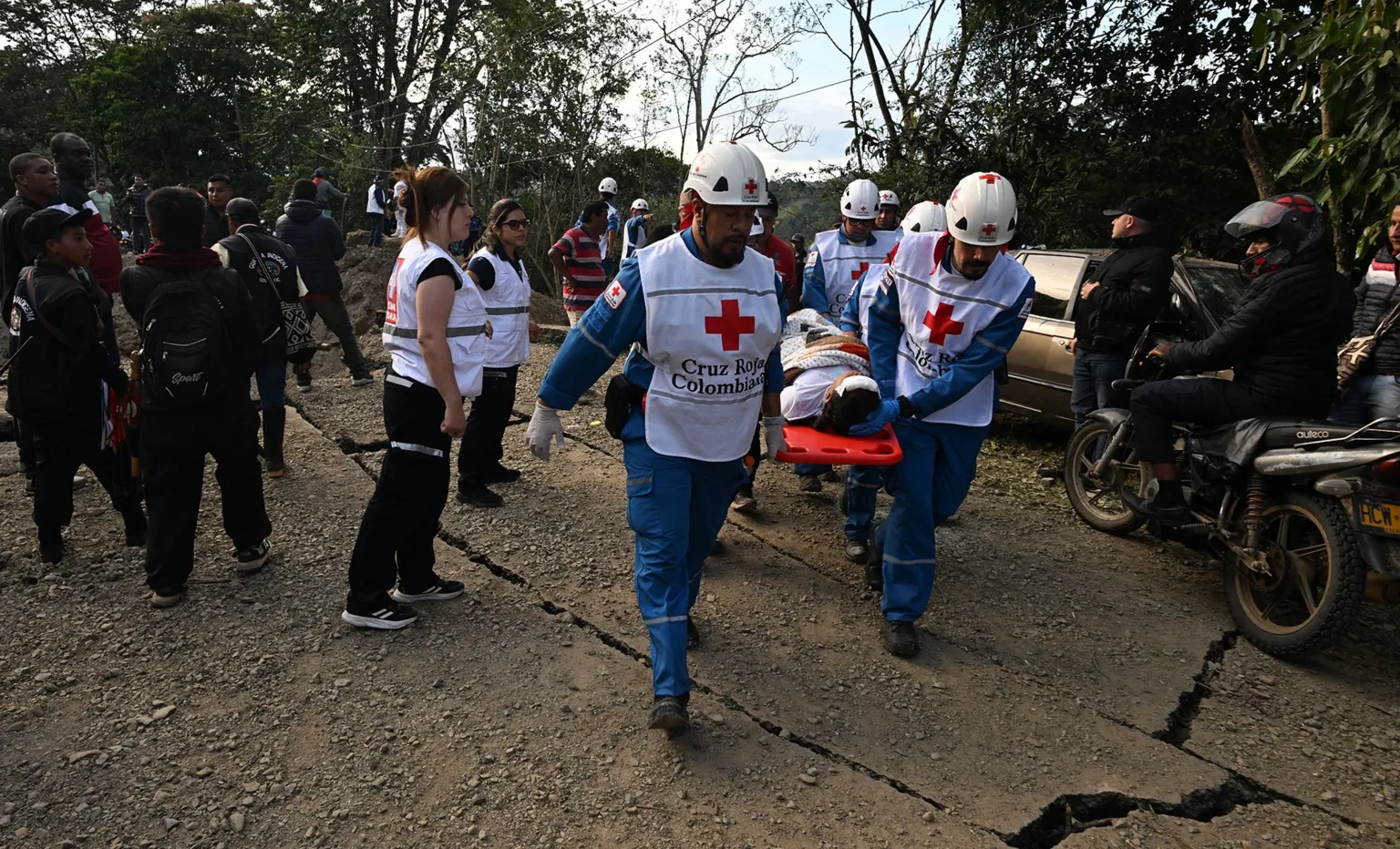
A devastating bomb attack on the Pan-American Highway in Colombia’s southern Cauca region killed 20 people and wounded 36 others on Saturday, in what officials described as the deadliest assault on civilians the area has seen in decades. The blast left a crater measuring 200 metres across and was powerful enough to knock witnesses off their feet from considerable distances.
Of those killed, 15 were women and five were men, according to Cauca Governor Octavio Guzman, who condemned the attack in the strongest terms. "This is the most brutal attack against civilians in decades," Guzman said, as emergency services worked to treat the dozens of injured, among them minors.
President Gustavo Petro swiftly attributed responsibility to dissident factions of the Revolutionary Armed Forces of Colombia (FARC), denouncing the perpetrators on social media as "terrorists, fascists and drug traffickers." Petro, himself a former guerrilla fighter who has staked much of his presidency on a controversial peace strategy with armed groups, has seen those efforts largely fail with dissident FARC offshoots, which have continued operating across the country while deepening their involvement in drug trafficking.
The 2016 peace agreement between the Colombian government and the FARC led to the demobilisation of thousands of fighters, but a significant number of combatants refused to disarm and broke away to form multiple splinter factions. Those groups have remained active in regions like Cauca, where they compete for control of drug trafficking routes and territory.
Saturday’s attack did not occur in isolation. A spate of smaller incidents had already been reported across Cauca since Friday, signalling a coordinated escalation of violence. Among them, an attack on a military base in the city of Cali injured two people. Defence Minister Pedro Arnulfo Sánchez also revealed that a bus laden with explosives had failed to detonate earlier in the day in the Cauca region — an incident he attributed to members of a drug-trafficking cartel, suggesting multiple armed actors may be operating simultaneously in the area.
The timing of the violence carries acute political weight. Colombia’s presidential election is scheduled for 31 May, just one month away, and Petro’s term is set to conclude later this year. The attack has thrust security policy to the forefront of the campaign, sharpening the contrast between candidates with starkly different visions for how to confront armed groups.
Ivan Cepeda, the left-wing candidate endorsed by Petro, has called for continued and expanded negotiation efforts with rebel factions. His opponents on the right, Paloma Valencia and Abelardo De la Espriella, have both pledged a firm military crackdown on insurgents if elected, arguing that dialogue has only emboldened armed groups.
The Cauca region has long been one of Colombia’s most volatile, serving as a corridor for drug trafficking and a stronghold for various armed factions. Despite years of government efforts — both military and diplomatic — to stabilise the area, communities along routes like the Pan-American Highway remain acutely vulnerable to the kind of mass-casualty violence witnessed on Saturday.
The scale of the bombing and the deliberate targeting of civilians on a major public highway mark a significant escalation, even by the standards of a region long accustomed to conflict. For Petro, whose peace agenda now faces its most serious credibility test, the attack represents both a political and humanitarian crisis at the worst possible moment — with the country preparing to choose his successor and the question of how to deal with armed groups more contested than ever.