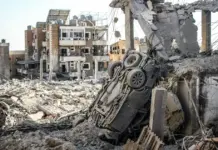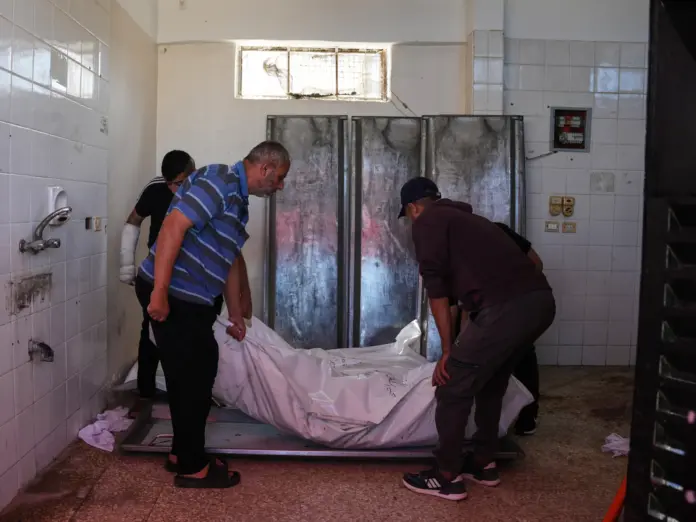
Gaza Death Toll — Seven months after a ceasefire was supposed to end the fighting in Gaza, the killing has not stopped. Israeli forces have killed at least 880 Palestinians since the agreement took effect, bringing the total death toll from the conflict to 72,797, according to Gaza’s health ministry. For a territory of 2.3 million people, the scale of destruction is staggering — nearly 90 percent of Gaza’s buildings have been destroyed.
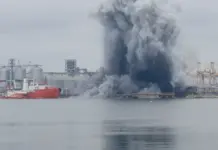
The ceasefire, brokered with international support, has in practice provided little protection for Palestinian civilians. The Gaza Rights Center documented at least 12 cases in May alone in which Israeli forces ordered forced evacuations by telephone before demolishing entire residential blocks. The demolitions struck the central camps of Nuseirat, Bureij, and Maghazi, as well as land east of Deir el-Balah that remains under Israeli military control. Israel currently controls 35 percent of Gaza’s territory.
Mai El-Sheikh, spokesperson for the United Nations Human Rights Office in Palestine, confirmed that Israel has imposed severe restrictions on food and medicine entering the strip — a charge that has drawn sharp condemnation from international humanitarian bodies. The cumulative effect of military operations, displacement, and supply blockades has left Gaza’s civilian population in a state of acute and worsening crisis.
Recommended Reading
Political analysts point to a deliberate strategy. Eyad al-Qarra, a Palestinian political analyst based in Khan Younis, argues that Israel has used the stipulated disarmament of Palestinian factions, including Hamas, as a pretext to evade its ceasefire commitments. Mohannad Mustafa, an academic specialising in Israeli affairs, notes that Prime Minister Benjamin Netanyahu is facing mounting domestic scrutiny — not only over Gaza, but also over Israel’s two other active fronts involving Hezbollah and Iran. Hezbollah continues to carry out daily attacks in southern Lebanon, adding pressure on an already stretched Israeli military posture.
With Israel’s next national election expected in September, Netanyahu faces accusations from critics that he is deliberately stalling the peace process for political gain. Sustaining the conflict, the argument goes, preserves his governing coalition and deflects attention from legal and political challenges at home. Netanyahu has denied such characterisations, framing continued military operations as security imperatives.
The international body tasked with overseeing Gaza’s administration has struggled to assert authority. The Board of Peace, a US-led international council, has been unable to impose ceasefire terms due to persistent disagreements among its members. Nickolay Mladenov, a former Bulgarian minister serving as a Gaza executive member on the Board, delivered a stark warning to the United Nations Security Council: without a credible reconstruction plan, Gaza’s situation will remain indefinitely exposed to further deterioration.
Compounding the diplomatic paralysis is Washington’s shifting focus. Kenneth Katzman, a US-based researcher, argues that President Donald Trump‘s preoccupation with Iran has created a significant regional diplomatic void, leaving the Board of Peace without the sustained American engagement needed to enforce its mandate. Iran, for its part, has signalled its own leverage — stating there are ‘no tolls’ on the Strait of Hormuz while warning that ‘everything has a cost,’ a thinly veiled reference to its capacity to disrupt global energy flows should tensions escalate further.
Gaza Death Toll: Regional Implications
The convergence of these pressures — a stalled ceasefire, a fractured international oversight body, a politically embattled Israeli prime minister, and a distracted American administration — has left Gaza’s population trapped in a conflict that shows no credible path toward resolution. With nearly nine in ten buildings reduced to rubble and the death toll climbing past 72,000, the humanitarian emergency has long since exceeded the capacity of emergency response frameworks to address.
Mladenov’s warning to the Security Council carries particular weight in this context. Reconstruction in Gaza cannot begin while active military operations continue, and active military operations show no sign of ending while the political incentives sustaining them remain intact. For the 2.3 million Palestinians living amid the ruins, the gap between the ceasefire on paper and the reality on the ground has never been wider.