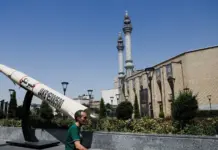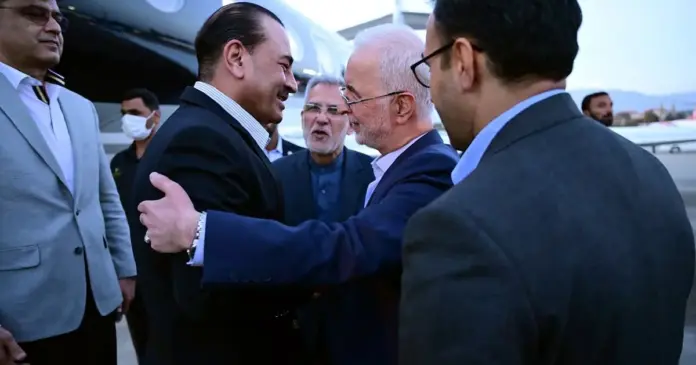
TEHRAN — Pakistani Army Chief Field Marshal Asim Munir touched down in Tehran on Friday for his second visit to the Iranian capital since the outbreak of the US-Israel war on February 28, deepening Islamabad’s role as the primary mediator in one of the most consequential conflicts of the decade.
Iran Us War Diplomacy — Munir was received by Iranian Interior Minister Eskandar Momeni, with Pakistan’s own Interior Minister Mohsin Naqvi also present at the reception — a signal of the diplomatic weight Islamabad is placing on the mission. Iran’s Foreign Ministry spokesperson Esmaeil Baghaei confirmed that Pakistan remains the central mediating power in ongoing negotiations, even as other regional actors crowd the diplomatic space.
The visit comes at a pivotal, if fragile, moment. Pakistan brokered a temporary ceasefire between the warring sides on April 8, and just days later hosted the highest-level direct talks between the United States and Iran since the 1979 Islamic Revolution. Those April 11–12 discussions, held on Pakistani soil, marked an extraordinary diplomatic milestone, yet the path to a durable settlement remains treacherous.
Recommended Reading
Baghaei was candid about the obstacles. The gaps between Tehran and Washington, he said Friday, are "deep and significant." He added that current negotiations are focused exclusively on ending the war itself, with the nuclear question — long the central flashpoint between the two countries — not yet on the formal agenda at this stage.
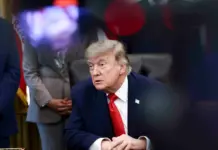
In Washington, President Donald Trump offered a characteristically blunt assessment. "Iran is dying to make a deal," he said Friday, while also reiterating his core justification for the conflict: that Iran cannot be permitted to acquire a nuclear weapon. Trump acknowledged he had called off a fresh wave of strikes this week at the personal request of leaders from Qatar, Saudi Arabia, and the United Arab Emirates — Gulf states with enormous economic and strategic stakes in regional stability. Earlier in the week, he had said he was holding off military action because "serious negotiations" were under way, though he had ordered the initial strikes in late February shortly after suggesting he would allow diplomacy to run its course.
A Qatari delegation was simultaneously holding talks with Iran’s foreign minister in Tehran on Friday, Baghaei confirmed, underscoring the multilayered nature of the diplomatic effort now encircling the conflict.
In Helsingborg, Sweden, US Secretary of State Marco Rubio addressed a gathering of NATO foreign ministers and offered a cautiously optimistic reading of the situation. There had been "slight progress" in talks with Iran, he said, and "a little bit of movement," with conversations continuing. NATO ministers used the meeting to explore what role the alliance might play in policing the Strait of Hormuz once hostilities cease — a question with enormous implications for global energy markets.
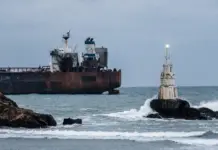
Iran closed the Strait of Hormuz in retaliation for the US-Israeli military campaign, a move that has sent shockwaves through global oil markets. The waterway normally carries approximately a fifth of the world’s oil production, and its blockade has been deemed "contrary to international law" by the European Union.
Iran Us War Diplomacy: Regional Implications
On Friday, EU member states moved toward imposing targeted sanctions on Iranian officials and entities deemed responsible for the blockade. The measures will include travel bans and asset freezes, and will prohibit EU citizens and companies from making funds or economic resources available to those listed. The sanctions represent a significant hardening of the European position and add further external pressure on Tehran to negotiate.
The convergence of Pakistani mediation, Gulf Arab diplomacy, US military restraint, and European economic pressure creates an unusually dense diplomatic environment — one that reflects both the severity of the conflict and the international community’s urgent desire to contain it. Whether the accumulated weight of these efforts can bridge what Baghaei described as the "deep and significant" divide between Washington and Tehran remains the defining question of the coming days.
Munir’s return to Tehran suggests Islamabad believes there is still ground to be gained. Pakistan’s emergence as a trusted interlocutor between the United States and Iran — two powers with no formal diplomatic relations — represents a remarkable geopolitical development, one that has elevated Islamabad’s international standing even as the region burns around it.