Hamas Commander Killed Gaza — Israeli air strikes on Gaza City killed at least seven Palestinians and wounded 45 others on Friday, as Israel claimed the elimination of Izz ad-Din al-Haddad, the commander of Hamas’s armed wing, the Qassam Brigades, in one of the deadliest targeted operations since a ceasefire took effect last October.
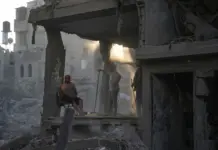
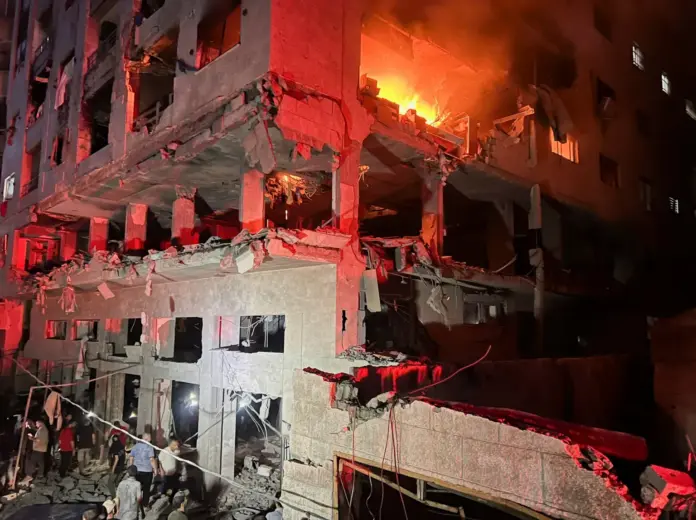
The strikes hit the Al-Mu’taz residential building in the Rimal neighbourhood of western Gaza City, where three missiles fired simultaneously from two separate directions ignited a massive fire. A second strike, roughly 1.5 kilometres away, hit a car seen leaving the scene, killing three people. In total, four Palestinians died in the building attack and three in the vehicle strike. Among the dead were three women and one child. At least 45 others were injured, several in critical condition.
Prime Minister Benjamin Netanyahu and Defence Minister Yisrael Katz issued a joint statement confirming the operation, describing Haddad as "one of the architects of the October 7 massacre" and holding him responsible for the murder, abduction, and injury of thousands of Israeli civilians and soldiers. The two officials also accused him of refusing to implement a US-led disarmament agreement and of acting as an obstacle to Donald Trump‘s Gaza peace plan.
Recommended Reading
![Gathering around a residential apartment as a fire burns after Israeli shelling, according to the Ministry of Health, in Gaza City, May 15, 2026. [Ebrahim Hajjaj/Reuters]](https://world-tension.s3.us-east-2.amazonaws.com/articles/981/9287a3e692014d7f847732a7e758fa79.webp)
Witnesses described a scene of chaos and devastation. According to Mahmoud Basel, Gaza’s civil defence spokesman, hundreds of displaced people were sheltering in the targeted building at the time of the strike, which came without pre-warning or notification. The area of western Gaza City has become severely overcrowded as civilians who fled fighting in the east sought refuge there. Eyewitnesses reported at least four missiles striking the building before the fire took hold.
The strikes fell on Nakba Day, the 78th anniversary of the expulsion of an estimated 750,000 Palestinians during the 1948 war — a date that carries profound symbolic weight for Palestinians. Hamas has not commented on whether Haddad was killed, neither confirming nor denying Israel’s claim.
The operation underscores the fragile and contested nature of the ceasefire that came into effect on 10 October. Israel has conducted regular strikes across Gaza since that date, and Hamas has repeatedly accused Israel of breaching the ceasefire’s terms and targeting civilians. Close to 857 Palestinians have been killed in Israeli attacks since the truce began, according to Gaza’s Hamas-run health ministry. The total death toll in Gaza since the conflict erupted stands at more than 72,744, per the same ministry.
Hamas Commander Killed Gaza: Regional Implications
The broader diplomatic framework remains deeply stalled. In January, the United States announced the launch of a second phase of its peace plan, which envisions a transitional, technocratic administration to govern Gaza, alongside demilitarisation and large-scale reconstruction. Talks on disarmament, however, remain deadlocked. Hamas has reactivated its police force since the ceasefire began, a move that has further complicated negotiations over the territory’s future governance.
The conflict was ignited on 7 October 2023, when Hamas-led fighters stormed southern Israel, killing approximately 1,200 people and taking 251 hostages. Israel launched a sustained military campaign in Gaza in response. The killing of Haddad, if confirmed, would represent one of the most significant blows to Hamas’s military leadership since the war began, though it is unlikely to resolve the fundamental impasse over Gaza’s political and security future.