Israeli Attacks On Gaza — Israeli military strikes on Gaza escalated dramatically in the weeks following the suspension of joint US-Israel bombing operations against Iran, with attacks rising 35% in April compared to March, according to conflict monitor ACLED. The surge coincided precisely with the halt of the US-Israel campaign against Iran on April 8, raising urgent questions about where military pressure is being redirected.
Since April 8, Gaza’s Ministry of Health has recorded at least 120 Palestinian deaths — among them eight women and 13 children. That toll represents a 20% increase over the equivalent five-week period when Israeli forces were simultaneously striking Iranian targets. The figures underscore a grim pattern: as one front quiets, violence intensifies on another.
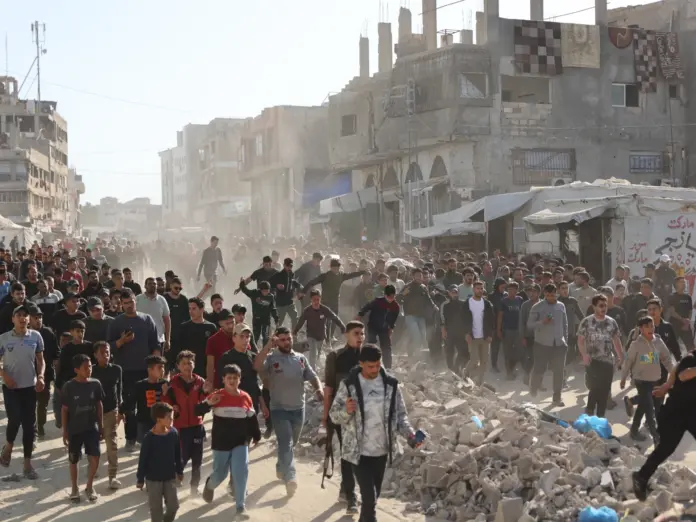
On the ground, the human cost is rendered in individual devastation. Lafi al-Najjar, a blind Palestinian man sheltering with his family in the ruins of Khan Younis — once Gaza’s second-largest city — lost one of his sons in an Israeli strike on April 28. His family’s circumstances reflect those of hundreds of thousands across the territory: displaced, impoverished, and trapped in a landscape of rubble and canvas.
Recommended Reading
A so-called ceasefire, brokered by the United States and Qatar, has nominally been in effect since October. Yet the agreement has done little to halt the bloodshed. Approximately 850 Palestinians have been killed in Israeli attacks since the ceasefire took hold, while at least four Israeli soldiers have been killed by Palestinian armed groups during the same period. Israeli forces have not withdrawn from Gaza and currently occupy more than half of the territory. Entire neighbourhoods have been demolished, and residents have been ordered to evacuate occupied zones.
The consequences for Gaza’s civilian population are catastrophic in scale. More than two million people — virtually the entire population — are now compressed into a narrow coastal strip, the majority living in damaged structures or improvised tent settlements. Israel continues to impose severe restrictions on humanitarian aid entering the territory, compounding what international agencies have described as a deepening crisis of food, medicine, and shelter.
Hamas retains de facto administrative and military control within Gaza, complicating both humanitarian operations and any prospective political resolution. The group’s continued presence has been cited by Israeli officials as justification for ongoing military operations, even as critics argue the campaign’s scale and civilian toll far exceed any proportionate military objective.
Israeli Attacks On Gaza: Regional Implications
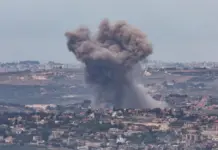
The broader regional picture adds further complexity. Israel joined the United States in striking Iran in March before those operations were suspended on April 8. Simultaneously, Israeli forces have been conducting a ground invasion and air campaign in Lebanon, where fighting — particularly in the south — has continued despite a separate US-brokered ceasefire coming into effect last month. The overlapping theatres of conflict reflect an Israeli military posture that has expanded significantly beyond Gaza’s borders over the past year.
The April spike in Gaza strikes suggests that the temporary diversion of Israeli military resources toward Iran did not represent any easing of pressure on the Palestinian territory — rather, it appears to have been a brief pause before an intensification. For the families sheltering in Khan Younis and along Gaza’s battered coastline, the distinction between a ceasefire and a war has become increasingly difficult to discern.