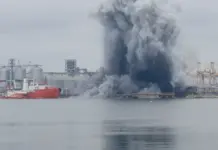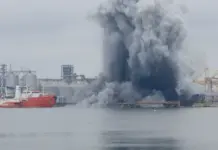
Ukraine Strikes Russia — Ukraine struck gas infrastructure deep inside Russia on Tuesday, targeting facilities in the Orenburg region of southwest Russia — more than 1,500 kilometres from the Ukrainian border — in one of the most distant attacks of the war’s four-year history. President Volodymyr Zelenskyy confirmed the strike in his nightly video address, framing it as direct retaliation for a devastating Russian drone campaign that had unfolded hours earlier.
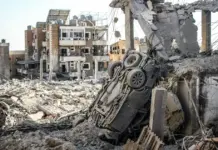
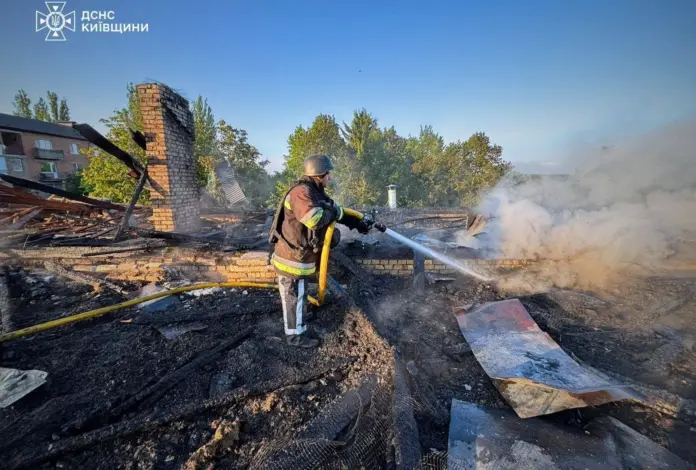
Russia’s overnight assault on Ukraine involved more than 200 drones, striking energy facilities, apartment buildings, a kindergarten, and a civilian train across six regions of the country. Six people were killed in the Dnipropetrovsk region alone. The scale of the attack drew an immediate and far-reaching Ukrainian response.
Orenburg — home to one of the world’s largest natural gasfields — had not previously featured prominently in the conflict’s geography. Regional governor Evgeny Solntsev said nine Ukrainian drones were intercepted over the area, but acknowledged that falling debris damaged a residential building, a school, and a kindergarten in the region.
Recommended Reading
The exchange of strikes marked a sharp deterioration following the collapse of a three-day ceasefire brokered by US President Donald Trump. That pause had been timed to coincide with Russia’s Victory Day commemorations, marking the Soviet Union’s defeat of Nazi Germany in World War II. Ukrainian Foreign Minister Andrii Sybiha said Kyiv had offered to extend the truce, but Moscow declined.
Against this backdrop of renewed hostilities, President Vladimir Putin oversaw the test of a new nuclear-capable intercontinental ballistic missile on Tuesday — a demonstration that drew immediate international attention. Putin described the weapon as the most powerful nuclear missile in the world, capable of travelling more than 35,000 kilometres and, he claimed, able to defeat all existing and future anti-missile defence systems. He announced the missile would be deployed before the end of the year.
The missile test added a stark dimension to what had already been a volatile week in the conflict. Just days earlier, on Saturday, Putin had suggested the war was nearing its end — a claim echoed by Kremlin spokesperson Dmitry Peskov, who said progress in negotiations with the United States and Ukraine would soon bring the fighting to a close. Trump told reporters Tuesday that he believes the end of the war is getting very close, a position consistent with his 2024 campaign pledge to end the conflict rapidly.
Not everyone shares that optimism. Zelenskyy pushed back firmly against Putin’s characterisation, warning that Ukraine was actively preparing for further Russian attacks rather than winding down its defences. Kaja Kallas, the European Union’s foreign policy chief, interpreted Putin’s comments differently still — describing them as a sign of weakness rather than confidence.
Ukraine Strikes Russia: The Wider European Impact
Complicating the diplomatic picture, Washington is reportedly attempting to broker another temporary ceasefire, one that would include sanctions relief for Russia as part of the arrangement. Ukrainian officials have expressed concern that any such deal lacks the security guarantees Kyiv considers essential to any durable agreement. The prospect of a ceasefire without firm commitments has deepened unease in Kyiv about the direction of US-mediated negotiations.
The war, which entered its fifth year following Russia’s full-scale invasion in February 2022, shows few structural signs of resolution despite the flurry of diplomatic activity. Tuesday’s events — a deep-strike drone attack on Russian energy infrastructure, a mass drone assault on Ukrainian civilians, and the test of a new nuclear delivery system — underscored how far the conflict remains from any genuine de-escalation. Both sides continue to demonstrate offensive capability even as peace talks are discussed in Washington and European capitals.
The strike on Orenburg in particular signals a Ukrainian willingness to extend the geographic reach of the war, targeting infrastructure that feeds Russia’s energy economy at a distance that would have seemed operationally ambitious even a year ago. Whether that pressure translates into leverage at the negotiating table or simply deepens the cycle of retaliation remains the central question hanging over the conflict.