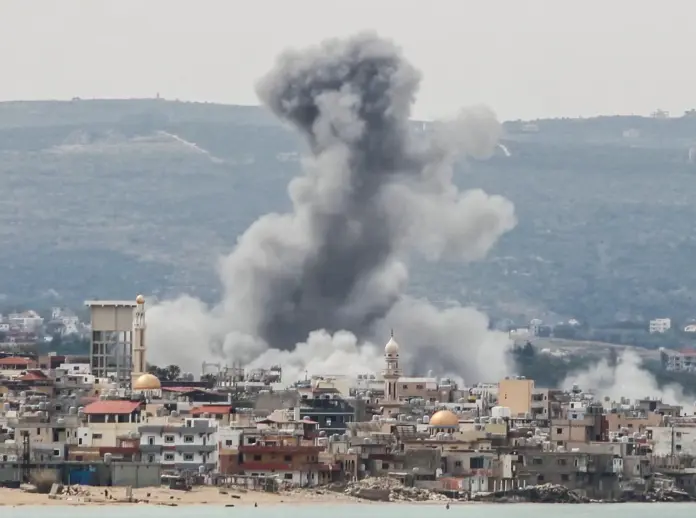
Israel Lebanon Ceasefire — An Israeli air strike on a residential building in Kfar Dounin, a municipality roughly 100 kilometres south of Beirut, killed six people Monday night and left seven others wounded, who were transported to hospitals in the coastal city of Tyre. The strike marked the latest in a relentless campaign that has continued unabated despite a nominally active ceasefire.
The attack came as the Israeli military simultaneously issued displacement orders for residents across multiple communities, including Sohmor in the Bekaa valley and the southern Lebanese towns of Arzoun, Tayr Debba, Bazouriyeh, and al-Haush. Israeli forces also demolished homes in Bint Jbeil and destroyed a water pumping station in Deir Mimas, a town overlooking the Litani River — an act that threatens civilian water access in an already battered region.
The scale of violence since the United States-brokered truce took effect on April 16 has been staggering. Israel’s air force has struck more than 1,100 sites across Lebanon during the truce period alone. Lebanon’s Ministry of Public Health reports at least 380 people killed since the ceasefire began — a figure that underscores how little the agreement has restrained hostilities on the ground.
Recommended Reading
Since Israel launched its invasion and bombardment of Lebanon on March 2, the total death toll has surpassed 2,800 people. The past week has seen a particularly sharp uptick in operations, with observers noting a significant escalation in the frequency and geographic spread of Israeli strikes.
For many Lebanese civilians, the cycle of displacement has become unbearable. Residents who returned to their towns following earlier evacuation orders say they are unwilling to flee again, even as fresh military warnings arrive. The destruction of infrastructure such as the Deir Mimas pumping station compounds the humanitarian toll, stripping communities of basic services alongside their physical safety.
Hezbollah has exchanged fire with Israeli forces during the ceasefire period, providing Israel with justification for continued operations. Nevertheless, the breadth and intensity of Israeli strikes — targeting residential structures, water infrastructure, and entire villages — has drawn sharp criticism from Lebanese officials.
Lebanese Prime Minister Nawaf Salam formally requested that US Ambassador to Lebanon Michel Issa press Israel to halt its attacks and cease what Beirut characterises as systematic violations of the truce. The diplomatic appeal reflects growing Lebanese frustration with Washington’s role as a guarantor of an agreement that has failed to halt the bloodshed.
Israel Lebanon Ceasefire: Regional Implications
Tensions extend beyond the battlefield into the negotiating room. Israeli Prime Minister Benjamin Netanyahu has pushed for a direct, face-to-face meeting with Lebanese President Joseph Aoun, a proposal Lebanese leaders have firmly rejected at this stage. Beirut’s position is unambiguous: Israeli forces must withdraw from southern Lebanon before any direct talks between the two countries’ leaders can take place.
A third round of meetings between Lebanese and Israeli officials is nonetheless scheduled to proceed in Washington, DC later this week, offering a narrow diplomatic channel even as conditions on the ground deteriorate. Whether those talks can produce meaningful progress — or simply provide cover for continued military operations — remains deeply uncertain.
The broader context offers little optimism. Israel’s military campaign, now entering its third month, has reshaped the landscape of southern Lebanon through sustained bombardment, ground operations, and the systematic targeting of civilian infrastructure. With hundreds dead during a ceasefire that exists largely on paper, and with displaced populations refusing to abandon their homes a second time, the human cost of the conflict shows no sign of abating.