Israel Lebanon Ceasefire — Israeli military strikes killed at least 19 people across southern Lebanon on Saturday, shattering any semblance of calm under a US-brokered ceasefire now in its third week and raising urgent questions about the agreement’s viability.
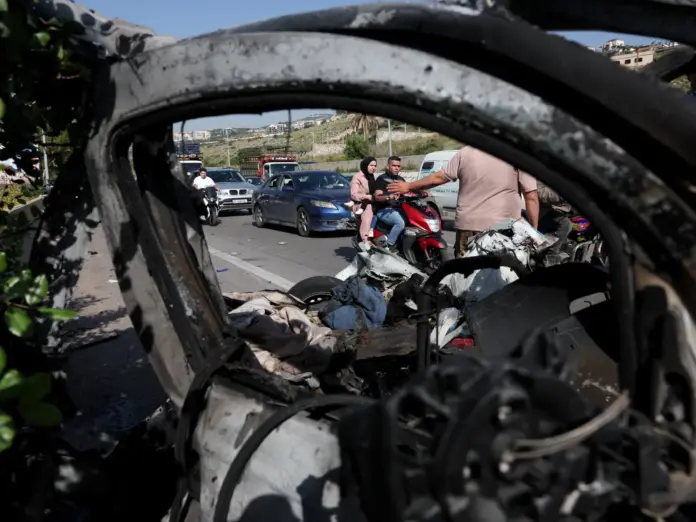
The deadliest single strike hit the town of al-Saksakieh in the southern Sidon district, where an Israeli attack killed at least seven people — including a child — and wounded 15 others, among them three more children. The assault on the small town alone accounted for more than a third of the day’s total casualties.
Violence spread across multiple communities throughout the day. Israeli strikes killed a Syrian man and his daughter in Nabatieh, three people in Nahrain, three more in Saadiyat, and another three in Haboush. A single person was killed in Mefdoun. The pattern of strikes — dispersed across a wide swath of southern Lebanon — underscored the sustained intensity of Israeli military operations despite the ceasefire framework.
Recommended Reading
The bloodshed is part of a broader and worsening toll. Since April 16, Israeli forces have killed nearly 500 people in Lebanon. The overall death toll since Israel launched its invasion and bombardment of the country on March 2 has surpassed 2,750 people.
The Israeli army also issued new forced displacement orders for several towns in southern Lebanon on Saturday, compounding a humanitarian crisis already defined by mass displacement. Israeli forces continue to occupy parts of southern Lebanon and maintain a buffer zone that prevents hundreds of thousands of displaced civilians from returning to their homes. Within that zone, Israeli forces are actively demolishing houses — a development that has drawn condemnation from Lebanese officials and human rights observers.
Hezbollah responded with its own attacks. The group launched artillery shell strikes on Israeli positions in the southern Lebanese towns of Biyyada and Rachaf, and carried out a drone attack in the border town of Misgav Am. Hezbollah also claimed to have targeted an Israeli army D9 bulldozer in the town of al-Abbad. The Israeli military confirmed that several explosive drones entered Israeli territory on Saturday and that air defences intercepted multiple projectiles launched toward troops operating in southern Lebanon. On Friday, Hezbollah drones had detonated in northern Israel near the Lebanese border, wounding at least three Israeli soldiers.
The mutual exchanges of fire expose the fragility of the ceasefire brokered by Washington last month. Neither side has formally abandoned the agreement, yet both continue to conduct military operations that directly contradict its terms.
Israel Lebanon Ceasefire: Regional Implications
Against this backdrop, the United States announced it would host a second round of negotiations between Israel and Lebanon on May 14 and 15 in Washington, DC. Lebanese President Joseph Aoun received former Ambassador Simon Karam, who will lead the Lebanese delegation in the upcoming talks. Notably, Hezbollah is excluded from the US-mediated process — an absence that critics argue undermines the talks’ capacity to produce a durable settlement, given the group’s continued military activity and political influence in southern Lebanon.
The diplomatic effort faces a stark credibility test. With Israeli forces demolishing civilian infrastructure inside the buffer zone, displacement orders continuing to be issued, and daily strikes killing Lebanese civilians, the gap between the ceasefire’s stated aims and conditions on the ground has grown conspicuous. For the hundreds of thousands of Lebanese unable to return home, the Washington talks represent a distant and uncertain prospect for relief.
The coming days — and the outcome of the May negotiations — will determine whether the ceasefire framework can be salvaged or whether the conflict is sliding toward a renewed and more devastating phase.