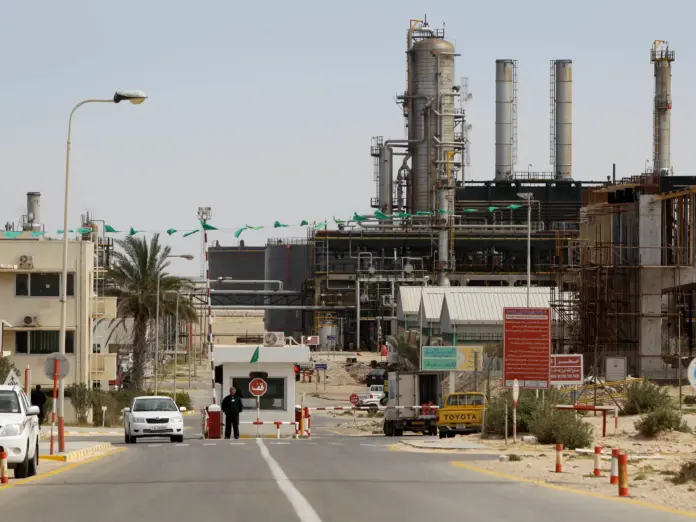
ZAWIYA, Libya — Libya’s largest operational oil refinery has been shut down after armed clashes involving heavy weapons broke out around the facility in the early hours of Friday, forcing the evacuation of all personnel and prompting a precautionary halt to operations at a site critical to the country’s fuel supply.
The National Oil Corporation (NOC) and the Zawiya Refining Company jointly announced the suspension of activities at the Zawiya refinery, located approximately 40 kilometres west of Tripoli. Alarm sirens were activated as projectiles from heavy weapons landed at multiple points within the oil complex, though no significant structural damage to the refinery was initially recorded. The NOC confirmed that all employees had been safely evacuated from both the complex and the adjacent port.
The violence did not remain contained. Fighting intensified and spread into the residential neighbourhood bordering the refinery, heightening fears of civilian casualties and further infrastructure damage. Footage verified by independent observers showed explosions and sustained gunfire, as well as damage to several vehicles and facilities inside the compound. The Zawiya Refining Company issued an urgent appeal to all parties involved to cease fire immediately.
Authorities in Zawiya framed the military action as a large-scale operation targeting criminal networks embedded in the area. The sweep aimed at dismantling hideouts and apprehending wanted individuals linked to a sweeping range of offences, including murder, attempted murder, kidnapping, extortion, drug trafficking, arms trafficking, human trafficking, and illegal migration — a catalogue of crimes that reflects the deep lawlessness that has taken root in parts of western Libya since the collapse of central authority.
Despite the shutdown, the NOC moved to reassure the public that fuel supplies would continue as normal, a statement intended to prevent panic buying or market disruption. The Zawiya refinery, with a processing capacity of 120,000 barrels per day, is a linchpin of Libya’s domestic energy infrastructure. It is also directly connected to the Sharara oilfield, one of the country’s most productive fields with an output capacity of 300,000 barrels per day, making any prolonged disruption at Zawiya potentially consequential for both domestic consumption and export flows.
The incident underscores the persistent fragility of Libya’s security environment, more than a decade after the fall of Muammar Gaddafi in 2011 plunged the country into cycles of conflict. Libya remains effectively divided between two rival administrations: the Government of National Unity (GNU), led by Prime Minister Abdul Hamid Dbeibah and based in Tripoli, and an eastern administration backed by military commander Khalifa Haftar, which lacks international recognition. The fault lines between these competing power centres have repeatedly drawn in armed factions, militias, and criminal enterprises that exploit the governance vacuum.
Zawiya itself has long been a flashpoint. The port city sits astride key smuggling routes used for fuel, weapons, and human trafficking — the same criminal ecosystems that Friday’s security operation claimed to be targeting. The presence of heavily armed non-state actors in close proximity to critical energy infrastructure has been a recurring vulnerability, and previous clashes in the area have triggered temporary oil disruptions that reverberated through global commodity markets.
The timing of the latest violence adds pressure on the GNU to demonstrate control over territory nominally under its authority. With Tripoli just 40 kilometres to the east, instability in Zawiya carries direct political implications for Dbeibah’s government, which has struggled to consolidate power against both Haftar’s forces and the fractious militia landscape within its own western stronghold.
International energy markets will be watching closely. Libya’s oil output, while recovering in recent years, remains vulnerable to sudden disruptions triggered by political or security crises. The Zawiya refinery’s role as a domestic fuel processor — rather than purely an export terminal — means its shutdown has an immediate impact on ordinary Libyans dependent on refined petroleum products for transport and power generation.
No casualty figures have been officially confirmed, and the full extent of the damage inside the complex remains under assessment. The security operation in Zawiya was ongoing as of the latest available information.