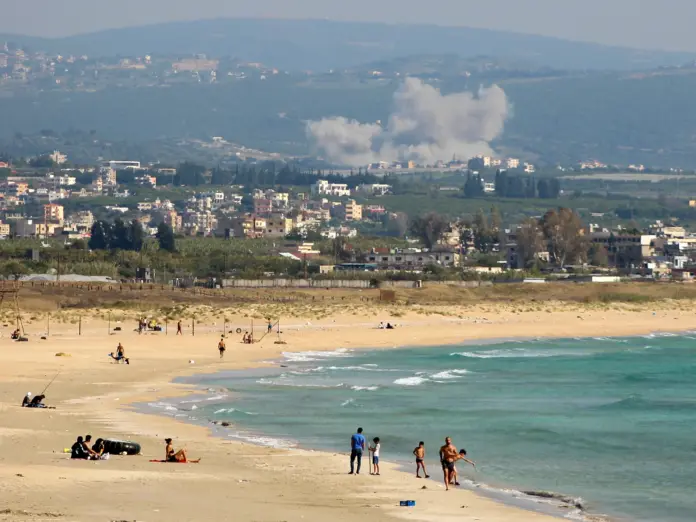
Israel Lebanon Ceasefire — Israeli air strikes killed at least 20 people across southern Lebanon on Friday, shattering the relative calm of a weeks-old ceasefire and casting a shadow over diplomatic talks set to resume in Washington next week.
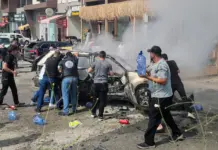
Among the dead were four people — including two women — killed when an Israeli strike hit the town of Toura in the Tyre district. Eight others were wounded in that attack alone. A civil defence worker was also killed after an Israeli army drone targeted a vehicle on the road connecting Kfarchuba and Kfarhamam in the Hasbaya district. Lebanese Red Cross teams, meanwhile, recovered the bodies of two young men who had been missing since Israeli strikes hit the town of Blat in the Marjayoun district on Thursday.
Strikes also hit the districts of Nabatieh, Bint Jbeil, and Sidon throughout the day. Shortly after the attacks, Avichay Adraee, the Israeli army’s Arabic-language spokesperson, issued forced evacuation orders for residents of multiple towns, including Nmairiyeh, Tayr Felsay, Hallousiyyeh, Upper Hallousiyyeh, Toura, and Maarakeh.
Recommended Reading
Hezbollah responded with a series of its own attacks. A drone launched into northern Israel wounded two soldiers, one severely. A second drone strike wounded another soldier in a part of southern Lebanon still under Israeli military occupation. The group also fired missiles at a military base in northern Israel, targeted an army vehicle in the town of Deir Siryan, and struck Israeli troops on the road to Adshit al-Qusayr.
The exchanges represent a significant escalation despite a ceasefire that technically took effect on April 17 following an initial round of US-brokered negotiations. Israel has continued to hold positions inside Lebanese border areas since the agreement was reached, a point of deep contention for Beirut.
The Lebanese health ministry reported that 2,759 people have been killed and 8,512 injured since hostilities began on March 2 — figures that underscore the sustained human cost of a conflict that has drawn comparisons to Lebanon’s darkest periods. The country endured a 15-year civil war that ended in 1990, and the spectre of renewed large-scale destruction looms over every diplomatic exchange.
Against this backdrop, Lebanese officials are preparing for a second round of negotiations in Washington on May 14 and 15. Lebanese President Joseph Aoun met with veteran diplomat Simon Karam on Friday; Karam will lead the Lebanese delegation to the American capital. Prime Minister Nawaf Salam stated that Beirut’s priority is to consolidate the ceasefire before substantive talks begin, with Lebanon intending to raise the cessation of attacks, the release of prisoners, and a clear timetable for Israeli withdrawal from occupied Lebanese territory.
Israel Lebanon Ceasefire: Regional Implications
The diplomatic path, however, is complicated by internal Lebanese politics. Hezbollah and its political allies oppose direct negotiations with Israel, favouring indirect channels instead. The Lebanese government faces simultaneous pressure from both Washington and Tel Aviv to engage in face-to-face dialogue — a tension that could fracture the fragile consensus needed to present a unified position at the talks.
The conflict entered a new phase in November 2024 when Israel killed Hezbollah leader Hassan Nasrallah, a strike that reshaped the group’s command structure and emboldened Israeli military operations across the south. Since then, the rhythm of strikes and counter-strikes has continued with little interruption, even as diplomats work to establish a durable framework for de-escalation.
Friday’s violence illustrates the central paradox facing both sides: each round of fighting erodes the political conditions necessary for a negotiated settlement, yet neither party has shown willingness to absorb attacks without response. With Washington talks days away, the pressure on both Beirut and Tel Aviv to exercise restraint — or at least the appearance of it — has never been higher.