Washington — The United States escalated its economic pressure campaign against Cuba on Thursday, imposing new sanctions on Grupo de Administracion Empresarial SA (GAESA), the military-controlled conglomerate that has its tentacles in nearly every sector of the Cuban economy, while United Nations experts warned the accompanying fuel blockade constitutes a form of unlawful collective punishment.
Secretary of State Marco Rubio announced the measures on X, declaring that the Trump Administration would not stand aside while Cuba’s communist government threatened US national security. The sanctions also targeted Moa Nickel SA (MNSA), a joint venture between Toronto-based Sherritt International Corp and Cuba’s state-owned nickel company. Sherritt moved swiftly to suspend its direct participation in joint venture activities in Cuba following the designation.
Us Sanctions Cuba — GAESA, led by executive president Ania Guillermina Lastres Morera, functions as the financial backbone of the Cuban state, with connections spanning tourism, retail, construction, and foreign trade. Targeting the conglomerate is designed to strike at the heart of the government’s revenue streams, though critics argue the consequences fall most heavily on ordinary Cubans.
Recommended Reading
Cuba’s government condemned the latest round of sanctions as ‘unilateral coercive measures’ and ‘collective punishment on the Cuban people’ — language that echoes the findings of three UN special rapporteurs who have formally condemned Washington’s fuel blockade as unlawful. The experts stated that ‘energy starvation as a coercive tool is incompatible with international human rights norms.’
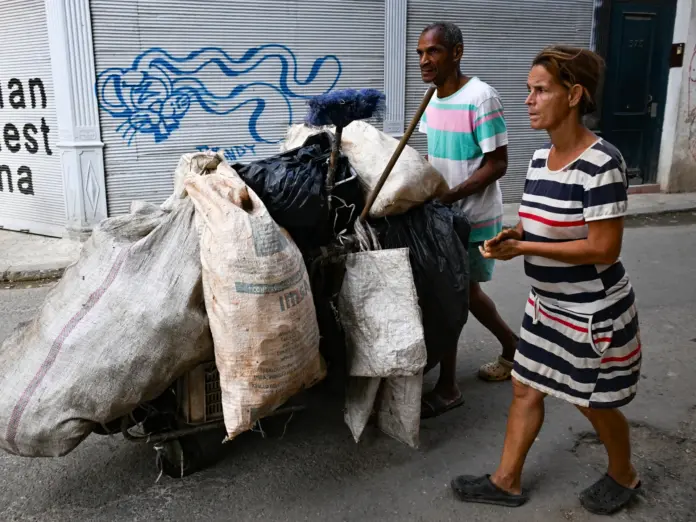
The humanitarian dimensions of the crisis are stark. Fuel scarcity across the island is preventing patients from reaching hospitals and keeping children out of school. Cuba’s health system is grappling with a backlog of more than 96,000 surgeries, including 11,000 procedures for children, a figure that underscores the cascading effects of the energy shortage on public services.
The fuel squeeze has tightened considerably in recent weeks. Washington moved to staunch Venezuelan oil deliveries to Cuba following the abduction of Venezuelan leader Nicolas Maduro on January 3. With that supply line disrupted, only a single Russian oil tanker has reached Cuban shores in recent months. President Trump has also signed an executive order establishing a mechanism to sanction any country that delivers fuel to the island, effectively threatening third-party nations against stepping in to fill the gap.
Trump has repeatedly threatened military action to topple Cuba’s government, rhetoric that has intensified the diplomatic isolation surrounding Havana. The administration frames its measures as a national security imperative, but the UN experts’ intervention signals growing international discomfort with the breadth of the restrictions.
Us Sanctions Cuba: Regional Political Context
The sanctions represent a significant escalation in a week that has already seen an earlier round of Cuba-related measures. Together, they form part of a broader strategy to maximise economic pressure on the government in Havana — a strategy that Washington’s critics argue is indistinguishable from a siege. The UN rapporteurs’ use of the phrase ‘energy starvation’ is deliberately pointed, invoking the language of humanitarian law to challenge the legal basis of the blockade.
For Sherritt International, the fallout is immediate and commercially significant. The Toronto-based miner had maintained its Cuban nickel operations as one of the few Western companies with a substantial footprint on the island. Its suspension of joint venture activities removes another pillar of foreign investment from an economy already under severe strain.
The combination of tightening sanctions, a near-total fuel embargo, and the collapse of Venezuelan supply lines has placed Cuba in one of its most acute economic crises in decades — a situation that international human rights bodies warn is moving from economic hardship into a full-scale humanitarian emergency.