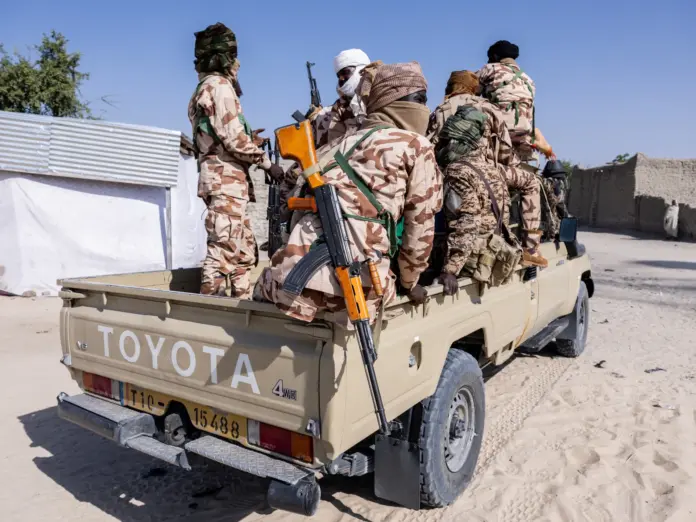
Boko Haram Chad Attack — A Boko Haram assault on a Chadian military post has left at least 23 soldiers dead and 26 others wounded, dealing a severe blow to a country that had recently declared the Nigeria-based armed group effectively neutralised within its borders.
The attack unfolded late Monday night on the island of Barka Tolorom, situated within the sprawling Lake Chad region — a volatile frontier zone where the borders of Chad, Nigeria, Niger and Cameroon converge. The Chadian military disclosed the assault in an official statement released Tuesday, confirming the death toll while asserting that troops had repelled the attackers and inflicted significant casualties on the militant force.
President Mahamat Idriss Deby Itno addressed the nation through a Facebook post on Tuesday, acknowledging the gravity of the losses. The government’s public response underscored the political sensitivity of the attack, which directly contradicts earlier military claims that Boko Haram had been stripped of any sanctuary on Chadian soil.
Recommended Reading
Those claims followed an intensive counteroffensive launched after a devastating October 2024 attack in which approximately 40 Chadian soldiers were killed — one of the deadliest single strikes against the country’s armed forces in recent memory. President Deby personally pledged to lead ground operations during that campaign, committing to two weeks on the front lines. The offensive concluded in February, with the army declaring that Boko Haram no longer held any territorial refuge within Chad’s borders. Monday’s attack has shattered that assertion.
The Lake Chad basin has long served as a strategic sanctuary for jihadist factions. The region’s labyrinthine network of islands, marshes and waterways provides natural cover for both Boko Haram and its rival splinter group, ISWAP — the Islamic State’s West Africa Province affiliate. Boko Haram’s JAS faction in particular has repeatedly targeted advanced military positions on islands and along Niger’s stretch of the lake, employing tactics that exploit the terrain’s inaccessibility to conventional forces.
The persistence of such attacks reflects the broader difficulty of achieving lasting security gains in one of the world’s most challenging operating environments. Lake Chad’s shrinking waters — a consequence of climate change and regional drought — have paradoxically created new islands and peninsulas that armed groups exploit as staging grounds, even as they have displaced hundreds of thousands of civilians who once depended on the lake for their livelihoods.
Chad itself remains among the poorest nations in Africa, burdened by decades of political instability, recurring rebellions, armed factions and coups. Despite possessing oil wealth, the country has struggled with economic stagnation and the pressures of an unforgiving climate. These structural vulnerabilities have historically complicated efforts to build a military capable of delivering sustained security across remote frontier zones.
Boko Haram Chad Attack: What This Means for the Sahel
The Barka Tolorom attack is a stark reminder that the Lake Chad crisis remains far from resolved. Regional security analysts have long warned that military offensives, however aggressive, cannot substitute for the political and economic conditions needed to deny militant groups their recruitment base. With Chad’s armed forces again absorbing heavy losses, pressure will mount on Deby’s government to reassess its counterterrorism strategy — and on regional partners to deepen cooperation across the four-nation basin.
No immediate claim of responsibility was issued by Boko Haram, consistent with the group’s irregular communication patterns. Chadian authorities have not released details on the scale of militant casualties beyond confirming that attackers were killed during the engagement. Further military operations in the Lake Chad region are widely anticipated as the government moves to respond to one of its most painful security setbacks in months.