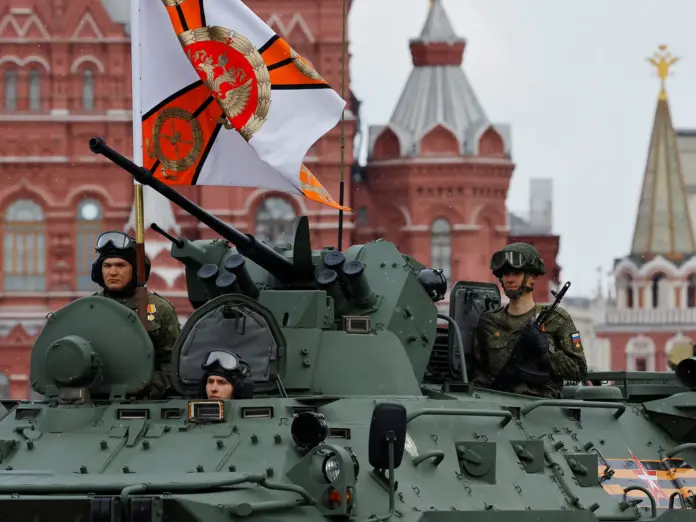
Russia Ukraine Ceasefire — Russia and Ukraine have each declared unilateral ceasefires that do not overlap, deepening mutual suspicion and raising fears of escalation as Moscow prepares to mark the 81st anniversary of its Victory in the Great Patriotic War with a parade on Red Square.
Russia announced a ceasefire running from May 8 to 9, timed to coincide with its Victory Day celebrations in Moscow. The declaration was made via the state-backed messaging platform MAX. Ukraine, meanwhile, announced its own separate ceasefire beginning at midnight on May 5, covering May 5-6 — a window that ends days before Russia’s truce is set to begin.
President Volodymyr Zelenskyy said he received no official communication from Moscow regarding the Russian ceasefire proposal, and announced that Ukraine would seek clarification through Washington. Speaking to European Union leaders gathered at a meeting of the European Political Community in Yerevan, Zelenskyy was pointed in his assessment: human life, he said, is more valuable than the celebration of any anniversary.
Recommended Reading
The Russian Ministry of Defence issued a stark warning alongside the ceasefire announcement, threatening a massive missile strike on central Kyiv if Ukraine attempts to disrupt the Victory Day parade. Russian authorities also urged civilians and foreign diplomatic mission employees in the Ukrainian capital to leave the city promptly — a move widely interpreted as an attempt to intimidate rather than protect.
Zelenskyy offered a pointed observation about the parade itself, noting that Russia had decided not to display military equipment during the ceremony — a departure from years of tradition that he attributed to fear of Ukrainian drone strikes. The absence of hardware from what is typically a showcase of Russian military power underscores the toll the war has taken on Moscow’s armed forces and its confidence in projecting strength domestically.
The ceasefire proposals follow a phone call last week between President Vladimir Putin and Donald Trump, during which Putin first floated the idea of a temporary halt to hostilities. That conversation has done little to produce coordinated action on the ground. A similar dynamic played out in April, when Putin declared a 32-hour ceasefire for Orthodox Easter. Zelenskyy confirmed Ukraine honoured that truce, yet both sides subsequently accused each other of violations — a pattern that has eroded confidence in any short-term pause as a meaningful step toward peace.
The broader context remains grim. Russia’s invasion of Ukraine, launched in February 2022, has now stretched into its fourth year, making it the bloodiest conflict on European soil since World War II. Hundreds of thousands of people have been killed, and millions more have been displaced across the continent. The war has reshaped European security architecture, strained global energy markets, and drawn in military and financial support from dozens of nations.
Russia Ukraine Ceasefire: The Wider European Impact
The duelling ceasefire announcements reflect the fundamental breakdown in direct communication between Kyiv and Moscow. Rather than a negotiated pause, each side has effectively issued a unilateral declaration on its own terms and timeline — leaving the front lines, and the civilians caught between them, in a state of continued uncertainty. With Russia’s Victory Day parade approaching and its military threatening strikes on the Ukrainian capital in the same breath as offering a truce, the prospect of even a brief, genuine cessation of hostilities appears remote.
International observers and Western governments are watching closely, particularly given Trump’s involvement in brokering the initial conversation. Whether Washington can translate that opening into a durable framework — or whether the rival ceasefires collapse into another cycle of mutual recrimination — may define the trajectory of diplomacy in the weeks ahead.