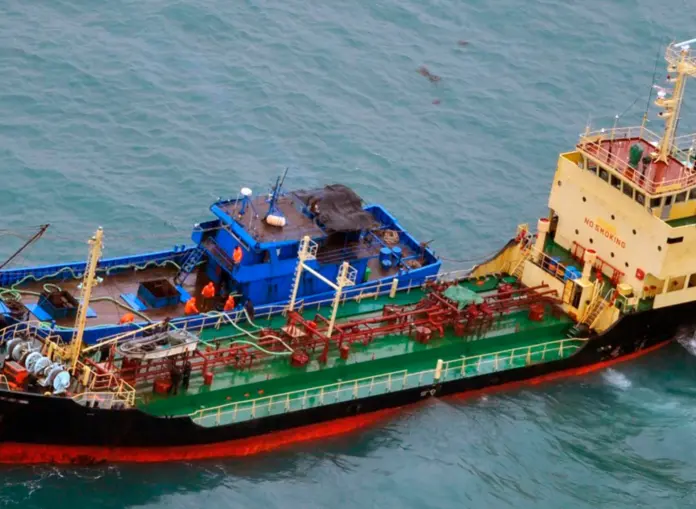
A New Zealand Defence Force long-range surveillance aircraft has detected a suspected illicit ship-to-ship transfer involving a North Korean vessel in international waters, the latest sign that Pyongyang continues to circumvent a sweeping regime of United Nations sanctions through maritime smuggling.
The observation was made by a P-8A Poseidon reconnaissance aircraft patrolling the Yellow Sea and East China Sea — waters that have become a focal point for international monitoring of North Korean sanctions evasion. New Zealand’s Defence Force announced the finding on Tuesday, though officials declined to specify what goods were involved in the exchange.
The aircraft identified 35 vessels of interest during the patrol, with the suspected transfer occurring among that cluster of ships. Air Commodore Andy Scott, New Zealand’s Air Component Commander, oversees the country’s contribution to the surveillance effort, which forms part of a broader multinational push to detect and document North Korean violations at sea.
North Korea has long relied on ship-to-ship transfers to sustain its heavily sanctioned economy. The country typically uses maritime channels to smuggle in refined petroleum — a commodity tightly restricted under UN resolutions — while exporting coal, iron ore, and sand to generate hard currency. Those revenues are widely understood to fund Pyongyang’s nuclear and ballistic missile development programmes, which have accelerated in recent years despite international pressure.
The United Nations first imposed sanctions on North Korea in 2006 following its inaugural nuclear weapons test. The measures were dramatically expanded in 2016 and 2017, with new restrictions targeting a broad range of exports and explicitly prohibiting ship-to-ship transfers of sanctioned goods. Despite those measures, North Korea continues to trade with a small number of countries. China remains its dominant commercial partner, while Pyongyang has also been known to supply weapons to both Iran and Russia in exchange for oil or hard currency — transactions that have drawn heightened scrutiny amid the ongoing war in Ukraine.
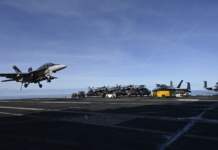
New Zealand has participated in the US-led Pacific Security Maritime Exchange since 2018. The coalition monitors North Korean sanctions violations through coordinated surveillance of illicit maritime activity, pooling intelligence from member nations to build a more complete picture of Pyongyang’s smuggling operations. The P-8A Poseidon — a sophisticated maritime patrol aircraft derived from the Boeing 737 airframe — is well suited to the task, capable of covering vast stretches of open ocean and collecting detailed imagery of vessel activity.
The latest observation adds to a growing body of evidence that North Korea’s sanctions-busting infrastructure remains resilient and adaptive. Vessels involved in illicit transfers frequently disable or manipulate their automatic identification systems to avoid detection, and the use of multiple intermediary ships makes tracing the origin and destination of goods significantly more difficult for enforcement bodies.
The international community faces a persistent enforcement gap: while surveillance missions like New Zealand’s document violations with increasing regularity, the mechanisms for acting on that intelligence — particularly when major trading partners such as China are involved — remain limited. Beijing has historically resisted the most aggressive enforcement measures, arguing that economic pressure risks destabilising the Korean Peninsula.
Nevertheless, multinational surveillance operations serve a deterrent and evidentiary function, generating the documentation that underpins diplomatic pressure and potential future enforcement action at the UN Security Council. For New Zealand, participation in the Pacific Security Maritime Exchange reflects a broader commitment to upholding the rules-based international order in the Indo-Pacific — a region where the strategic stakes have risen sharply as North Korea’s weapons programmes have grown more sophisticated and its diplomatic isolation has deepened.