![Control over the Strait of Hormuz has been a widely discussed factor in the ongoing US-Israel war against Iran [Dado Ruvic/Reuters]](https://www.world-tension.com/app/uploads/2026/04/wt-image-124-696x522.webp "wt-image-124")
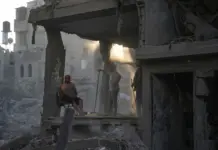
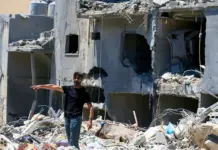
Two months after Washington and Tel Aviv launched Operation Epic Fury, the joint military campaign against Iran has killed thousands of people, severely disrupted global energy markets, and placed two of the world’s most critical maritime chokepoints under sustained threat.
The operation began on February 28 — the same day Iran’s Supreme Leader, Ayatollah Ali Khamenei, was killed. His second son, Mojtaba Khamenei, has since assumed the role of Supreme Leader, inheriting a nation under siege and a military establishment scrambling to mount a coherent response.
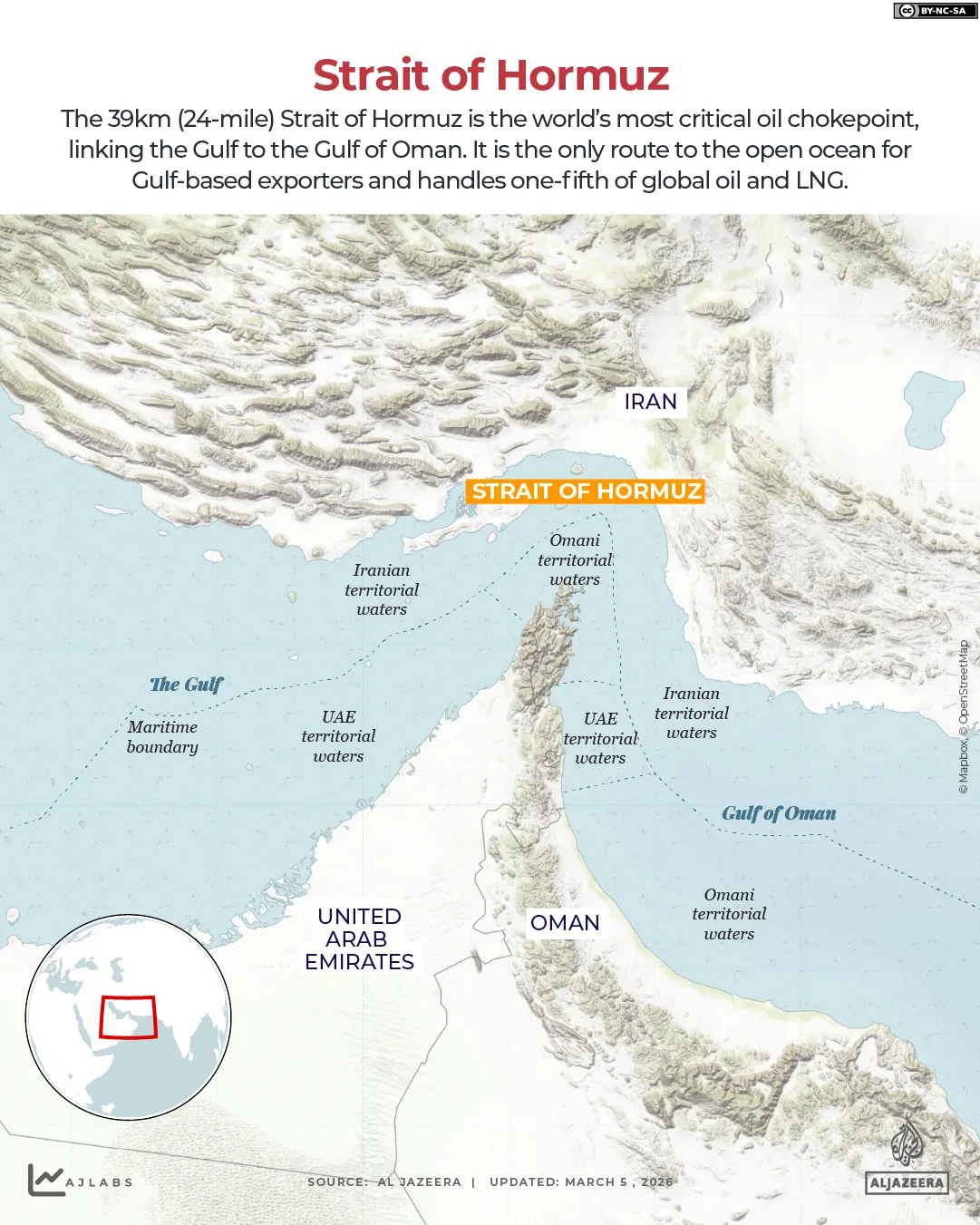
At the heart of the conflict’s economic fallout lies the Strait of Hormuz, the narrow waterway separating Iran from Oman that connects the Persian Gulf to the Arabian Sea. Under normal conditions, approximately 20 percent of the world’s oil supplies transit the strait daily. Since the war began, access has been heavily restricted, with periods of partial and near-total closure sending shockwaves through global energy markets.
In March, a large-scale US air operation struck Kharg Island — Iran’s primary oil export terminal — hitting more than 90 military sites. American planners deliberately avoided targeting energy infrastructure on the island, a strategic calculation widely interpreted as an attempt to limit oil price escalation while still degrading Iran’s military capacity. Kharg Island, which endured heavy bombardment during the Iran-Iraq War, once again found itself at the centre of a major conflict.
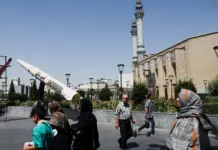
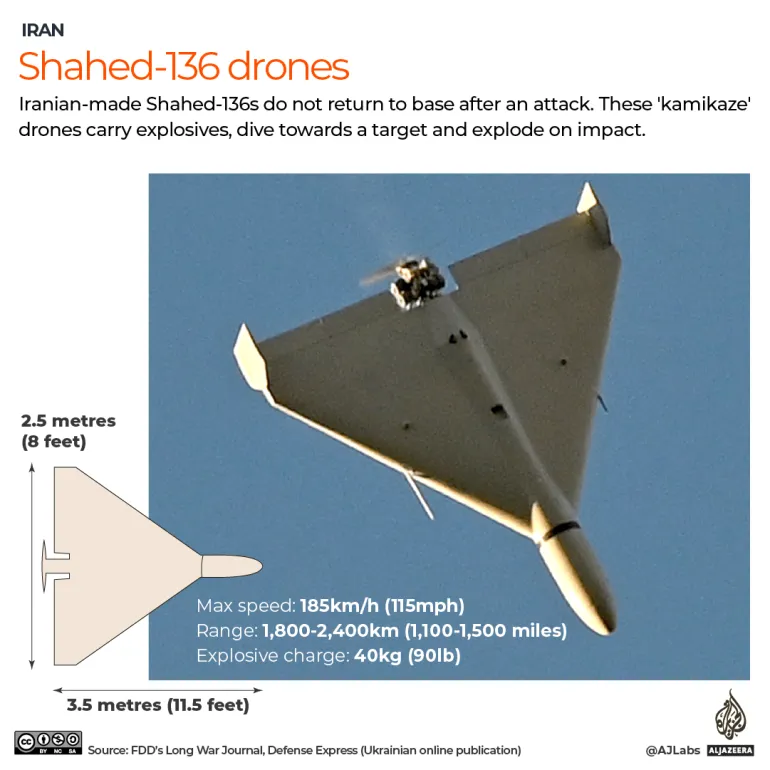
Iran’s military response has relied heavily on Shahed drones, low-cost loitering munitions — sometimes called kamikaze drones — that fly at low altitudes and are typically deployed in large swarms. The word ‘Shahed’ derives from Arabic, meaning ‘witness.’ Tehran has used these unmanned aerial vehicles since the opening days of the war to strike targets in Israel and across Gulf states, presenting air defence systems with a persistent and economical threat.
The human cost of the conflict has drawn intense international scrutiny. Rights groups have alleged that a Tomahawk cruise missile — the long-range, all-weather weapon developed by the United States capable of striking targets from over a thousand miles away — hit a school in the Iranian city of Minab early in the war, killing close to 170 children. Minab, situated near the Strait of Hormuz and known domestically for its citrus fruits and dates, has become a symbol of civilian suffering in the conflict. Neither Washington nor Tel Aviv has formally acknowledged the strike.
The Islamic Revolutionary Guard Corps (IRGC), whose central headquarters is known as Khatam al-Anbiya, has continued to coordinate Iran’s military posture. Spokesperson Ebrahim Zolfaghari has remained the public face of the IRGC’s communications throughout the campaign, issuing periodic statements as strikes and counter-strikes have continued.
Beyond the Persian Gulf, the conflict has amplified instability along a second critical maritime corridor. The Bab el-Mandeb Strait — the narrow passage between Yemen and Djibouti that serves as the only southern entrance to the Red Sea from the Indian Ocean — faces mounting pressure. The Houthis, the Iran-aligned movement that controls much of Yemen’s populous northwest including the capital Sanaa, have repeatedly threatened to disrupt or close the strait entirely. A sustained closure would effectively sever one of the world’s busiest shipping routes, forcing vessels onto lengthy detours around the Cape of Good Hope.
The combination of a restricted Strait of Hormuz and a threatened Bab el-Mandeb represents an unprecedented dual chokepoint crisis for global trade. Energy analysts warn that prolonged disruption to either waterway could trigger sustained fuel price spikes across Europe, Asia, and the Americas.
On the political front, US Defence Secretary Pete Hegseth has remained a prominent figure in the administration’s public posture on the campaign, even as controversy has surrounded him domestically. The conflict has deepened Washington’s direct military entanglement in the Middle East to a degree not seen in decades, raising questions among allied governments about the long-term strategic objectives of Operation Epic Fury and the conditions under which either side might pursue a negotiated pause.
With thousands dead, energy markets in turmoil, and a new and untested Supreme Leader in Tehran, the trajectory of the war remains deeply uncertain. The coming weeks are expected to test both the resilience of Iran’s military command and the cohesion of the US-Israeli alliance as pressure mounts for a diplomatic off-ramp.