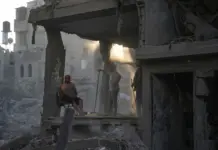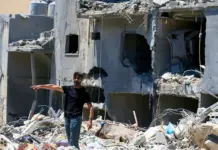
The war began before dawn on February 28, 2026. A US-Israeli strike killed Supreme Leader Ayatollah Ali Khamenei, the opening blow of a campaign that American planners expected would trigger rapid regime collapse. Within days, it was clear that calculation had been catastrophically wrong.
Iranian state institutions continued to function. A successor to Khamenei was selected within hours of his death. Rather than imploding, Tehran launched retaliatory strikes across the region — targeting American assets, Gulf energy infrastructure, and civilian installations in countries that had explicitly assured Iran their territory would not be used for offensive operations against it.
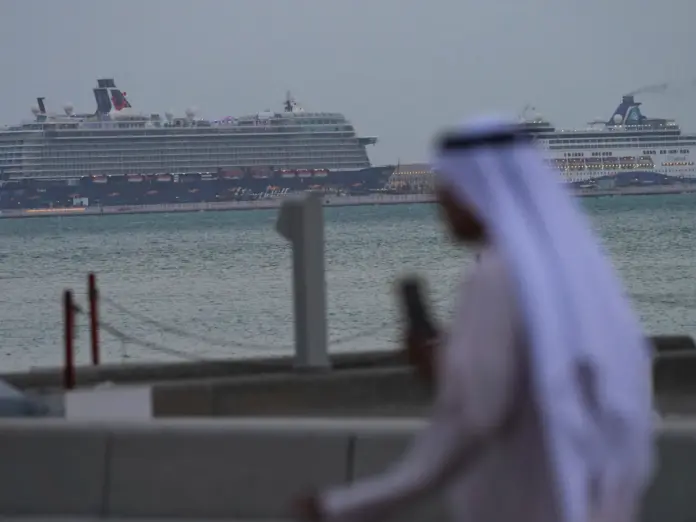
Qatar was among the hardest hit. Despite years spent mediating between Washington and Tehran, Doha found its civilian infrastructure and energy installations under Iranian attack within hours of the war’s outbreak. Qatar Energy halted liquefied natural gas production entirely, triggering an immediate shock to global markets. Several other Gulf state energy producers declared force majeure and suspended operations. The Strait of Hormuz — through which approximately one-fifth of all globally traded oil and 30 percent of the world’s LNG passes — was closed.
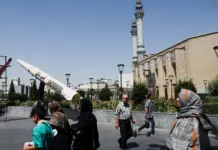
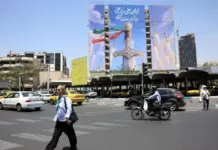
![An Iranian woman walks past a monument for schoolchildren who were killed in a strike on a girls' primary school in Minab, southern Iran, amid a ceasefire between the US and Iran, in Tehran, Iran, April 15, 2026. [Thaier Al Sudani/Reuters]](https://world-tension.s3.us-east-2.amazonaws.com/articles/457/ab533f6f0329470f983ff78a347b74c8.webp)
The consequences rippled outward with extraordinary speed. US crude oil surged past $90 per barrel, up from $67 the day before hostilities began. Gas prices in the Netherlands and the United Kingdom jumped nearly 50 percent. By March, US inflation was climbing at an annual rate of 3.3 percent, with gasoline prices rising 21.2 percent during the conflict. Higher energy costs accounted for nearly three-quarters of the monthly rise in the consumer price index — a direct and visible burden on American households.
The political damage to President Donald Trump has been severe. Trump, who returned to office in January 2025 promising to bring prices down, dispatched envoy Steve Witkoff to Oman with a 60-day deadline before the war began, seeking a negotiated resolution. When diplomacy failed, he authorised military action in the expectation of a swift, decisive outcome. Instead, his approval rating on the economy fell to an all-time low of 29 percent. Forty percent of Republicans now disapprove of his handling of inflation and rising prices — a striking fracture within his own political base, with midterm elections scheduled seven months away.
A ceasefire between the United States and Iran has since been announced, though the situation remains volatile. Israeli Prime Minister Benjamin Netanyahu’s office stated the truce "does not include Lebanon," signalling that Israel intends to continue military operations on at least one front. Netanyahu, who faces domestic legal proceedings and elections in the coming months, retains overwhelming public support for the war among the Jewish Israeli public, according to polling data.
The broader strategic picture is deeply uncertain. Iran’s nuclear infrastructure was struck during the campaign, but the country retains significant deterrent capacity — including advanced missile systems and a network of regional allies capable of projecting force across multiple theatres simultaneously. The threats that have materialised include militia attacks, cyberattacks, economic targeting, and the closure of vital maritime corridors, demonstrating the breadth of Iran’s asymmetric toolkit.
The international response has been fractured. The UN Security Council failed to reach consensus on the US-Israeli strikes. Several NATO member states signalled reluctance or outright declined to support Washington’s request for expanded cooperation — an unusual public rupture within the alliance. The war has redrawn geopolitical divisions in ways analysts describe as unprecedented, with the concept of neutrality increasingly untenable for states across the Middle East and beyond.
Saudi Arabia and Qatar, both of which received Iranian strikes despite their assurances of non-participation, now face the acute dilemma of states caught between great-power conflict and their own security imperatives. The strikes on Gulf energy infrastructure have demonstrated that geographic distance and diplomatic positioning offer limited protection when a regional power decides to escalate.
Historians and strategists have pointed to the precedents of Iraq and Libya as cautionary frameworks. Both countries remain destabilised decades after external military interventions toppled their governments by force, and neither produced the stable successor systems their architects envisioned. The assumption that eliminating a regime’s leadership produces political transformation has been tested repeatedly — and repeatedly found wanting.
The war that began on February 28 was conceived as a sharp shock. It has instead become a prolonged crisis with no clear endpoint, reshaping energy markets, straining alliances, and confronting the United States with the gap between the conflict it planned and the one it is now fighting.