Turkey’s defence sector is undergoing a dramatic transformation, with missile manufacturer Roketsan at its centre — opening billion-dollar facilities, deploying weapons in active conflicts, and positioning itself as an indispensable partner for dozens of nations navigating an increasingly volatile world.
President Recep Tayyip Erdogan personally inaugurated a series of large-scale industrial complexes, including what is now recognised as Europe’s largest warhead facility. Alongside it, Roketsan opened the ‘Kirikkale‘ facility dedicated to rocket fuel technology and a new research and development centre staffed by 1,000 engineers. The combined investment stands at $1 billion, with plans already drawn for an additional $2 billion expansion phase.
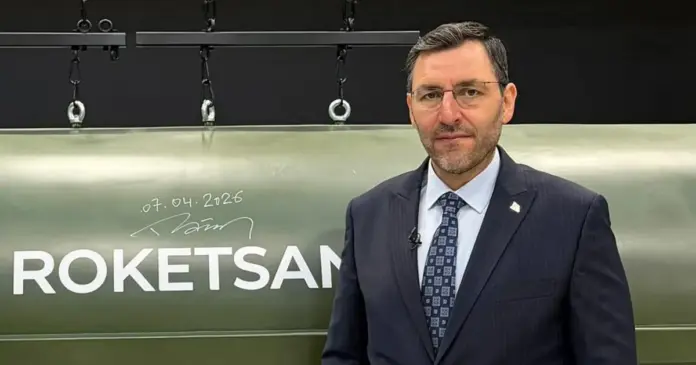
Founded in 1988 to serve the Turkish Armed Forces, Roketsan has evolved into a global exporter reaching approximately 50 countries. General Manager Murat Ikinci confirmed the company now ranks 71st among the world’s defence firms — a standing underpinned by a workforce of 3,200 engineers, making it Turkey’s third-largest research and development institution. The broader Turkish defence industry draws on a supply chain of nearly 4,000 small and medium-sized enterprises and operates with a local production rate exceeding 90 percent.
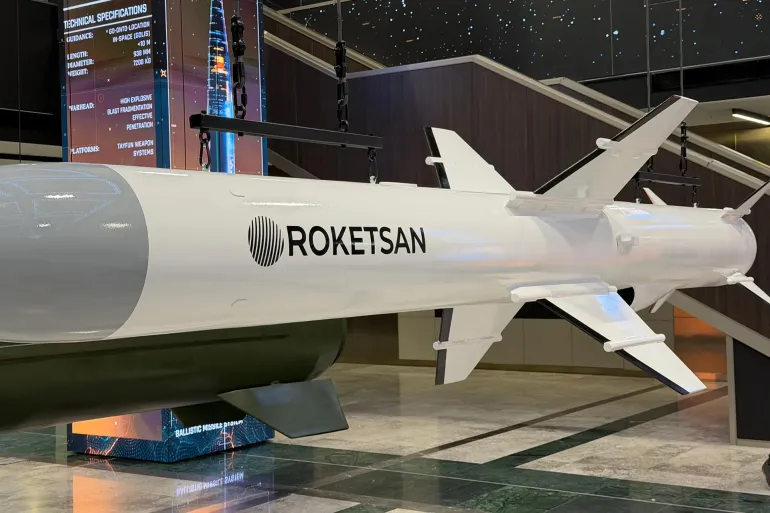
Roketsan has concentrated its ambitions across five strategic domains: long-range ballistic and cruise missiles, air defence systems, submarine-launched cruise missiles, smart micro-munitions, and long-range air-to-air missiles. Among its most significant recent developments is the Tayfun Block 4, a hypersonic ballistic missile specifically engineered to defeat advanced air defence systems. The company has also developed the ‘CIRIT‘ laser-guided missile and two new air defence platforms — ‘ALKA‘ and ‘BURC‘ — designed in direct response to tactical lessons drawn from the war in Ukraine.
The urgency behind that development is not theoretical. In March 2026, NATO air defences intercepted three Iranian ballistic missiles that entered Turkish airspace — a stark demonstration of the threat environment Ankara now faces. That same month, Iranian-designed Shahed drones, upgraded by Russia with ‘Kometa-B‘ anti-jamming modules, struck a British military base in Cyprus. Meanwhile, Gulf states have collectively detected more than 1,000 drones in their airspace, and the United States relied on Patriot and THAAD systems to intercept Iranian drones during the US-Israel military campaign against Iran.
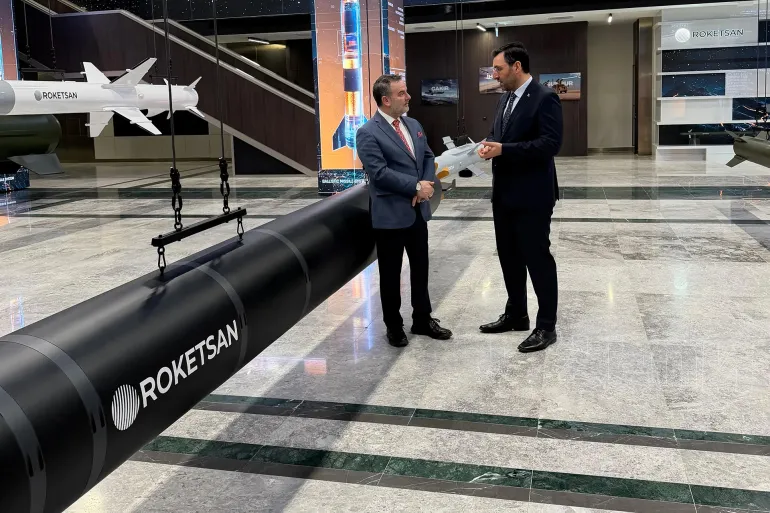
Turkish-made weapons have already seen combat beyond the region. During Pakistan’s war against India in May, Pakistani forces deployed Turkish drones — a battlefield debut that drew international attention and reinforced Ankara’s credentials as a credible arms supplier to non-Western partners.
Turkey’s defence ascent has not been without friction with its Western allies. Washington ejected Ankara from the F-35 stealth fighter programme in July 2019 after Turkey purchased Russia’s S-400 missile defence system. The following year, the United States imposed CAATSA sanctions targeting Turkey’s military procurement agency, its chief Ismail Demir, and three other senior officials. Rather than reversing course, Ankara accelerated domestic production — a strategy that has since yielded the $10 billion export figure recorded in 2025.
Ikinci has pointed to Qatar as a benchmark for Turkey’s model of technological, military, and security cooperation — a relationship that reflects Ankara’s broader ambition to anchor itself as a defence partner of choice across the Gulf and beyond.
The scale of Roketsan’s expansion signals that Turkey views strategic autonomy in defence not merely as a policy preference but as an existential imperative. With hypersonic missiles in development, Europe’s largest warhead plant now operational, and Turkish weapons proving themselves in live conflicts from South Asia to the eastern Mediterranean, Ankara is staking a claim to a seat among the world’s foremost military-industrial powers.