Three successive Israeli strikes on emergency responders in southern Lebanon killed at least three paramedics and wounded several others on Wednesday, as multiple ambulance teams attempting to reach casualties in the Nabatieh region were targeted in rapid succession.
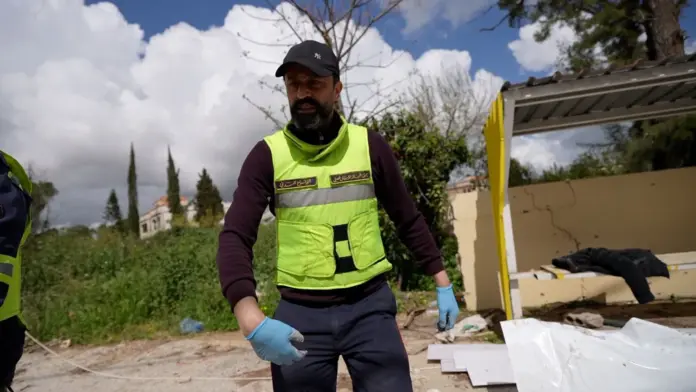
The attacks unfolded in Mayfadoun, a village in the Nabatieh district, where a team from the Islamic Health Association had responded to an earlier Israeli strike. While attempting to evacuate the wounded, the team came under attack — one paramedic was killed and a second remains missing. A second Islamic Health Association team dispatched to the same location was also struck, leaving three more paramedics wounded.
Two additional ambulances — one from the Risala Scout Association and one from the Nabatieh Ambulance Service — were hit at the site. Two paramedics from those vehicles were killed and three others wounded, bringing the total casualties from the sequence of strikes to at least three dead and six wounded among emergency personnel.
Among the dead was Fadel Serhan, a 43-year-old paramedic with the Risala Scout Association who leaves behind a seven-year-old daughter. Serhan had dedicated decades to emergency response work, having served alongside colleague Ali Nasreddine for more than 30 years. His team had been operating out of a tent pitched outside Nabih Berri Hospital after their station in Mayfadoun was destroyed in a previous Israeli air strike.
The deaths underscore the mounting toll on Lebanon’s medical community since the conflict began on 2 March. Lebanon’s health ministry reports that 91 health professionals have been killed and 208 wounded. More than 120 Israeli attacks on ambulances and medical facilities have been recorded across the country.
The broader human cost of the war has been severe. More than 2,100 people have been killed and over 7,000 wounded since hostilities began. Among the dead are at least 260 women and 172 children. On the Israeli side, authorities report 13 soldiers killed in combat in Lebanon, while Hezbollah attacks have claimed the lives of two civilians in Israel over the same period.
Israel has maintained that Hezbollah exploits ambulances and medical infrastructure for military purposes — a charge Lebanon’s health minister has flatly denied. The Islamic Health Association, one of the targeted organisations, is an emergency service with ties to Hezbollah, while the Risala Scout Association is affiliated with Amal Movement, a separate Shia political and paramilitary group. Both organisations operate as civilian emergency services across southern Lebanon.
The strikes drew renewed international attention to the vulnerability of first responders in active conflict zones. Under international humanitarian law, medical personnel and vehicles are afforded protected status and may not be deliberately targeted. Attacks on clearly marked ambulances responding to prior strikes — a pattern documented repeatedly in this conflict — raise serious questions about compliance with those obligations.
For communities in southern Lebanon, the loss of paramedics like Serhan represents not only a personal tragedy but a deepening crisis in emergency response capacity. With stations destroyed, vehicles struck, and personnel killed or wounded, the ability of local services to reach the injured is being systematically eroded. Teams operating from makeshift facilities outside damaged hospitals are now themselves becoming targets.
The war, now in its seventh week, shows no sign of abating, and the toll on Lebanon’s civilian infrastructure — including the medical system meant to protect those caught in the crossfire — continues to climb.