Russia launched a devastating wave of missile and drone strikes across Ukraine overnight, killing at least 16 civilians and wounding more than 100 others in attacks on Kyiv, Odesa, and the Dnipropetrovsk region — a barrage that began within hours of a short-lived Orthodox Easter truce collapsing.
The Ukrainian Air Force reported that Russian forces fired 659 drones and 44 missiles over a 24-hour period, one of the largest combined aerial assaults recorded since the war began in February 2022. Air defence units intercepted 636 drones and 31 missiles, but the projectiles that broke through caused widespread destruction across multiple cities.
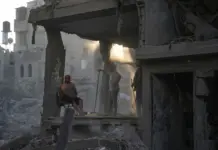
Odesa bore the heaviest toll, with nine people killed and 23 wounded in strikes that tore through the southern port city. In Kyiv, at least four people died — among them a 12-year-old child — and 48 others were injured. Russian air raids caused widespread damage across the capital’s Podilskyi, Obolonskyi, and Desnyanskyi districts. Emergency crews pulled a child and her mother from rubble in Podilskyi district, while at least four medics were injured during repeated shelling as they responded to casualties. Three more people were killed and 34 wounded in the Dnipropetrovsk region.
The assault came immediately after the expiry of a 32-hour Orthodox Easter ceasefire, a brief pause that had raised fragile hopes of a broader de-escalation. Those hopes were swiftly extinguished. EU Council President Antonio Costa condemned the attacks in stark terms, accusing Russia of deliberately choosing to terrorise civilians rather than pursue peace.
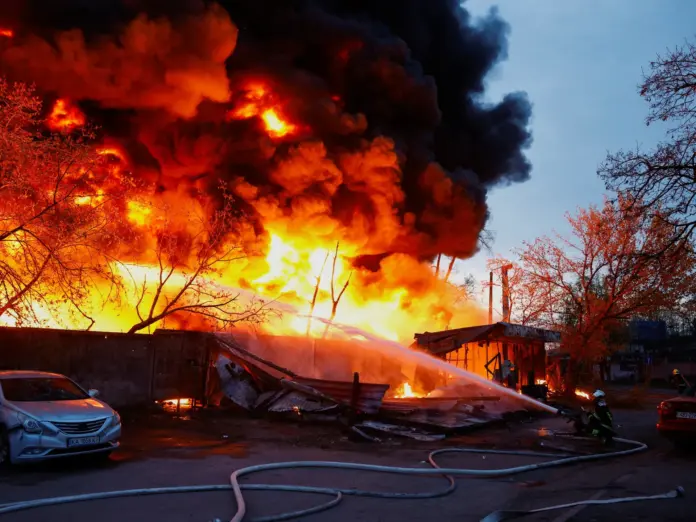
Ukraine struck back. A Ukrainian drone attack on Tuapse, a city in Russia’s Krasnodar Krai region, killed two children aged five and 14, and sparked a large fire. Kyiv has consistently carried out retaliatory strikes inside Russian territory in response to the near-nightly bombardments it has endured throughout the conflict.
The scale of Monday’s attack underscores the grinding attrition that has defined the war since Russia’s full-scale invasion in February 2022. Russian forces have fired missiles and hundreds of drones at Ukrainian cities on an almost nightly basis, systematically targeting civilian infrastructure, residential areas, and energy networks.
The strikes also arrive against a backdrop of stalled diplomacy. Several rounds of United States-brokered negotiations have failed to bring the two sides closer to any agreement in recent months. Ukraine has proposed freezing the conflict along current front lines, a formula that would leave Russian-occupied territory in place but halt active fighting. Russia has flatly rejected the proposal, insisting it seeks full control of the entire Donetsk region — one of four Ukrainian oblasts Moscow claimed to annex in 2022 in a move not recognised under international law.
The diplomatic impasse leaves millions of Ukrainian civilians exposed to continued bombardment with no immediate prospect of relief. The pattern of attacks — large-scale, multi-city, and timed to follow any pause in hostilities — reflects a deliberate Russian strategy of sustained pressure designed to exhaust Ukrainian air defences and civilian morale simultaneously.
With peace talks deadlocked and the front lines largely static, the war enters its fourth year with no clear path to resolution, and Ukrainian cities bracing for the next wave of strikes.