An Orthodox Easter ceasefire between Russia and Ukraine collapsed into a torrent of mutual accusations on Saturday, with both sides reporting thousands of violations within hours of the truce taking effect — and Ukrainian officials alleging that Russian forces executed four unarmed soldiers in cold blood.
The ceasefire, announced by President Vladimir Putin earlier in the week, came into force at 16:00 local time (13:00 GMT) on Saturday. Within hours, Ukraine’s military had logged 2,299 Russian violations, while Russia’s defence ministry countered with claims of 1,971 Ukrainian breaches. The competing tallies underscored the near-total breakdown of a truce that had been framed by Moscow as a gesture of goodwill during the Christian holy period.
The most serious allegation to emerge concerned four Ukrainian soldiers in the Kharkiv region, whom Ukrainian officials say were shot dead by Russian forces after the ceasefire began. The Kharkiv local prosecutor’s office characterised the killings as a grave violation of international humanitarian law, while Ukraine’s military declared them an outright war crime. The soldiers were unarmed at the time of their deaths.
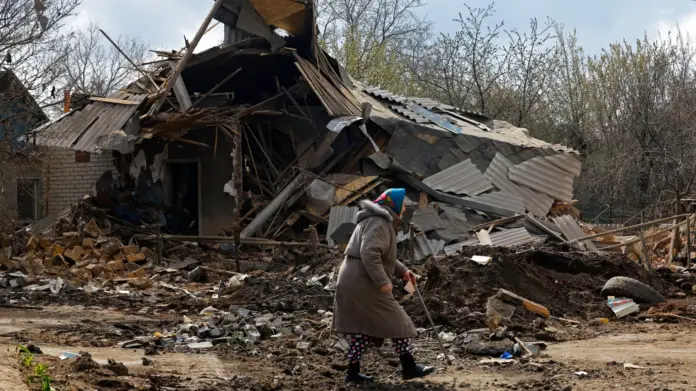
Violence extended beyond the front lines. A Russian drone struck an ambulance in Ukraine’s Sumy region overnight, wounding three medics. Russian forces also mounted 28 separate attacks during the ceasefire period and launched close to 2,000 drone strikes — though Ukraine’s military noted that bombs and missiles were not deployed during the truce window.
Russia, for its part, accused Ukraine of launching three overnight attacks on positions near Pokrovsk and Otradne in the Dnipropetrovsk region, and claimed to have repelled four Ukrainian attempts to advance in the Sumy and Donetsk regions.
Against this backdrop of sustained hostilities, President Volodymyr Zelensky had struck a cautiously hopeful tone at the outset, describing Easter as a time of peace and pledging that Ukrainian forces would respond symmetrically to any Russian aggression. Zelensky expressed hope that the truce could be extended beyond the Easter period to create conditions for meaningful peace negotiations. Moscow flatly rejected that proposal, with Russian officials confirming that full-scale military operations would resume on Monday.
One tangible outcome of the brief pause was a prisoner exchange. Both sides released 175 prisoners of war on Saturday, with seven civilians included in each transfer — a rare moment of bilateral cooperation in a conflict that has ground on since Russia’s full-scale invasion in 2022. Putin had long resisted Ukrainian and international calls for even a temporary halt to fighting, though earlier this year he agreed to suspend strikes on energy infrastructure following a request from the United States.
The failure of the Easter truce dims already fragile prospects for a negotiated settlement. Zelensky’s government has repeatedly sought internationally mediated ceasefires, while Russia has shown little appetite for pauses that could allow Ukrainian forces to regroup. The execution allegations, if substantiated, are likely to further harden positions on both sides and draw renewed scrutiny from international legal bodies monitoring conduct during the conflict.
The war, now in its fourth year, has claimed tens of thousands of lives and displaced millions of Ukrainians. Saturday’s events illustrated the vast distance between the two sides — not only on the battlefield, but in their willingness to observe even the most symbolically significant of humanitarian pauses.