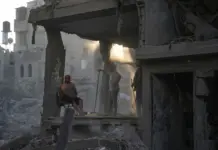
Israeli drone strikes and artillery fire killed at least seven Palestinians and wounded more than a dozen others across the Gaza Strip, with attacks targeting a refugee camp in central Gaza and a tent sheltering displaced civilians in the south.
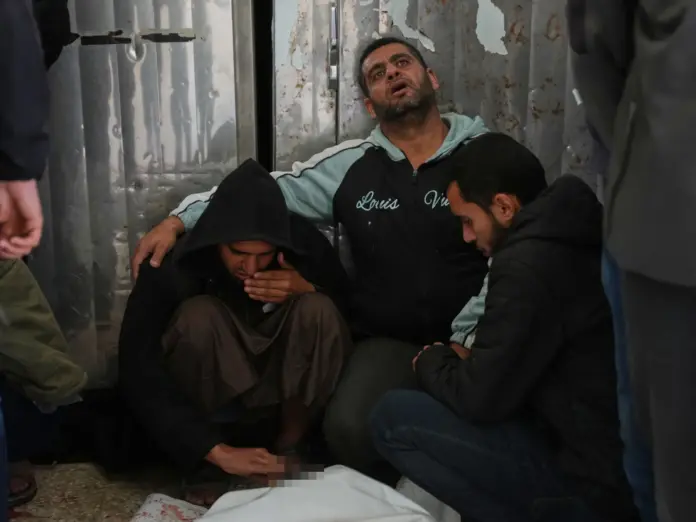
A drone fired two missiles near a police post in the Bureij refugee camp in central Gaza, striking a group of civilians gathered in the area known as Block 9. Al-Aqsa Hospital in central Gaza received six bodies and seven wounded individuals from the strike, four of whom were listed in critical condition. A separate fatality and two additional wounded were transferred to Al-Awda Hospital.
In southern Gaza, an Israeli drone struck a tent housing displaced people in Bani Suheila, east of Khan Younis. Three wounded survivors were transported to Nasser Medical Complex for treatment. Israeli artillery shelling and heavy tank fire were also reported near Bani Suheila and east of Gaza City, compounding the toll on civilian infrastructure already strained by months of sustained conflict.
The Gaza Ministry of Health reports that more than 72,300 people have been killed since the war began in October 2023. At least 738 of those deaths have occurred since a ceasefire went into effect, with 32 fatalities recorded in April alone — a figure that underscores the fragility of any pause in hostilities. Among the dead this week was Mohammed Wishah, a journalist working in Gaza, who was killed in an attack west of Gaza City.
UN human rights chief Volker Türk issued a sharp condemnation of Israel’s recent military conduct in Gaza on Friday, adding his voice to a growing chorus of international criticism over the scale and targeting of strikes in densely populated civilian areas.
Violence was not confined to Gaza. Across the West Bank, Israeli military forces arrested seven people east of Qalqilya and conducted a separate operation near Bir al-Basha, close to Jenin, where soldiers detained residents during a raid on the community.
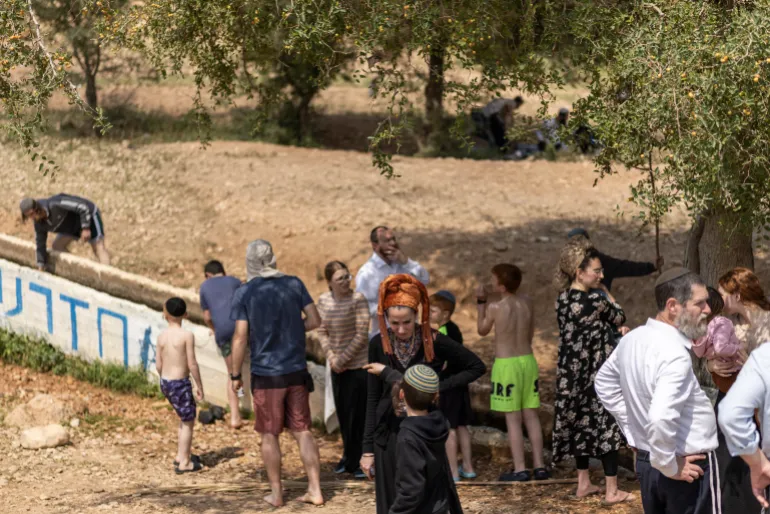
Israeli settlers also carried out a series of provocative actions in the occupied territory. In al-Maniya, southeast of Bethlehem, settlers moved through residential streets shining spotlights directly into homes. In Duma village in the Nablus governorate, settlers set fire to a house. Residents managed to contain the blaze before it spread to neighbouring properties, according to village council head Suleiman Dawabsheh.
The settler activity comes amid fresh controversy over Israeli settlement expansion. Israel secretly approved 34 new illegal settlements in the West Bank, bringing the total number endorsed since Prime Minister Benjamin Netanyahu’s government took power in late 2022 to 68. The approvals drew swift condemnation from the European Union, Türkiye, Sweden, and the Organisation of Islamic Cooperation, all of which called the move a violation of international law and an obstacle to any future peace process.
The surge in violence on multiple fronts arrives against a backdrop of tense diplomatic manoeuvring in the region. US Vice President JD Vance arrived in Islamabad for conditional peace talks involving American and Iranian envoys, signalling a potential diplomatic opening even as hostilities continue. Vance issued a pointed warning to Tehran not to exploit the negotiations, while President Trump made separate statements regarding the strategic importance of the Strait of Hormuz. Iran’s parliamentary speaker indicated that any substantive talks would require a ceasefire in Lebanon as a precondition.
On the ground in Gaza, civil defence rescue teams continue to operate under extreme pressure. Mahmoud Bassal, spokesman for Gaza’s civil defence rescue service, has been among those documenting the human cost of the ongoing strikes as emergency responders struggle to reach casualties in areas where active military operations are underway.
The pattern of strikes on civilian infrastructure — tents housing displaced families, refugee camps, and areas adjacent to medical facilities — has drawn sustained scrutiny from human rights organisations monitoring the conflict. With the death toll climbing and diplomatic efforts still at an early stage, the prospect of a durable halt to the violence remains uncertain.