The World Health Organization suspended all medical evacuations of sick and wounded Palestinians from Gaza through the Rafah crossing into Egypt on Monday, after Israeli troops fatally shot a WHO contractor whose vehicle was part of a coordinated patient transfer convoy in southern Gaza.
The contractor, Majdi Aslan, 54, was killed when Israeli forces opened fire on the vehicle he was driving. A colleague, Raed Aslan, said the vehicle bore the WHO logo prominently on all sides and was positioned at the front of an organised convoy transporting patients toward the Rafah crossing when it came under fire from an Israeli tank. Three people were inside the vehicle at the time. Two WHO staff members present during the incident escaped without physical injury.
WHO Director-General Tedros Adhanom Ghebreyesus described the killing as a "security incident" and confirmed the suspension of evacuations until further notice. Hanan Balkhy, WHO's regional director, called it "a devastating loss." Dr Fathi al-Lulu, a medic at al-Aqsa hospital, said Majdi Aslan was actively coordinating the transfer of patients from Gaza to Egypt when he was targeted.
The Israeli military offered a different account of events. Its forces said they identified an unmarked vehicle approaching their position and the Yellow Line, which they assessed as posing an immediate threat. Troops fired warning shots, but the vehicle continued to accelerate toward them, prompting further fire that struck it. The military said the incident is under review. The account directly conflicts with testimony from Raed Aslan, who insisted the vehicle was clearly identified as a WHO-affiliated vehicle on all sides.
Gaza's Hamas-run health ministry said the contractor was driving a WHO-rented vehicle when it was targeted by Israeli forces, adding its voice to calls for accountability.
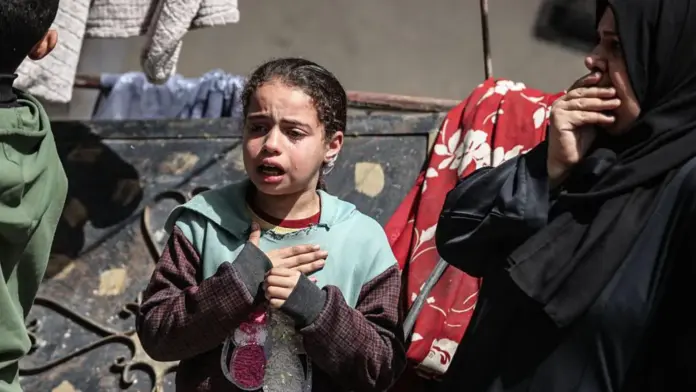
The suspension of evacuations carries severe humanitarian consequences. More than 18,000 Palestinian patients are currently waiting to leave Gaza for medical treatment, according to local hospitals and the WHO. The Rafah crossing — the primary gateway for medical evacuations — has had a turbulent recent history. Israeli forces seized the Gazan side of the crossing in May 2024, keeping it largely closed for months. It reopened in early February as part of a ceasefire agreement reached in October between Israel and Hamas, only to be shut again on 28 February following the start of US-Israeli military operations against Iran. The crossing reopened after 20 days of closure.
Despite the crossing's intermittent availability, movement has been severely limited. The Israeli military coordination body Cogat said approximately 1,150 people have exited Gaza through Rafah over the past two months, with a similar number entering the territory during the same period — figures that underscore the bottleneck facing tens of thousands of patients in urgent need of care.
The broader security environment in Gaza remains deeply unstable. At least 733 Palestinians have been killed in the territory since the ceasefire took effect on 10 October, according to Gaza's health ministry. The Israeli military has reported that five of its soldiers have been killed in attacks by Palestinian armed groups during the same period.
Monday's killing of a clearly identified humanitarian worker is likely to intensify international pressure on Israel over its rules of engagement in areas where aid operations are active. The WHO has not indicated when evacuations might resume, leaving thousands of critically ill Palestinians in limbo as the organisation demands clarity and accountability from Israeli authorities over the circumstances of Majdi Aslan's death.