Ukraine has fundamentally shifted the momentum of the war in its favour, slowing Russian territorial advances to their lowest rate since the full-scale invasion began while simultaneously striking deep into Russia’s energy and defence industrial base with an expanding fleet of long-range drones.
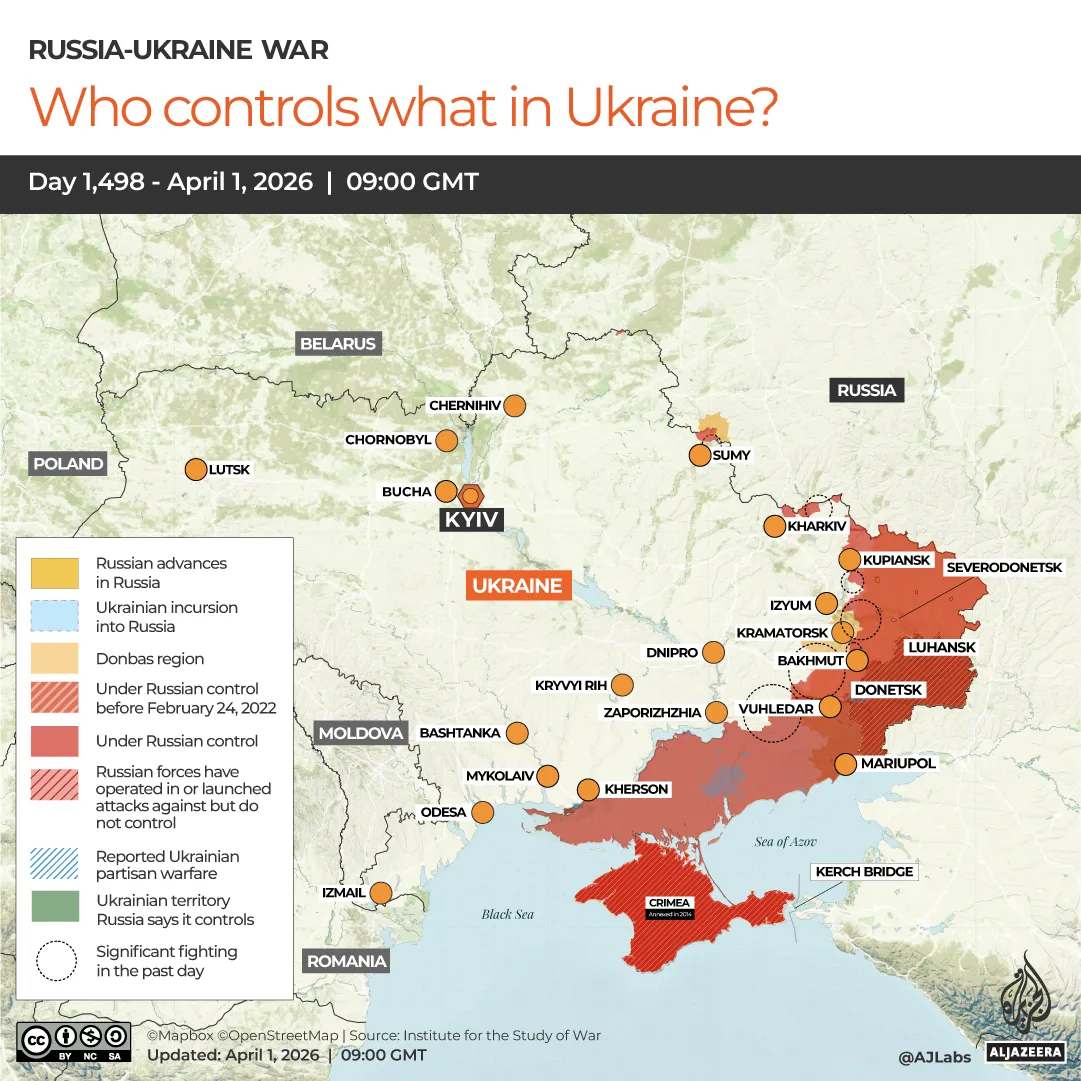
Russian forces, which were advancing at 14.9 square kilometres per day between October 2024 and March 2025, have seen that pace collapse to just 5.5 square kilometres per day in the first three months of 2026 — a reduction of more than 60 percent over 18 months, according to assessments by the Institute for the Study of War. Ukraine has simultaneously reclaimed 470 square kilometres of occupied territory in 2026, its first meaningful territorial recovery since 2023. The ISW independently confirmed the liberation of at least 334 square kilometres. Among the recaptured areas is the village of Berezove, near the border of the Donetsk and Dnipropetrovsk regions, which Ukraine’s Air Assault Forces Command reported liberating on March 26.
Commander-in-chief Oleksandr Syrskii attributed the battlefield reversal in large part to Ukraine’s drone warfare programme. First-person view remote-controlled drones now account for 90 percent of Russian casualties, he said, adding that combat sorties by drone interceptors surged nearly 55 percent in March compared to February. Defence Minister Mykhailo Fedorov underscored the scale of the investment: purchases of engineering mines and drone ammunition in the first quarter of 2026 already exceeded half of all such procurement across the entirety of 2025.
Ukraine has also tested a new generation of bomber drones capable of penetrating 20 kilometres through active electronic warfare environments while carrying payloads of tens of kilogrammes — a significant leap in both range and lethality that signals further escalation of Ukraine’s long-range strike capability.
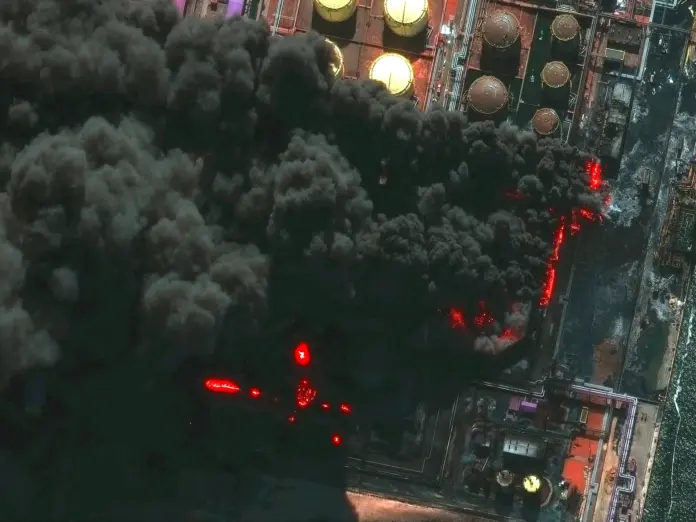
That capability was on full display in a sustained campaign against Russia’s Baltic Sea oil export infrastructure. Beginning on the night of March 20-21, Ukrainian drones began striking the terminals at Ust-Luga and Primorsk, which together handle roughly 60 percent of Russia’s seaborne crude exports. By Wednesday, Ust-Luga had been effectively shut down through continued strikes, and further attacks on both terminals followed on March 27. The economic damage has been severe: Russia’s oil exports fell from 4.072 million to 2.318 million barrels per day, with one estimate placing the loss of export capacity at approximately 40 percent.
Ukraine extended its strikes inland on March 27 and the following day, hitting the Kirishi and Yaroslavl refineries. Those two facilities, along with refineries in Moscow and Ryazan, collectively process around 55 million metric tons of crude oil annually. A separate strike using Flamingo drones targeted the Promsintez explosives plant in the Samara region, a facility that produces 30,000 tonnes of military explosives each year. Andriy Kovalenko, a senior Ukrainian security official, assessed that cumulative Ukrainian strikes have now destroyed roughly 45 percent of Russia’s missile production capacity.
Russia has responded by dramatically escalating its own drone campaign. Beginning March 24, Russian forces abandoned their previous practice of restricting drone attacks to overnight hours, launching strikes throughout the day. On Wednesday alone, Russia sent 339 drones overnight followed by 361 during daylight hours. Ukrainian air defences intercepted more than 90 percent of the incoming drones.
The pressure on Russia’s military manpower is also becoming visible domestically. On March 20, the governor of the Ryazan region, Pavel Malkov, signed a decree compelling businesses with at least 150 employees to identify between two and five workers to sign military contracts — an indication of the strain that sustained casualties are placing on Russia’s recruitment pipeline.
President Volodymyr Zelenskyy declared on Friday that the front-line situation is the best it has been in ten months, a statement underpinned by the convergence of slowing Russian advances, territorial recovery, and the deepening campaign against Russian infrastructure.
Ukraine is also moving aggressively to expand its drone industrial base through international partnerships. Zelenskyy concluded agreements with Saudi Arabia, the United Arab Emirates, and Qatar covering drone technology transfer and joint production. Discussions are ongoing with Kuwait, Iraq, and Bahrain on similar cooperation arrangements. The Gulf partnerships represent a significant broadening of Ukraine’s defence industrial network beyond its traditional Western allies, and could accelerate the production of the very systems now proving decisive on the battlefield.
The convergence of a slowing Russian advance, territorial recovery, a crippled Russian energy export sector, and expanding drone production partnerships marks a strategic inflection point — one that Kyiv is moving quickly to consolidate before any potential diplomatic process reshapes the conditions on the ground.