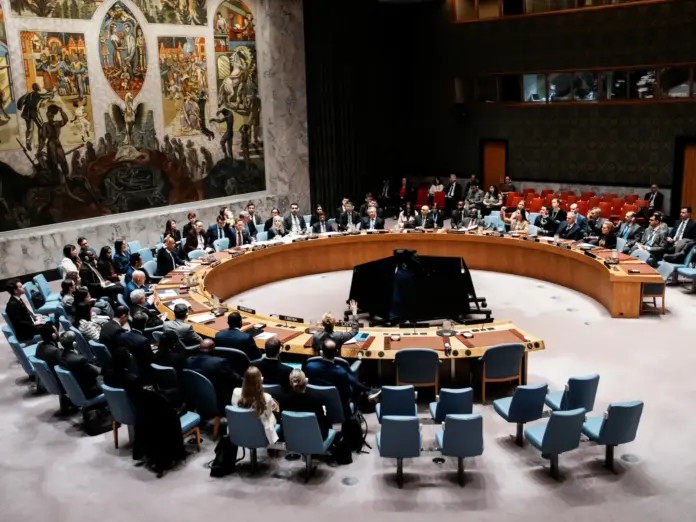
The Gulf Cooperation Council escalated its diplomatic offensive Thursday, demanding the UN Security Council take immediate action to stop a wave of Iranian missile and drone strikes that have battered civilian infrastructure across the Gulf since the United States and Israel launched a war against Iran on February 28.
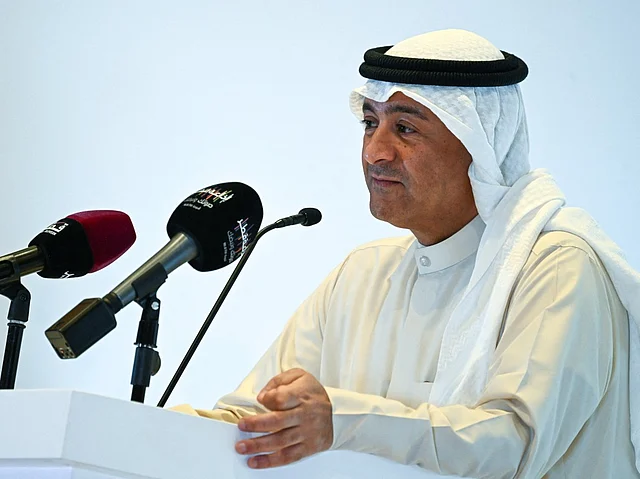
Speaking before the Security Council, GCC Secretary-General Jassim al-Budaiwi characterised Iran’s daily attacks as a ‘flagrant violation’ of international law and the United Nations Charter, urging the body to ‘take all necessary measures’ to bring the strikes to an end. He also pressed for the protection of maritime corridors and the guarantee of uninterrupted navigation through strategic waterways — a demand carrying enormous urgency given that Iran has effectively closed the Strait of Hormuz, through which roughly one-fifth of the world’s oil and liquefied natural gas supplies normally flow. The closure has sent global energy prices sharply higher.
Al-Budaiwi made clear that the six GCC member states — Saudi Arabia, Qatar, Bahrain, Oman, Kuwait, and the United Arab Emirates — must be included in any negotiations or agreements reached with Tehran. The bloc had worked for months before the conflict erupted to prevent it from occurring, and frustrations across the Gulf are now mounting as the fighting continues with no immediate end in sight.
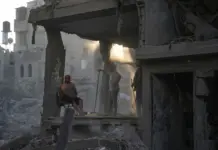
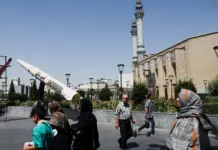
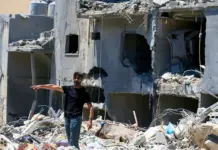
The human and material toll on GCC nations has been severe. Iranian strikes have hit oil facilities, service installations, and residential areas throughout the region. A striking 85 percent of all projectiles fired by Iran have landed on GCC territory, with the UAE sustaining the heaviest damage of any member state. Iranian officials maintain they are acting in self-defence, describing their targets as sites linked to the United States and Israel.
The Security Council address came alongside an emergency videoconference between the foreign ministers of GCC countries and the European Union, convened in Brussels. Dr. Abdullatif bin Rashid Alzayani, Bahrain’s Foreign Affairs Minister and current Chairman of the GCC Ministerial Council, led the Gulf side of the talks. The EU delegation was headed by Kaja Kallas, the bloc’s High Representative for Foreign Affairs and Security Policy and Vice-President of the European Commission, joined by Dubravka Šuica, European Commissioner for Mediterranean affairs.
The joint statement that emerged from the meeting condemned Iranian attacks on GCC states in unambiguous terms and called on Tehran to halt them immediately. Ministers invoked Article 51 of the United Nations Charter, affirming the right of GCC states to defend themselves against ongoing aggression. They also agreed to intensify coordinated diplomatic efforts aimed at preventing Iran from acquiring nuclear weapons and at stopping the production and proliferation of ballistic missiles and drones.
The GCC states, for their part, committed not to allow their territories to be used as launching grounds for attacks against Iran — a pledge designed to underscore the bloc’s defensive posture and its preference for a negotiated resolution. Oman received specific praise from both sides for its constructive role in sustaining dialogue and diplomacy throughout the crisis.
Both the GCC and EU underscored the strategic importance of keeping the Strait of Hormuz and the Bab al-Mandab open to international shipping. The EU’s existing naval operations — Aspides and Atalanta — were highlighted as active instruments for protecting vital sea lanes. Ministers agreed that energy security and nuclear safety in the region require urgent attention, warning that instability in the Gulf carries direct consequences for the global economy.
The EU also expressed gratitude to GCC member states for the hospitality and assistance extended to European Union citizens caught in the conflict zone.
The GCC and EU have maintained formal cooperative ties since the GCC-EU Cooperation Agreement was signed in 1988, with relations deepening at a Brussels Summit held as recently as October 2024. Thursday’s emergency session reflected the degree to which the current conflict has accelerated the urgency of that partnership, as both blocs seek to contain a war neither wanted and both had tried to prevent.