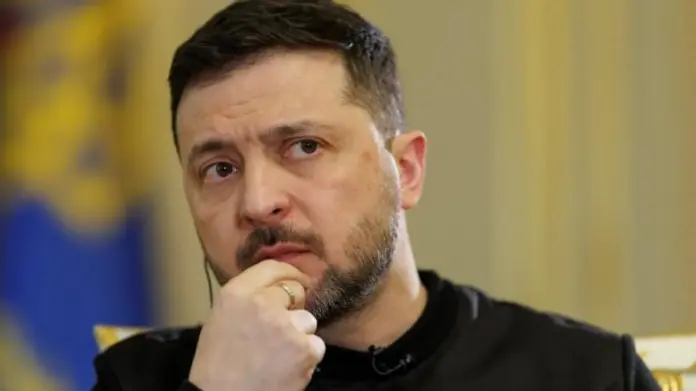
Kyiv — Ukrainian President Volodymyr Zelensky has revealed that unnamed allies have pressed him to reduce Ukraine’s strikes on Russian energy infrastructure, a request he flatly rejected, insisting that Kyiv will stand down only if Moscow stops targeting Ukraine’s power grid first.
Zelensky delivered the remarks via a WhatsApp voice message to journalists on Saturday, shortly after completing a diplomatic tour of the Gulf region that included stops in Saudi Arabia, the United Arab Emirates, Qatar and Jordan. He declined to identify which partners had made the request, but the disclosure underscores the growing tension between Ukraine’s military strategy and the economic anxieties of its supporters.
"If Russia stops attacks on Ukraine’s energy sector, Ukraine will not retaliate with attacks on Russia’s energy sector," Zelensky said, framing the issue as one of reciprocity rather than restraint. He also reiterated that Ukraine remains ready for any ceasefire.
The statement arrives at a moment of acute energy market sensitivity. Global oil prices have continued to climb, driven in part by the war in Iran and Tehran‘s effective closure of the Strait of Hormuz. Ukraine has openly acknowledged that its intensified campaign against Russian energy infrastructure is designed, at least in part, to prevent Moscow from capitalising on those elevated prices.
Over the past week alone, Ukrainian drones struck multiple Russian refineries and export terminals. Zelensky claimed that a strike on the Ust-Luga oil export terminal near St Petersburg knocked out 60 percent of the port’s operational capacity — a significant blow to Russia’s ability to ship crude to its largest customers.
Those customers remain deeply invested in the status quo. China and India together accounted for 85 percent of Russian crude oil exports in February, according to data from the Centre for Research on Energy and Clean Air. The European Union, despite years of stated ambitions to reduce dependency, remains the largest buyer of Russian gas at 34 percent of imports and Russian liquefied natural gas at 49 percent — figures that help explain why some European capitals may be reluctant to see energy infrastructure become a sustained theatre of the war.
For Ukraine itself, the energy war cuts both ways. Russia’s relentless bombing campaign has left more than a million people without electricity and heating during one of the coldest winters in recent memory. Ukrainian oil refineries have been systematically targeted, forcing the country to rely heavily on fuel imports routed through Poland, Greece, Lithuania and Turkey. Nearly half of Ukraine’s gas imports once flowed through Hungary, a route now complicated by Budapest’s accusation that Kyiv has deliberately stalled repairs to the pipeline carrying Russian oil.
Zelensky insisted the Ukrainian military currently has sufficient fuel supplies, a claim intended to reassure both domestic audiences and international partners concerned about battlefield readiness.
During his Gulf tour, Zelensky pursued a dual agenda: seeking assistance in defending Ukraine against Russian missile attacks while simultaneously offering Ukrainian drone technology and expertise to regional partners. The outreach reflects Kyiv’s broader effort to diversify its security relationships beyond its traditional Western backers at a time when political support in some capitals shows signs of fatigue.
The energy dimension of the conflict has grown considerably more complex since fighting escalated in the Middle East. Ukraine stepped up its strikes on Russian energy infrastructure after that conflict began, calculating that tighter global supply would amplify the economic damage inflicted on Moscow. The United States has meanwhile eased some of the sanctions it previously imposed on Russian oil, a move that has added another layer of friction to the alliance’s energy calculus.
Ukraine’s record in the economic dimensions of the war is not without precedent for resilience. Kyiv successfully resisted Russian attempts to blockade its grain exports via the Black Sea, a campaign that had threatened food supplies across multiple continents. Whether it can sustain a similar posture on energy — against both Russian firepower and allied diplomatic pressure — will be one of the defining tests of the war’s next phase.