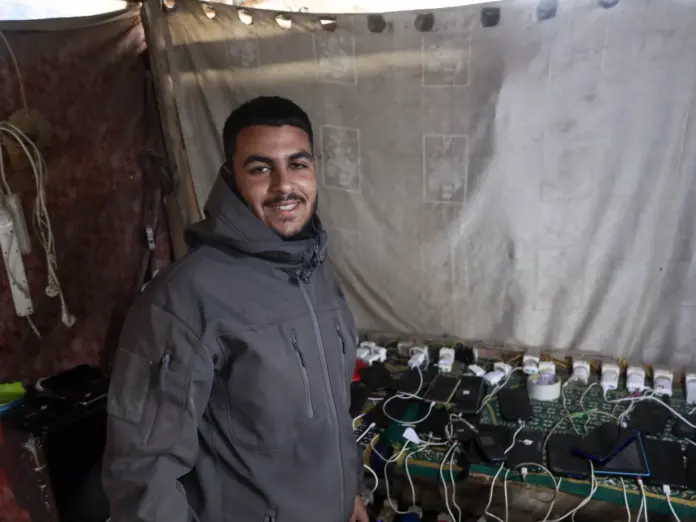
In a narrow alley in Deir el-Balah, central Gaza, Abdel Karim Salman walks up to 200 metres every morning to reach the nearest phone-charging point. The 28-year-old former civil engineer from Beit Lahiya municipality in northern Gaza has made this journey every day for more than a year, paying between 2 and 4 shekels — roughly 65 cents to $1.30 — each time he plugs in his device. Over a month, those small payments accumulate to between 270 and 300 shekels, or $86 to $95, a significant burden for a man who no longer has a salary, a home, or a city to return to.
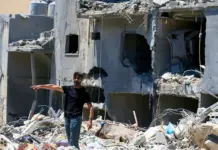
Abdel Karim’s family house in Beit Lahiya was destroyed on October 9, 2023, two days after Hamas launched its attack on southern Israel that triggered the current war. He fled south with his wife, two children, and roughly 30 members of his extended family, eventually settling in Deir el-Balah. Like the vast majority of Gaza’s population, he has had no access to municipal electricity since the early days of the conflict. Gaza’s main power plant ran out of fuel and shut down within days of October 7. By October 11, United Nations agencies confirmed the territory had entered a full electricity blackout — one from which it has never recovered.
That blackout is now entering its third year. Municipality-supplied electricity has been absent for two years across Gaza, and the strip’s primary generation capacity remains at zero. Where power does reach homes, it arrives in windows of fewer than four hours daily, concentrated in early morning and evening hours. Rebuilding the grid to pre-war standards would require more than three billion dollars in reconstruction investment, according to international development assessments — a figure that underscores how distant any systemic solution remains.
Into this void, a fragile informal energy economy has taken shape. Across Deir el-Balah and other parts of the strip, small operators run solar-powered charging stations from storefronts and courtyards, selling electricity by the device. Jamal Musbah, 50, is one of them. Before the war, he farmed two agricultural plots on the eastern edges of Deir el-Balah. Both have since been bulldozed and now fall under Israeli military control. With his livelihood gone, Jamal converted what remained of his pre-war solar installation into a commercial charging station, the primary income source for himself, his eight children, and his university-educated sons who now work alongside him.
His setup is a study in wartime attrition. Before October 2023, Jamal operated six solar panels, a battery bank, and a water pumping device. A strike on a neighbouring property destroyed four of those panels. He now runs the station on two panels and a single battery, charging customers 1 to 2 shekels per phone. At its peak, the station handled between 100 and 200 devices daily. Today, it manages 50 to 60 at most.
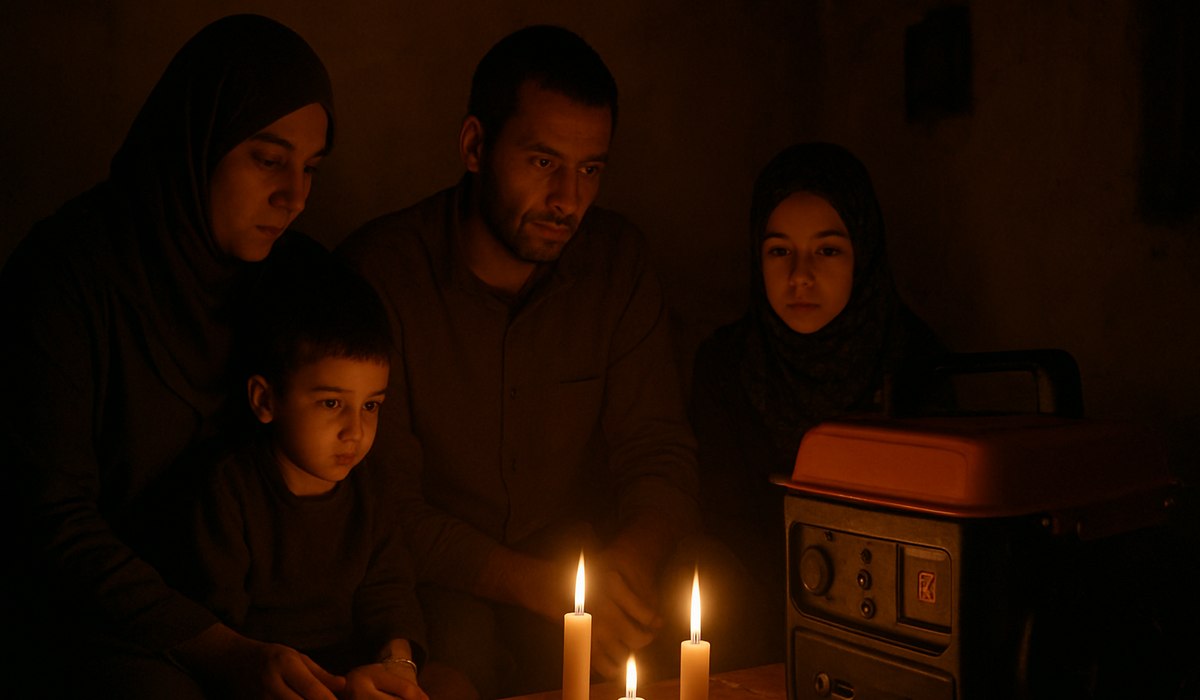
The economics of survival energy are punishing for consumers. Solar-powered lamps that once sold for modest sums now cost around 300 shekels — approximately $95 — after prices increased tenfold during the war. A single solar panel costs $420; a battery system runs to roughly $1,200, with inverter costs on top. Full solar installations range from $800 to $2,000, well beyond the reach of most families in a territory where the majority of residents earn less than $500 per month and youth unemployment exceeds 60 percent. Solar panels are present in only about five percent of Gaza households. Elsewhere, diesel generators shared among five to ten families have become the default, with fuel costs consuming between 30 and 60 percent of household income.
The consequences of the power collapse extend across every critical system in Gaza. The World Health Organization has documented that hospital generators operate on rationed fuel, forcing surgical teams to schedule operations around fuel availability rather than medical need. Dialysis centres run on reduced schedules. Vaccine refrigeration fails periodically, undermining immunisation campaigns. Water treatment facilities cannot function reliably without consistent power, compounding the public health emergency in a territory where more than 75,000 Palestinians have been killed since the war began.
Israel’s siege declaration, issued immediately after the October 7 attack, cut electricity supply to Gaza and blocked fuel imports. Israel had withdrawn its settlements from the territory in 2005 but retained control over its borders, airspace, and coastal waters. That control has shaped every dimension of the current crisis, including the supply chain disruptions that prevent replacement equipment and maintenance materials from reaching the strip’s improvised energy operators.
Community-based generator cooperatives have emerged in some neighbourhoods as residents pool resources to share costs. Egypt’s power grid has been identified as one potential external solution to Gaza’s energy deficit, though no concrete connection has been established. International tourism, once a marginal but present feature of Gaza’s economy, remains entirely suspended.
For Abdel Karim Salman, the daily walk to the charging point is both a practical necessity and a marker of how completely ordinary life has been dismantled. His phone connects him to family members scattered across the strip, to information about aid distributions, and to whatever remains of the world outside. Keeping it charged costs him nearly $95 a month — almost the entire price of one of those tenfold-inflated solar lamps — with no end to the calculation in sight.