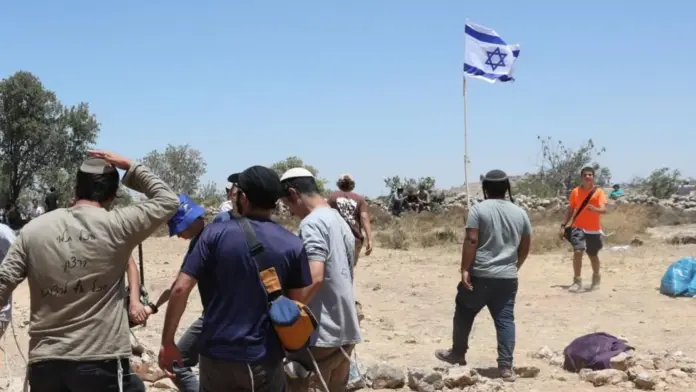
WEST BANK — A Palestinian man was shot dead near Bethlehem after settlers returned to rebuild an outpost on his family’s land, becoming the seventh Palestinian killed in a surge of settler violence that has gripped the occupied West Bank since late February.
Mohammad al-Malhi was struck in the head by gunfire as settlers reassembled an unauthorised outpost they had erected on land belonging to his family. Israeli soldiers had arrived earlier to dismantle the structure, but once they departed, the settlers returned to reconstruct it — and the shooting followed. The Israel Defense Forces confirmed a confrontation between settlers and Palestinians in which an Israeli civilian opened fire, killing one person and wounding three others.
The killing was not an isolated incident. In the northern village of Tayasir, near Tubas, settlers raided the community and shot at young men who attempted to confront them. A 75-year-old man was attacked inside his own home, left bruised and bloodied by the assault.
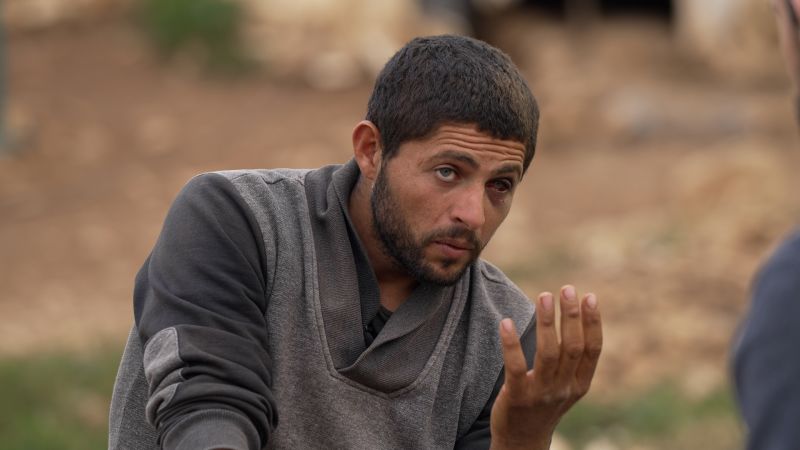
Perhaps the most disturbing account to emerge from the current wave of violence involves Qusai Abu al-Kebash, a 29-year-old shepherd whose village was stormed in the middle of the night by masked settlers armed with clubs and knives. The attackers bound Abu al-Kebash by his hands and legs, stripped him, zip-tied his genitals, and paraded him through his community while beating him. His wife, cousins, and father were also restrained and beaten. The settlers poured water and dirt over family members, threatened to rape the women, and struck children. Abu al-Kebash and six relatives were subsequently hospitalised.
Before leaving, the settlers stole hundreds of Abu al-Kebash’s sheep, broke the village’s security cameras, cut the electricity supply, and confiscated every phone they could find. Two foreign activists with the International Solidarity Movement — a 24-year-old American and a 25-year-old Portuguese national — were present and witnessed the assault.

The current surge follows a pattern that first emerged during the Gaza war, which was triggered by Hamas-led attacks on Israel in October 2023. Since that conflict began, settler violence in the West Bank has escalated sharply, with Palestinian communities reporting attacks on people, property, and livestock with increasing frequency and severity.
The violence unfolds against a backdrop of accelerating settlement expansion. The Israeli security cabinet this week retroactively legalised 30 settler outposts across the West Bank — structures that had previously existed without government approval. Last year set a record for the most extensive expansion of settlements and planning approvals since United Nations monitoring began. Israel has constructed approximately 160 settlements across the West Bank and East Jerusalem since occupying those territories during the 1967 Middle East war. Those settlements now house roughly 700,000 Jewish Israelis, while an estimated 3.3 million Palestinians live in the same territory.
Under international law, all Israeli settlements in the occupied territories are considered illegal. Outposts — structures erected without even Israeli government authorisation — occupy a further legal grey zone, though Israeli law also formally prohibits Israeli citizens from entering areas under full Palestinian Authority control. Despite this, multiple new outposts have been established in such areas in recent days alone. Israeli forces have removed some of them, while others remain standing.
The combination of state-sanctioned settlement expansion and unchecked settler violence has drawn renewed international concern. Critics argue that the retroactive legalisation of outposts sends a permissive signal to settlers operating outside the law, effectively rewarding land seizures carried out through intimidation and force. With the death toll among Palestinians rising and attacks growing more severe, pressure is mounting on Israeli authorities to demonstrate that civilian perpetrators of violence will face meaningful legal consequences.