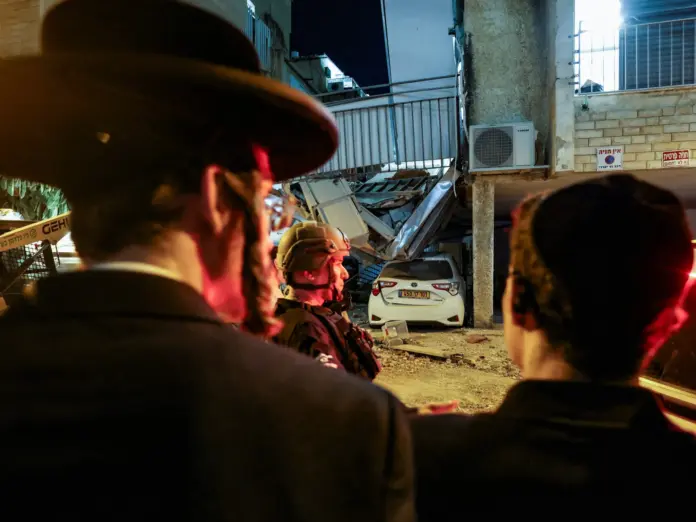
Schools are shuttered. Cultural venues stand dark. Large public gatherings are banned by police order. Across Israel, the rhythms of daily life have been reshaped by a war with Iran that sends air raid sirens wailing over Tel Aviv on a near-daily basis — and that the government is working hard to control the narrative around.
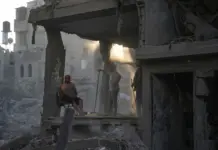
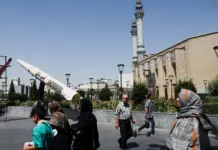
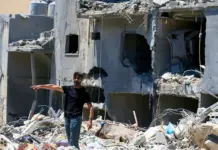
On Tuesday, missiles struck Tel Aviv with enough force to tear gaping holes in a multistorey apartment building. Magen David Adom, Israel’s emergency medical service, reported six people lightly injured across four separate sites from that single barrage. It was not an isolated incident. Iran has launched multiple missile salvos at Tel Aviv, and the cadence of attacks has become a grim fixture of Israeli life.
Yet what Israelis are permitted to know about those strikes is increasingly circumscribed. On March 5, new wartime restrictions came into force limiting media coverage of Iranian missile barrages — specifically barring journalists from reporting where missiles land, what they strike, and the extent of the damage they cause. The rules draw on a military censorship apparatus whose roots predate Israel’s founding in 1948.
The consequences for journalism have been immediate and documented. In one case, reporters were stopped by police from recording the actual target of an attack at a residential block. Coverage of debris hitting a nearby educational facility was permitted, but the successful strike on the intended military target close by was off-limits. The visible destruction, concentrated on a civilian building, became the story by default — the real story was suppressed.
Meron Rapoport, an editor at the Hebrew-language outlet Local Call — sister publication to the Israeli magazine +972 — is among those who have documented these instances of censorship. Journalists across the country describe an atmosphere not only of formal restriction but of self-policing, a pervasive caution that shapes editorial decisions before censors even intervene.
Against this backdrop, dissent remains a marginal but present force. The Israeli-Arab activist group Zazim, led by co-founder and executive director Raluca Ganea, has staged demonstrations against the war in central cities. Ganea has described the relentless pace of missile attacks as a defining feature of the current moment, even as the organisation pushes back against a conflict that commands strong majority support in Israeli polling.
That support has made opposition a socially costly position. Itamar Greenberg, a 19-year-old living near Tel Aviv, has spoken publicly against the war and paid a personal price for it. He reports being spat at in the street and denounced as a traitor or a terrorist by strangers. His experience reflects a broader social pressure that reinforces the formal restrictions on information — a dual silencing, institutional and communal.
The war is being prosecuted under the leadership of Prime Minister Benjamin Netanyahu, with the involvement of US President Donald Trump, both of whom are perceived by many ordinary Israelis as distant figures whose decisions reverberate through the daily lives of citizens absorbing missile strikes and navigating wartime restrictions.
The combination of military censorship, social conformity, and genuine public support for the war has created an environment in which the full picture of what is happening on Israeli soil remains deliberately obscured — even to those living through it. How many missiles have landed, where they have struck, and what they have destroyed are questions the Israeli state has decided its citizens do not need answered in full.
For journalists, activists, and the small number of Israelis willing to voice opposition, the war is being fought on two fronts simultaneously: one against Iranian missiles in the sky, and another over the right to know — and say — what those missiles are doing when they land.