The US-Israeli war with Iran, which began on March 18, 2026, has escalated into a confrontation threatening the foundations of international law, global energy markets, and the cohesion of the world’s most consequential emerging-economies bloc, as President Donald Trump issued stark warnings to Tehran over the closure of the Strait of Hormuz and attacks on Gulf energy infrastructure.
Trump threatened to ‘massively blow up’ Iran’s South Pars gas field — one of the world’s largest natural gas reserves — if Iranian forces carried out further strikes against Qatari energy sites. He went further, warning that the US would ‘obliterate’ Iranian power plants, beginning with the largest, should Tehran refuse to reopen the Strait of Hormuz, which has been effectively closed since the conflict began.
On Monday, Trump announced a five-day postponement of the threatened strikes, claiming Iran had entered negotiations. Iranian officials flatly denied any such talks were underway.
The threats drew immediate condemnation from Luis Moreno Ocampo, the founding chief prosecutor of the International Criminal Court, who declared the war on Iran constitutes a crime of aggression under international law. Moreno Ocampo argued that Iranian power plants and energy infrastructure do not qualify as legitimate military targets, drawing a direct parallel to Russia’s systematic strikes on Ukrainian energy sites — attacks widely condemned by Western governments. He added, however, that Iran’s own strikes on Gulf neighbours would equally be classified as crimes of aggression under the same legal framework.
The White House dismissed Moreno Ocampo’s assessment as ‘ridiculous,’ insisting Trump was acting to neutralise the threat posed by what it described as a ‘rogue, terrorist regime.’ US Ambassador to the United Nations Mike Waltz argued on CBS News that Iranian power plants are legitimate targets because the regime exploits critical infrastructure to repress its population and project force against neighbouring states.
Legal experts are unconvinced. Brian Finucane, a former State Department lawyer, said it would be difficult to construct a lawful justification for strikes on Iran’s energy facilities. Under the Rome Statute, intentionally directing attacks against civilian objects that serve no military purpose is defined as a war crime. Neither the United States, Israel, nor Iran are members of the ICC — a fact that limits the court’s direct jurisdiction but does not extinguish the legal debate. The Trump administration has previously sanctioned several ICC judges in response to investigations targeting the US and Israel.
The humanitarian stakes are considerable. Rights organisations warn that destroying Iranian power plants would be catastrophic for ordinary civilians, who are already enduring severe electricity shortages. Iran has threatened that any US strikes on its power infrastructure would trigger retaliatory attacks on the energy and water systems of its Gulf neighbours.
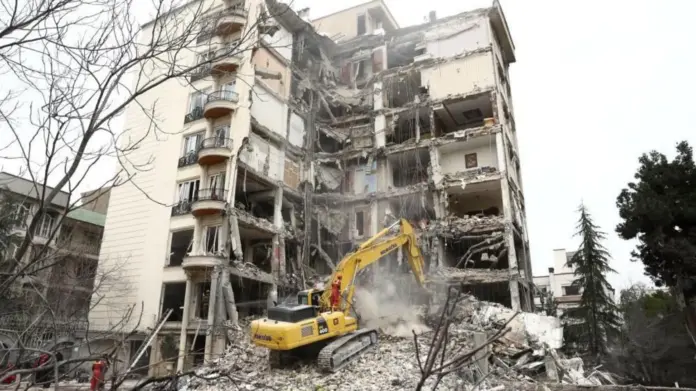
The conflict has already inflicted enormous damage on regional energy networks. The International Energy Agency reported that at least 40 energy assets across nine countries have been severely or very severely damaged since hostilities began. Iran has struck infrastructure in Qatar, the UAE, Saudi Arabia, Bahrain, Kuwait, Oman, Iraq and Israel. Israeli airstrikes have hit multiple fuel depots in and around Tehran. Missiles have landed in proximity to nuclear facilities in both Iran and Israel. The World Health Organisation described the conflict as being at a ‘perilous stage’ and called for immediate restraint. The UN Security Council has condemned Iran’s attacks on its Gulf neighbours.
Brian Katulis, a former national security official who served under both Democratic and Republican administrations, characterised Trump’s threats as emerging at a ‘very dicey moment for the international order.’ He argued that Washington’s failure to assemble a coalition to secure the Strait of Hormuz reflects a deeper erosion of trust among US allies.
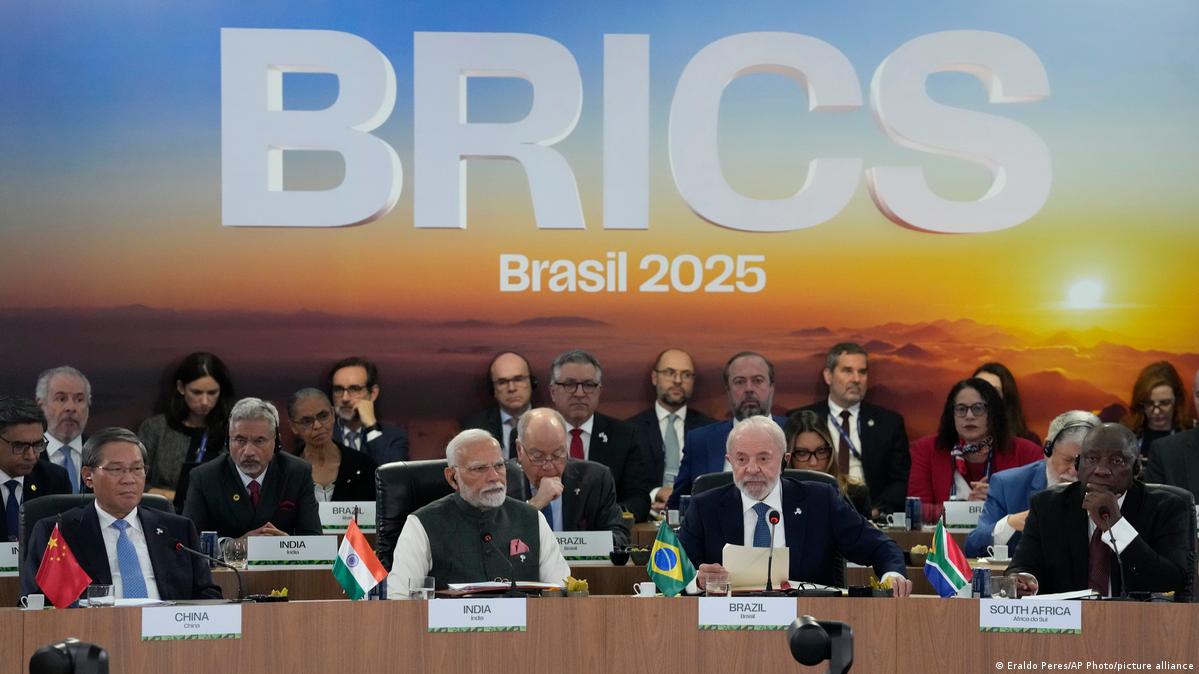
Against this backdrop, Iran has turned to BRICS — the bloc of 11 emerging economies that Tehran joined in 2024 — urging member states to condemn what it describes as military aggression. Iranian President Masoud Pezeshkian raised the issue directly with Indian Prime Minister Narendra Modi, while Iranian Foreign Minister Abbas Araghchi held multiple calls with Indian Foreign Minister S. Jaishankar pressing for BRICS intervention.
India, which currently chairs BRICS, faces an acutely uncomfortable position. Its energy imports are heavily dependent on the Strait of Hormuz, and Tehran has begun allowing India-flagged vessels to transit the waterway on a case-by-case basis — a gesture widely interpreted as leverage. Yet New Delhi has responded with characteristic caution, calling for restraint, de-escalation, and a return to dialogue. Indian Foreign Ministry spokesperson Randhir Jaiswal acknowledged that some BRICS members are directly involved in the West Asia situation, a pointed reference to the fact that Saudi Arabia and the UAE — both BRICS members and hosts of US military bases — have themselves been struck by Iranian forces and remain deeply wary of Tehran.
India defines BRICS as a non-Western economic club rather than an anti-Western security alliance, a distinction that makes consensus on a live military conflict extraordinarily difficult to achieve. The bloc’s expansion, which brought in Iran alongside Saudi Arabia and the UAE, has deepened internal fault lines that the Ukraine war previously exposed. India has been facilitating discussions among members through the Sherpa channel, but former Indian ambassador to the United States Meera Shankar and other analysts note that the bloc’s structural divisions make a unified response unlikely. The assassination of a BRICS head of state during the conflict has added another layer of volatility to an already fractured diplomatic landscape.
With the Strait of Hormuz closed, global oil markets in turmoil, and legal, diplomatic, and military pressures converging simultaneously, the conflict shows no sign of abating — and the international architecture designed to contain such crises is being tested as rarely before.