Iran’s Islamic Revolutionary Guard Corps struck central Israel with cluster missiles on March 17, killing two people and wounding several others in the Ramat Gan area near Tel Aviv, as a U.S.-Israeli war against Iran entered its fourth week with mounting civilian casualties on both sides.
The two victims were a couple in their 70s. Falling shrapnel from the attack injured additional bystanders and caused significant property damage, including at a Tel Aviv train station. Tehran framed the strike as retaliation for the assassination of Iranian security chief Ali Larijani.
In a separate wave of strikes, Iranian missiles hit the Israeli towns of Arad and Dimona — located close to a nuclear research centre — wounding at least 180 people and forcing hundreds of residents to evacuate. Iran described those attacks as a direct response to an Israeli strike on its Natanz nuclear facility in Isfahan province.
The Israeli Ministry of Health reports that more than 4,500 people have been wounded in Israel since the start of the current conflict. Both sides have also been accused of targeting or threatening water and electrical infrastructure on which civilians depend, as well as other violations of the laws of war.
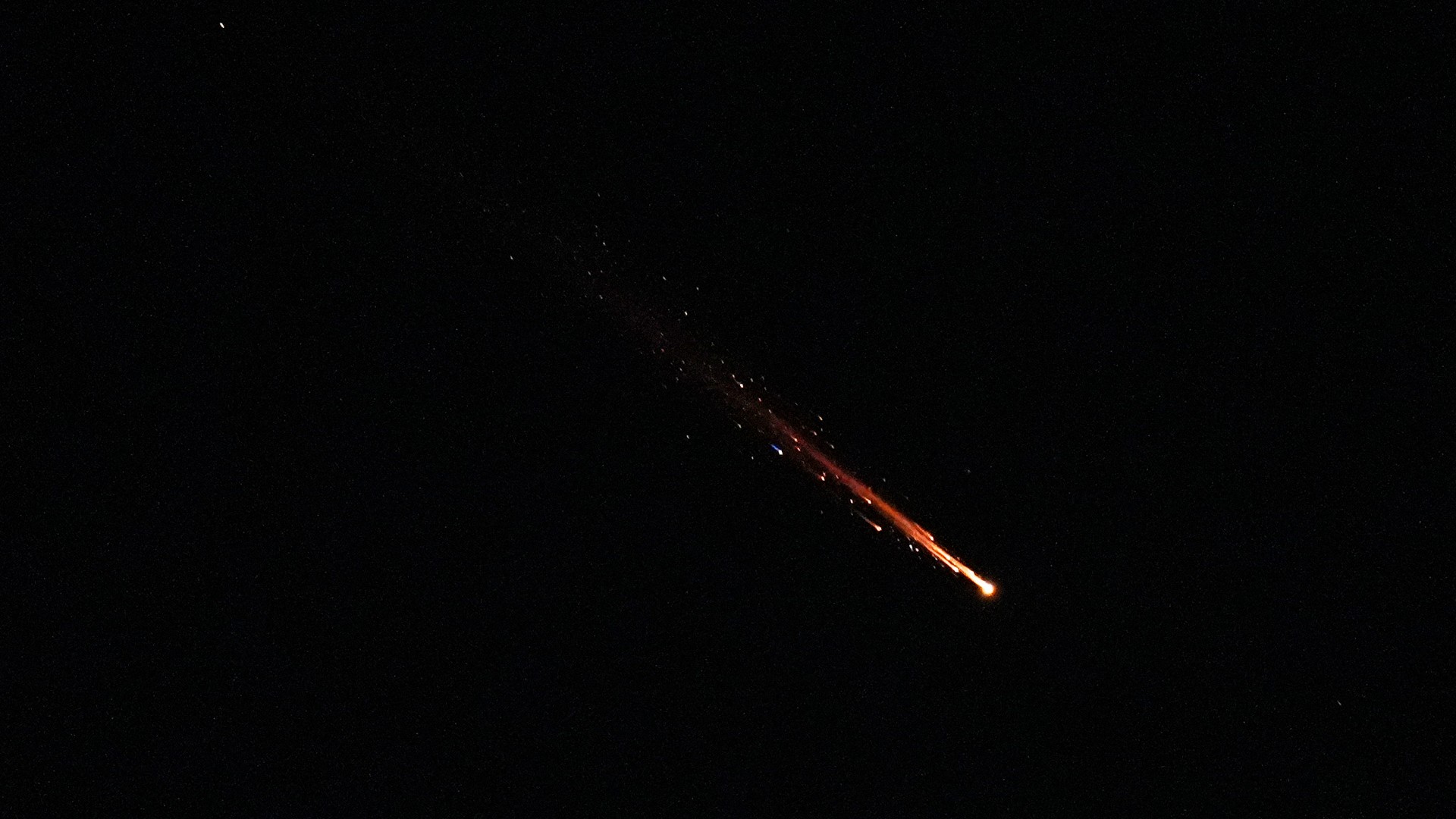
The use of cluster munitions by Iran has drawn particular condemnation. Cluster munitions are conventional weapons that split apart mid-flight, scattering dozens of smaller submunitions across a wide area rather than striking a single target. Missile defence analyst Uzi Rubin noted that Iranian cluster warheads can contain between 20 and 30 bomblets in some configurations, or as many as 70 to 80 in others, depending on the missile type deployed.
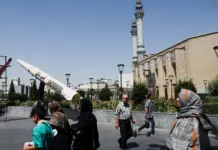
Iran fields a broad arsenal of medium- and long-range ballistic missiles capable of delivering such payloads, including the Shahab-3, Emad, Ghadr-1, multiple Khorramshahr variants, and the solid-fuelled Sejjil. Newer designs such as the Kheibar Shekan and Haj Qassem have also entered service. Iran’s longest-reaching ballistic missile, the Soumar, carries a range of 2,000 to 2,500 kilometres. Former Supreme Leader Ali Khamenei had previously capped Iranian missile ranges at 2,200 kilometres, but that restriction was lifted following Israel’s 12-day war in June.
The humanitarian risks posed by cluster munitions extend well beyond the immediate moment of impact. Many submunitions fail to detonate on contact, lying dormant in fields, roads, and residential areas long after fighting ends. Farmers, children, and anyone who inadvertently encounters them face potentially lethal consequences. The United Nations reported that civilians accounted for 93 percent of all global casualties from cluster munitions in 2023 — a stark illustration of their indiscriminate nature.
The legacy of such weapons is not abstract. During Israel’s 34-day bombing campaign in southern Lebanon in 2006, the United Nations warned that up to one million unexploded cluster bomblets had been left scattered across the ground. The following year, the Israeli army’s chief investigator, Major General Gershon HaCohen, concluded that the majority of cluster munitions had been fired at open and uninhabited areas — a finding disputed by humanitarian organisations at the time.
More recently, evidence presented in the UK Parliament in late 2024 indicated that Israel had been deploying cluster munitions during its invasion of Lebanon, with Elbit Systems, Israel’s largest arms manufacturer, identified as one of the producers of the weapons used.
The 2008 Convention on Cluster Munitions prohibits the use, production, transfer, and stockpiling of these weapons. To date, 111 countries have joined the treaty. Neither Israel nor Iran is a signatory — nor is the United States, which in 2023 authorised the transfer of cluster munitions to Ukraine for use in its war against Russia, a country that is also not party to the convention.
Some analysts argue that newer, more precise submunitions can be reliably directed at military objectives, reducing the risk to civilians. Critics counter that the weapons’ inherent scatter pattern makes such assurances difficult to verify in practice, particularly in or near populated areas.
The escalating exchange of strikes between Iran and Israel — encompassing ballistic missiles, cluster munitions, and attacks on sensitive infrastructure — has intensified pressure on the international community to enforce existing legal frameworks and, where those frameworks fall short, to strengthen them. Each documented violation, legal scholars note, can ultimately serve as a catalyst for clarifying the moral and legal principles that underpin the laws of armed conflict.