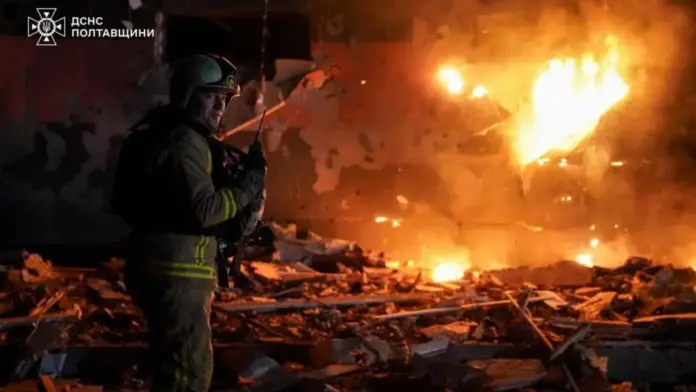
A sweeping Russian aerial bombardment struck at least eleven regions of Ukraine overnight into Tuesday, killing at least five civilians, wounding dozens more, and severing a vital energy connection between Moldova and the rest of Europe in one of the most intensive attacks in recent weeks.
Russia launched a combined arsenal of seven ballistic missiles, 23 cruise missiles, four air-launched guided missiles, and 392 drones in the assault. Ukrainian air defence units intercepted 25 missiles and 365 drones, according to the Ukrainian Air Force, though the volume of projectiles that broke through caused widespread destruction across residential areas and energy facilities alike.
The south-eastern city of Zaporizhzhia bore some of the heaviest punishment. Six drones struck first, followed by a second wave of six ballistic missiles. At least one person was killed and nine others injured when a residential high-rise building was hit directly. Twenty apartment blocks sustained damage across the city, leaving entire neighbourhoods shattered.
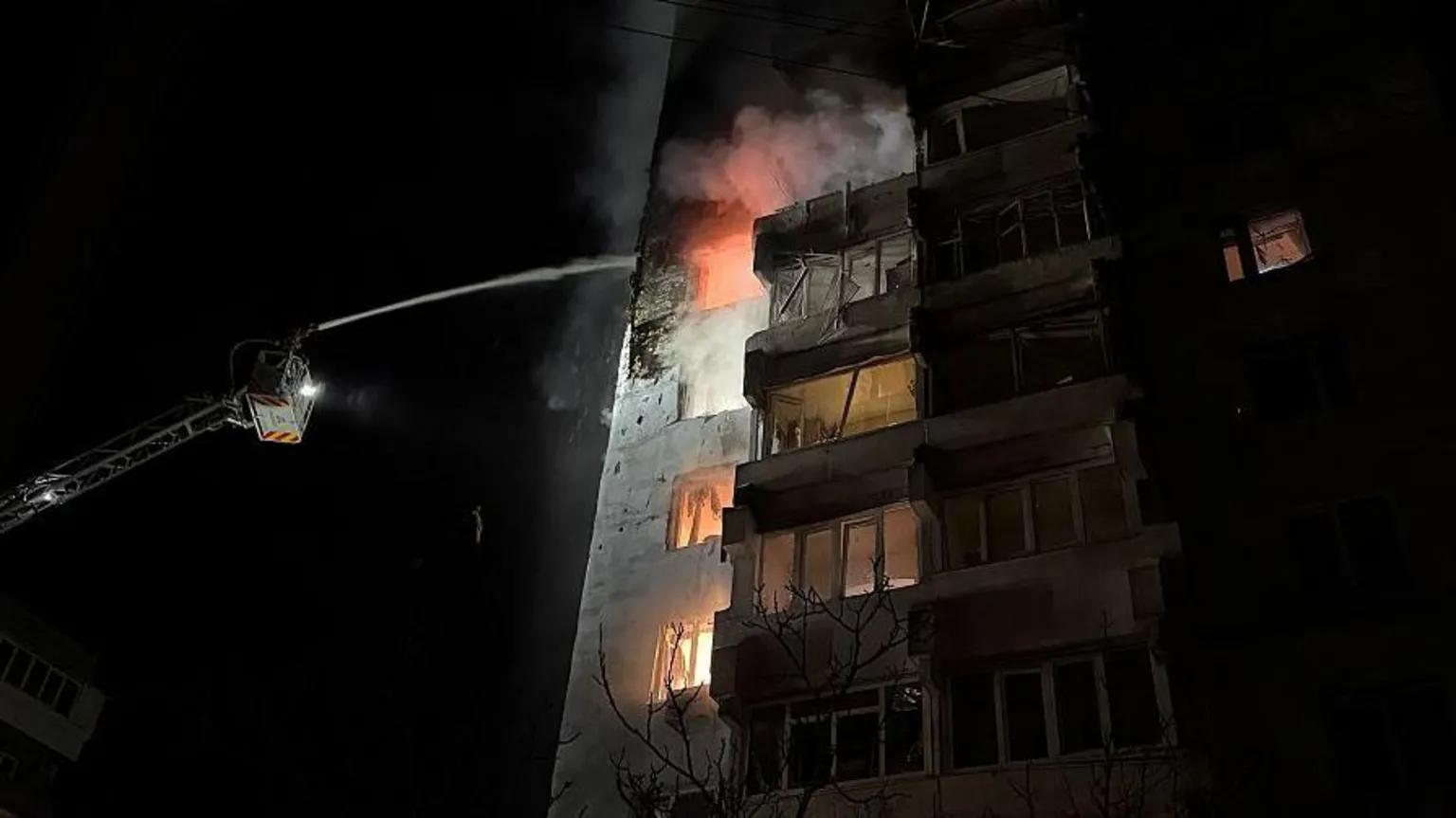
In the Poltava region, strikes on residential buildings and a hotel killed at least two people and wounded 12 others. Regional governor Vitaliy Dyakivnych confirmed the toll, describing scenes of destruction in areas that had been struck without warning. Further south, in Kherson, a civilian was killed when Russian shelling struck his home, according to Yaroslav Shanko, head of the city’s military administration.
The assault also claimed a life in Kharkiv, where a 61-year-old woman died after a drone struck an electric train in the early hours of Tuesday morning — a stark illustration of how civilian transport has become a target in the conflict. In the Dnipropetrovsk region, a 75-year-old woman was injured and hospitalised following a Russian attack, while in Sumy, a 65-year-old bus driver was wounded when his vehicle was hit by a drone.
The strikes were not confined to Ukrainian territory. Russian attacks on energy infrastructure in the Odesa region disconnected the Isaccea-Vulcanesti power line, the conduit through which Moldova imports electricity from Romania. The severing of that link rippled beyond Ukraine’s borders, cutting off a NATO-adjacent nation from its primary European energy supply. Moldova’s foreign ministry condemned the strikes, stating they undermine regional energy security and endanger critical civilian infrastructure.

Moldovan President Maia Sandu warned that the energy situation remained fragile in the aftermath, signalling that the country’s vulnerability to Russian strikes on Ukrainian infrastructure poses an ongoing threat to its stability. Consumers in six Ukrainian regions were left without power following the attack.
The scale of Tuesday’s bombardment was foreshadowed by President Volodymyr Zelensky, who warned in his Monday night address that Russia appeared to be preparing a massive strike. Zelensky confirmed damage across eleven regions and cautioned that attacks of this magnitude have been occurring roughly once a week or every ten days in recent months — a tempo that is straining both Ukraine’s air defences and its civilian infrastructure.
Zelensky also raised broader geopolitical concerns, warning that Russia may seek to exploit international attention on the Middle East to intensify its campaign against Ukraine. He specifically noted that the focus of the United States on developments involving Iran risks diverting air defence supplies away from Kyiv at a critical moment. Ukrainian and American officials held talks over the weekend on pathways toward ending Russia’s full-scale invasion, though no concrete outcomes have been announced.

On the ground in eastern Ukraine, the pace of the Russian advance has slowed considerably, with Ukrainian forces reporting minor counteroffensives in several areas. Russia’s defence ministry, for its part, claimed its air defences intercepted 55 Ukrainian fixed-wing unmanned aerial vehicles overnight — an indication that both sides continue to prosecute aerial campaigns simultaneously.
The latest barrage, which deliberately avoided the capital Kyiv and instead concentrated on cities and regions further east and south, underscores a strategic pattern of targeting civilian morale, energy capacity, and regional stability beyond Ukraine’s borders. With winter approaching and infrastructure already under sustained pressure, officials in Kyiv and Chișinău alike are bracing for further strikes.