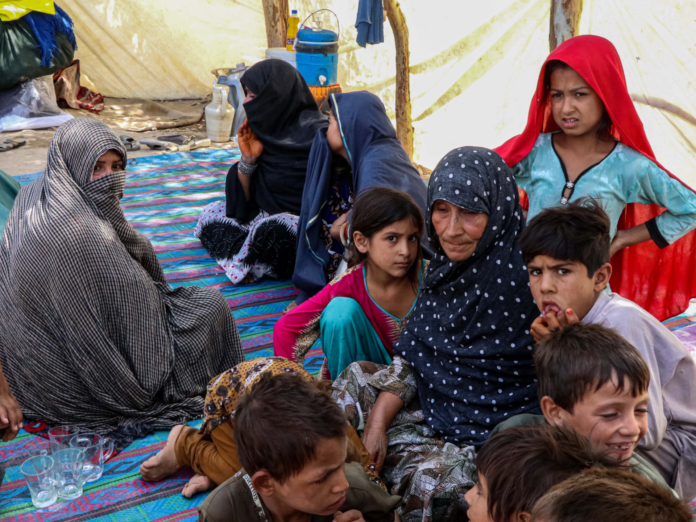
Heavy shelling and aerial bombardment marked a seventh consecutive day of fighting along the 2,640-kilometre Durand Line separating Afghanistan and Pakistan on Wednesday, as the United Nations warned of a rapidly escalating humanitarian disaster that has forced nearly 66,000 people from their homes.
The International Organization for Migration (IOM) issued an urgent alert about the intensifying cross-border hostilities, while the UN World Food Programme announced it had temporarily suspended emergency food distributions, school feeding programmes, and livelihood activities — a decision affecting approximately 160,000 people in a country where more than 46 districts were already experiencing severe food insecurity before the latest violence erupted.
The current crisis traces its origins to late February, when Pakistan launched air strikes it said were targeting militant training facilities and fighters using Afghan territory to stage attacks inside Pakistan. The Taliban administration in Kabul characterised those strikes as unprovoked aggression and launched a retaliatory border offensive last week, triggering the most severe fighting between the two neighbours since clashes in October killed more than 70 people on both sides.
Pakistani strikes have hit an array of targets, including the former American air base at Bagram, the capital Kabul, and the southern city of Kandahar. Pakistani fighter jets conducted nighttime sorties over Kabul, with explosions and anti-aircraft fire heard across the city. An AFP journalist in Jalalabad also reported hearing explosions and weapons fire, with fighting ongoing at the Torkham border crossing roughly 50 kilometres away.
Afghanistan’s Defence Ministry reported that Taliban forces shot down a Pakistani drone and seized seven border posts during the offensive. The ministry said extensive retaliatory operations had been conducted across seven provinces in a single day, with fighting concentrated in Kunar province in the northeast, where thousands of families have fled the village of Sirkanay alone. Three children were reported killed in Kunar by Pakistani military action.
Casualty figures from both sides remain deeply contested. Afghanistan’s Defence Ministry put the civilian death toll at 110 — including 65 women and children — with a further 123 wounded since the fighting began. The UN Assistance Mission in Afghanistan recorded a more conservative figure of 42 civilian deaths and 104 wounded since Thursday. Afghanistan’s military estimated Pakistani fatalities at approximately 150, while Islamabad claims more than 430 Afghan soldiers have been killed. Afghanistan’s defence ministry acknowledged more than 25 of its own soldiers had died. Neither set of figures has been independently verified.
Pakistani political adviser Rana Sanaullah, a senior aide to Prime Minister Shehbaz Sharif, said Islamabad had achieved most of its military objectives, claiming that the majority of militant training centres had been eliminated. Pakistan has not commented on reports of Afghan civilian casualties and has demanded verifiable guarantees that Afghan soil will not be used to plan or launch attacks against Pakistani targets.
Pakistani Foreign Minister Ishaq Dar struck a cautiously diplomatic tone on Tuesday, saying it was never too late to pursue dialogue while simultaneously warning of Pakistan’s resolve to eliminate what he called the militant threat. Land borders between the two countries have been largely closed since the October clashes.
The humanitarian toll is compounding an already dire situation. Acute malnutrition is being reported across multiple areas, and the WFP suspension of aid has severed a critical lifeline for communities with few alternatives. A 30-year-old labourer in Kunar province described how the violence had made it impossible for residents to reach markets for basic supplies, leaving entire communities cut off.
The Durand Line — a colonial-era boundary stretching 1,640 miles — has long been a source of tension between Kabul and Islamabad. The Taliban government does not formally recognise the border’s legitimacy, a dispute that has fuelled recurring friction. The current escalation represents the most dangerous rupture in bilateral relations in years, with no ceasefire in sight and international organisations scrambling to respond to a displacement and food crisis that threatens to worsen significantly if fighting continues.