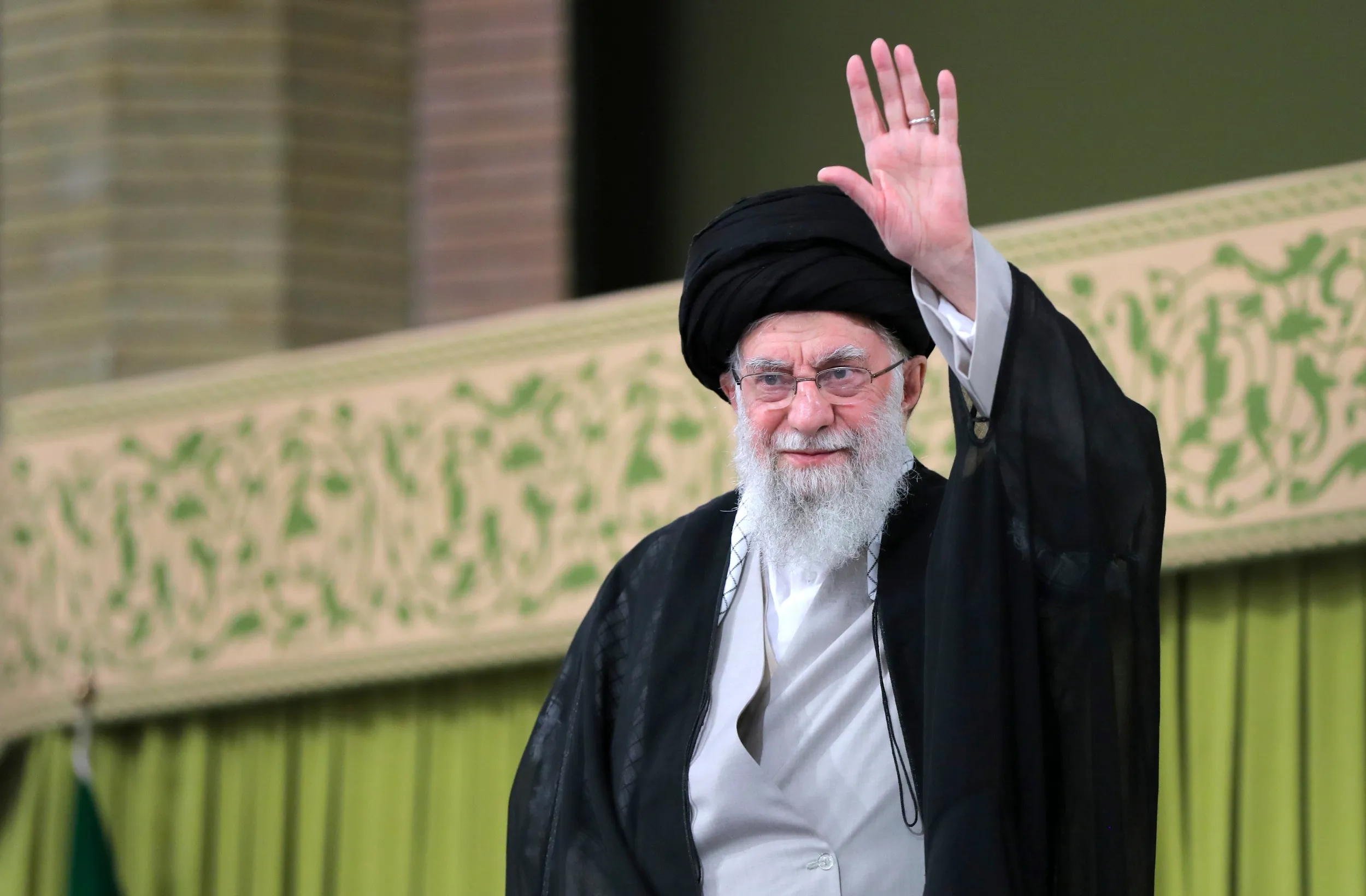
TEHRAN — Ayatollah Ali Khamenei, the 86-year-old Supreme Leader who governed Iran with absolute authority for 35 years, was killed Saturday in coordinated strikes carried out by the United States and Israel, shattering the Islamic Republic’s highest seat of power and igniting a cascade of retaliatory military action across the Middle East.
Iranian state media confirmed Khamenei’s death on Sunday. His daughter, son-in-law, and grandson perished alongside him, as did top security officials who were present at the time of the strikes. President Masoud Pezeshkian condemned the killing as ‘a great crime’ and declared seven days of public holidays on top of a 40-day national mourning period that began immediately following the announcement of the Supreme Leader’s death.
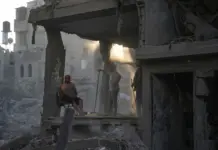
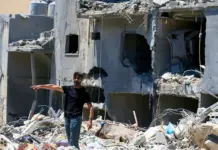
The human cost of the strikes extended far beyond Khamenei himself. Iran’s Red Crescent society reported at least 201 people killed and more than 700 wounded across 24 provinces. The single deadliest incident was a strike on an elementary girls’ school in the southern city of Minab, which killed at least 148 people in what aid workers described as a catastrophic blow to a civilian area.
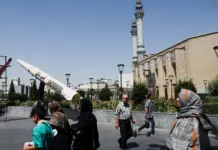
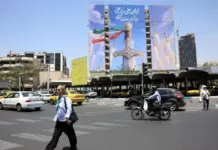
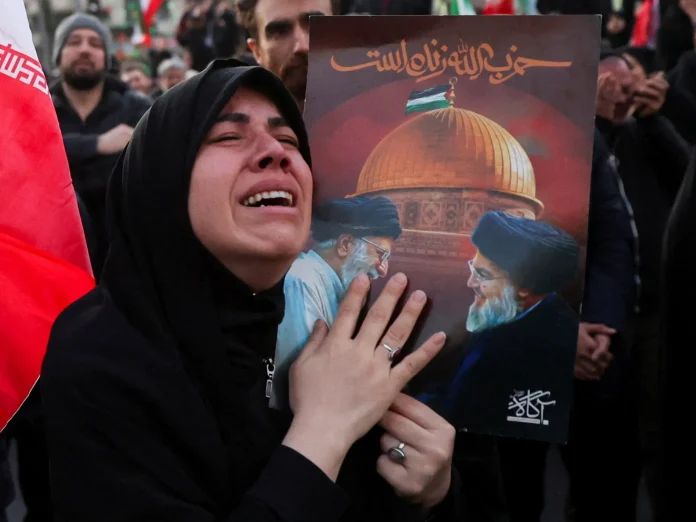
Scenes of grief and shock swept across Iran. Supporters gathered at the shrine of Imam Reza in Mashhad, with footage showing mourners weeping and collapsing in anguish. Crowds poured into the streets of Tehran following confirmation of Khamenei’s death, even as continuing bombardment was reported in multiple parts of the country. Protests denouncing the killing were recorded in Shiraz, Yasuj, and Lorestan. In a striking contrast, witnesses reported scenes of celebration in Tehran, Karaj, and Isfahan — a reflection of the deep divisions Khamenei’s rule had long produced within Iranian society.
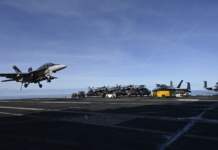
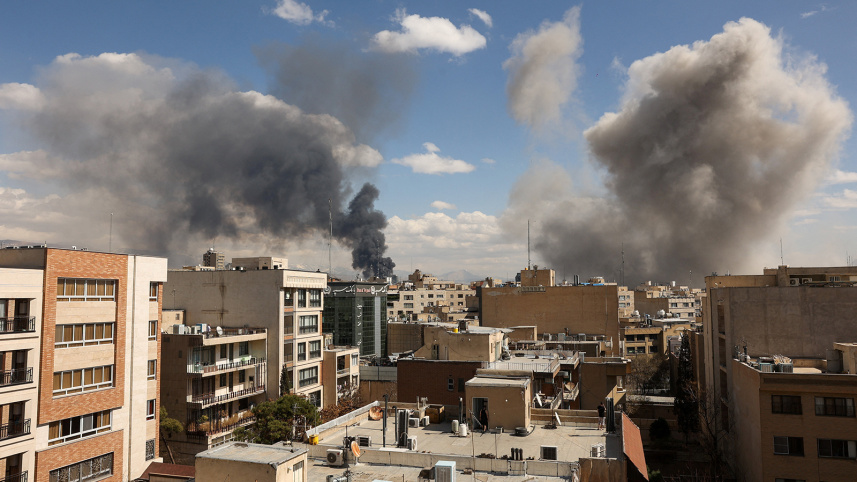
The Islamic Revolutionary Guard Corps moved swiftly to signal that Iran would not absorb the strikes without consequence. The IRGC announced it had launched attacks on 27 bases hosting US troops across the region and struck Israeli military facilities in Tel Aviv. Iranian retaliatory operations since Saturday have targeted US and Israeli assets in Qatar, the United Arab Emirates, Kuwait, Bahrain, Jordan, Saudi Arabia, and Iraq. Explosions were reported in Qatar and the UAE. In Israel, an Iranian missile strike killed one woman in the Tel Aviv area and wounded approximately 20 others.
US President Donald Trump issued a stark warning to Tehran, threatening to strike Iran ‘with a force that has never been seen before’ should it continue its retaliatory campaign — a statement that raised immediate fears of further escalation between nuclear-armed and nuclear-capable powers in an already volatile region.
The reverberations spread rapidly beyond Iran’s borders. Iraq declared three days of national mourning. In Baghdad’s heavily fortified Green Zone — home to Iraqi government institutions and foreign embassies — protesters confronted security forces and attempted to mobilise toward the US Embassy. In Karachi, Pakistan, demonstrators attacked the US consulate, setting it on fire and smashing windows.
Constitutional provisions have activated a transitional governance structure inside Iran. A three-person council comprising the president, the chief of the judiciary, and a jurist from the Guardian Council will assume the Supreme Leader’s duties on an interim basis while the Assembly of Experts convenes to determine a successor — a process that could prove deeply contentious given the scale of the crisis now engulfing the country.
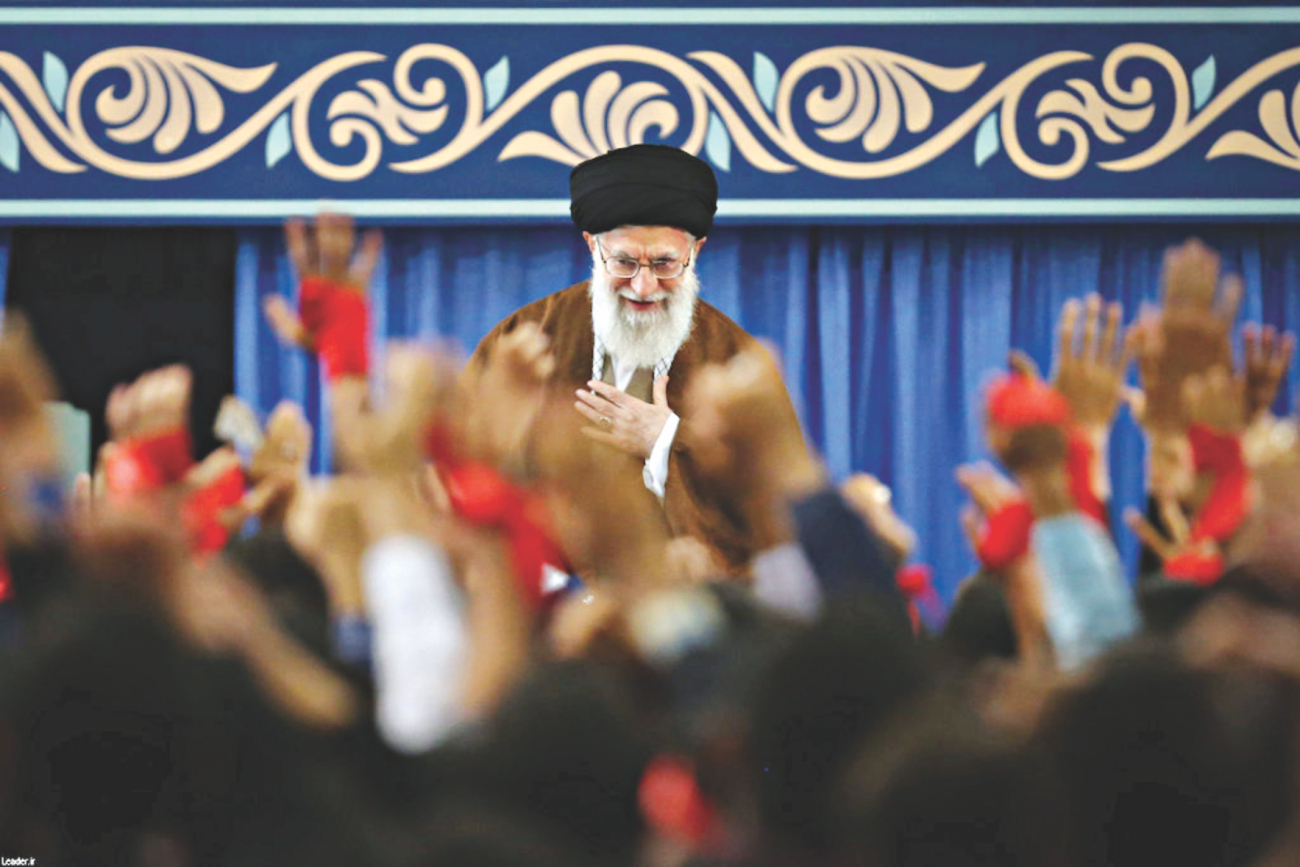
Khamenei’s death represents a rupture without modern precedent in the Islamic Republic’s history. He assumed the supreme leadership in 1989 following the death of Ayatollah Ruhollah Khomeini, who had led the Islamic Revolution a decade earlier. Over more than three decades, Khamenei shaped Iran’s military and paramilitary apparatus, deepened the state’s domestic control, and extended its regional influence through proxy networks stretching from Lebanon to Yemen. His removal from power by foreign military action constitutes the most significant blow to Iran’s leadership structure since the revolution’s founding in 1979.
The full strategic consequences of Saturday’s strikes remain uncertain. Iran’s government faces the simultaneous challenge of managing a succession crisis, sustaining a military confrontation with the United States and Israel, and containing a domestic population whose response has been anything but uniform. The coming days will test whether Iran’s institutions can hold together under the most severe external pressure they have ever faced.