A rare bipartisan coalition of lawmakers erupted in opposition to U.S. military strikes on Iran, demanding congressional oversight and warning that the attacks risk dragging the United States into a prolonged Middle East conflict without constitutional authority.
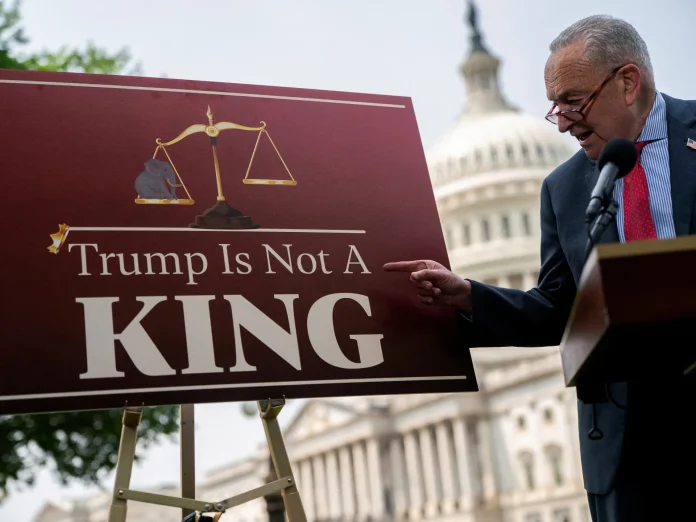
Senate Minority Leader Chuck Schumer called Saturday for Congress to be briefed immediately, demanding both an all-senators classified session and public testimony on the strikes. Schumer criticized the administration for withholding details about the scope and immediacy of the threat that prompted the military action.
Senator Tim Kaine of Virginia, a member of both the Senate Armed Services and Foreign Relations Committees, described President Donald Trump‘s order to strike Iran as a ‘colossal mistake’ and called on the Senate to return to session immediately to vote on his War Powers Resolution. Kaine is the primary author of the measure, which has attracted significant bipartisan support.
Senator Mark Warner, vice chairman of the Senate Select Committee on Intelligence, characterized the decision as ‘a deeply consequential one that risks pulling the United States into another broad conflict in the Middle East,’ while questioning the urgency and intelligence underpinning the attack.
House Minority Leader Hakeem Jeffries of New York pledged that House Democrats would force a floor vote on legislation restricting Trump’s war powers with respect to Iran. Jeffries argued that Trump failed to seek congressional authorization before ordering the strikes, invoking the Constitution’s explicit grant of war-declaration authority to Congress. While acknowledging Iran’s record of human rights abuses, nuclear ambitions, and support for terrorism, Jeffries demanded the administration provide an ironclad justification, clear national security objectives, and a credible plan to prevent a prolonged military entanglement. He also pointed to the failed wars in Iraq and Afghanistan as cautionary precedents.
Jeffries raised a pointed question about the strategic rationale: Trump had proclaimed in June 2025 that Iran’s nuclear program had been ‘completely and totally obliterated’ by earlier military strikes. If that assessment was accurate, Jeffries asked, what justified the current attacks?
The opposition was not confined to Democrats. Republican Representative Thomas Massie of Kentucky declared the strikes ‘acts of war unauthorised by Congress,’ adding bluntly that the military action was ‘not America First.’ Massie announced he would work with Representative Ro Khanna of California to force a congressional vote on the conflict when lawmakers reconvene. The two have co-sponsored a war powers resolution that would require Trump to withdraw U.S. forces from hostilities in Iran absent explicit congressional authorization.
Senator Rand Paul, another Republican, co-sponsored Kaine’s Senate war powers resolution, grounding his opposition in constitutional principles. The push for legislative checks on executive military authority has gained notable bipartisan momentum in the Senate, even as the Republican Party holds a slim majority in that chamber.
In the House, the war powers resolution faces steeper odds. War powers measures are privileged parliamentary procedures, allowing sponsors to bypass Republican House leadership and bring them directly to the floor. However, the resolution was expected to fall short of passage, with some Democrats — including Representatives Josh Gottheimer of New Jersey and Jared Moskowitz of Florida, both supporters of Israel — announcing their opposition. Despite the anticipated defeat, party leaders pushed for the vote to place every lawmaker on the record.
The strikes also drew condemnation internationally. Iran’s ambassador to the United Nations described the U.S.-Israeli attacks as a ‘war crime.’ Iranian official Ali Shamkhani was among those reportedly killed in the strikes.
Democrats framed the episode as a fundamental constitutional crisis, arguing that no president — regardless of party — holds unilateral authority to take the nation to war. Jeffries called on the Trump administration to explain itself to the American people and to Congress without delay, warning that the absence of transparency and legislative authorization set a dangerous precedent for executive overreach in matters of war and peace.