Cuban border guards have killed four exiles aboard a Florida-registered speedboat after it allegedly opened fire on a patrol near Varadero, Cuba. The incident, which occurred on October 16, has resulted in increased tensions between Havana and Washington.
The speedboat, a 24-foot center-console vessel, was reportedly stolen and carried ten individuals, including US citizens. Cuban authorities stated that the occupants, who were all Cuban residents in the US with criminal records in Cuba, intended to carry out a terrorist infiltration. The boat was allegedly armed with assault rifles and handguns.
During the confrontation, a Cuban commander and a guard were injured. The Cuban Ministry of the Interior reported that the survivors are being held at a heavily guarded hospital in Santa Clara, approximately 150 miles east of Havana.
Among the deceased was Michel Ortega Casanova, who had previously expressed a desire to liberate Cuba. The incident has drawn attention to the longstanding history of exiles attempting to incite uprisings against Cuba’s communist government.
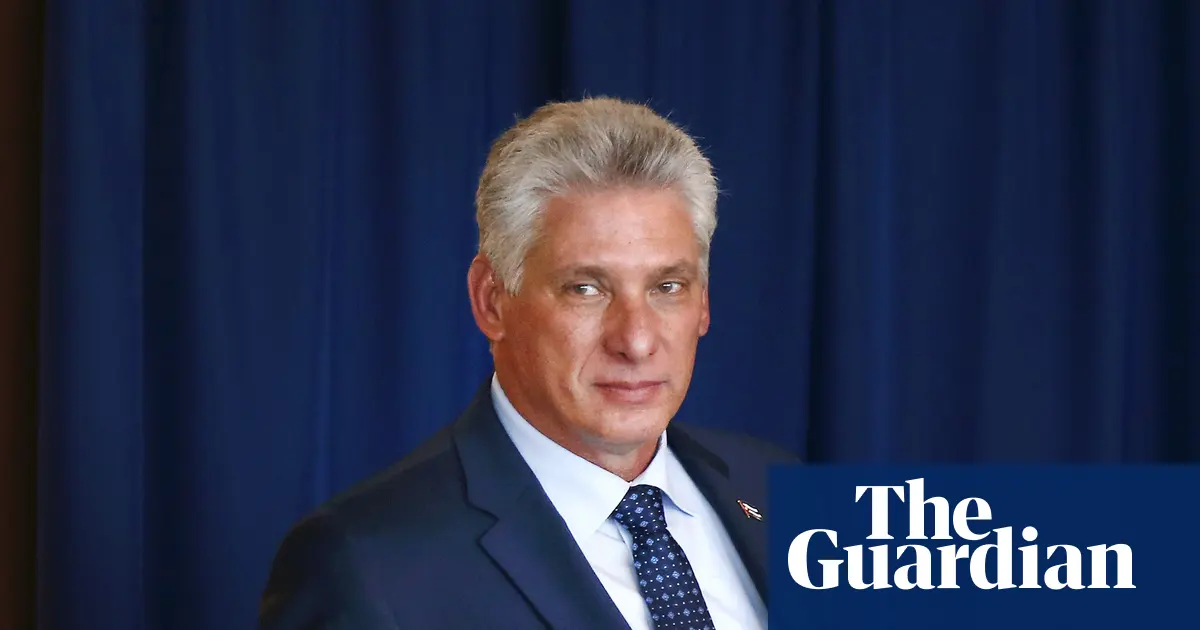
Cuban President Miguel Díaz-Canel has vowed to defend the nation against any terrorist and mercenary aggression. Meanwhile, US Secretary of State Marco Rubio has denied any involvement by the US government in the incident.
The event coincides with a meeting between Raúl Guillermo Rodríguez Castro, grandson of former Cuban president Raúl Castro, and US officials at the Caricom summit in St Kitts and Nevis. The encounter underscores the delicate diplomatic relations between the two nations, which have been strained further by the Trump administration’s oil blockade imposed on Cuba in January.
Experts have noted that the speedboat was an unlikely choice for a seaborne landing on Cuba due to its size and engine power. Nevertheless, Cuban authorities have detained an additional member of the group who had traveled to the island to rendezvous with the boat.
This incident highlights the ongoing geopolitical tensions and the potential for further escalation between the US and Cuba, as both sides navigate a complex web of historical grievances and current diplomatic challenges.