North Korean leader Kim Jong Un issued a stark warning to South Korea, asserting that his forces could ‘completely destroy’ the neighboring nation. During a series of meetings held by the ruling Workers’ Party of Korea, Kim also called on the United States to abandon its ‘hostile’ policies towards North Korea.
Kim’s remarks came on Wednesday, as the Workers’ Party congress concluded in Pyongyang with a military parade. The congress, which convenes every five years, gathered around 5,000 party representatives. The event underscored North Korea’s determination to solidify its status on the global stage through its nuclear arsenal.
Emphasizing the strategic importance of nuclear weapons, Kim described them as a ‘guarantee and safety device’ for the country’s security and interests. He highlighted the need for new weapons systems, including intercontinental ballistic missiles capable of underwater launches and an expanded arsenal of tactical nuclear weapons. These developments, he stated, would permanently cement North Korea’s status as a nuclear-armed state.
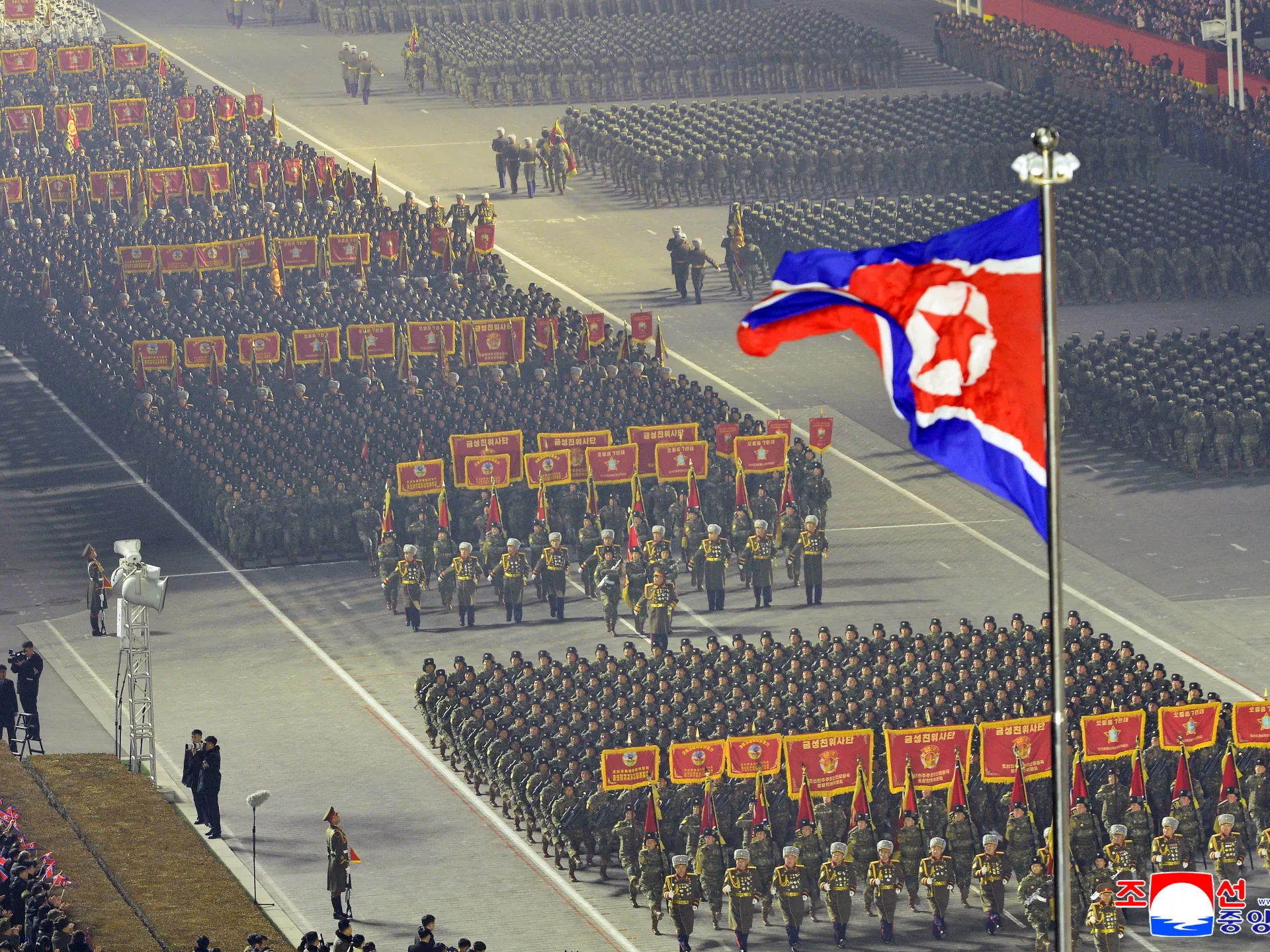
The military parade that marked the congress’s conclusion featured formations of soldiers, some in camouflage and special warfare gear, marching through Kim Il Sung Square. A formation of jets performed a fly-by, although it was unclear what specific military hardware was showcased. Kim Jong Un attended the parade with his daughter, Kim Ju Ae, and senior officials, sparking speculation about her potential role in future leadership.
![North Korean leader Kim Jong Un and his daughter Kim Ju Ae attend a military parade to mark the conclusion of the Ninth Congress of the ruling Workers’ Party of Korea in Pyongyang, North Korea, on February 25, 2026 [KCNA via Reuters]](https://world-tension.s3.us-east-2.amazonaws.com/articles/5/2bb62265060348b2a7e290bb4dc8336c.webp)
Kim’s statements and the military display underscore North Korea’s ongoing commitment to enhancing its military capabilities, particularly its nuclear and missile programs. This development poses significant challenges for regional stability and international diplomacy, as the country seeks to assert its influence and deter perceived threats.
The implications of Kim’s warnings and North Korea’s military ambitions are profound. Tensions on the Korean Peninsula could escalate, affecting regional security dynamics and complicating diplomatic efforts aimed at denuclearization. The international community, particularly the United States and South Korea, faces the challenge of addressing these threats while seeking avenues for dialogue and negotiation.
As North Korea continues to prioritize its nuclear capabilities, the potential for conflict looms large. The international response to Kim’s declarations and the country’s military advancements will be critical in shaping the future of peace and security in the region.