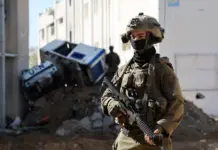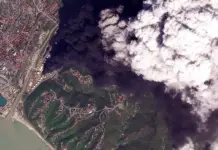
Israeli Strikes Beirut — Israeli airstrikes on the Dahiyeh district of southern Beirut killed at least three people on Sunday, triggering a sharp public rebuke from Donald Trump and throwing a near-finalised peace agreement between the United States and Iran into serious jeopardy.
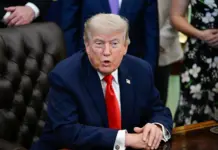
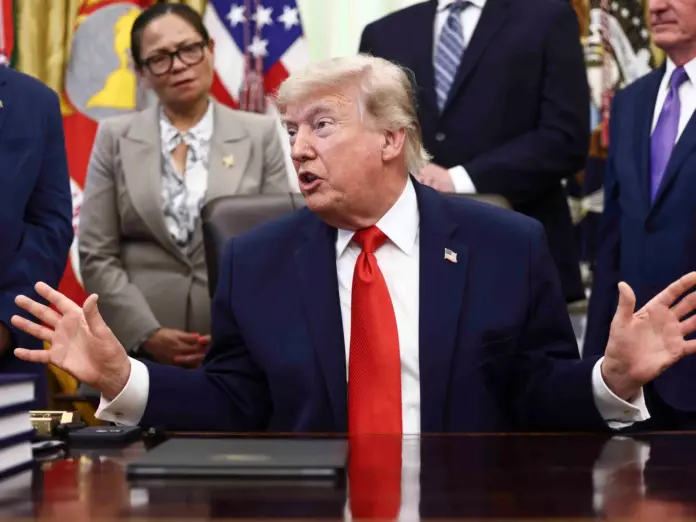
Trump, who had announced just one day earlier that a deal was "scheduled" to be signed on Sunday, vented his frustration on Truth Social, writing that the Israeli attack "should not have happened, particularly on a special day when we are so close to a Peace Deal with Iran." He called on Israel to halt further strikes in Lebanon and demanded that Hezbollah likewise cease attacks against Israel.
The timing was particularly jarring. Trump told Axios in a Sunday interview that the Israeli strikes occurred roughly an hour before the planned signing, forcing a delay of "a few hours." He also challenged the justification offered by Israeli Prime Minister Benjamin Netanyahu, who said the military acted in response to Hezbollah projectiles fired toward northern Israel. Trump dismissed the provocation as "very small and meaningless," noting that nobody had been hurt, injured, or killed in the Hezbollah fire that preceded the Israeli response.
Recommended Reading
The proposed agreement, described by both sides as closer than ever to completion, would establish a memorandum of understanding to end fighting across all fronts, including in Lebanon. Under its terms, the Strait of Hormuz would remain open, a US naval blockade would be lifted, and hostilities would cease immediately upon signing. Thornier issues — including Iran’s nuclear programme, frozen Iranian assets, and sanctions relief — were to be addressed during a subsequent 60-day negotiating window. Pakistan indicated the signing itself would be conducted digitally.
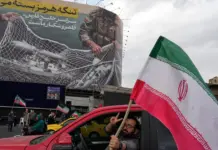
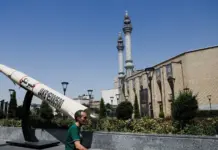
Iranian officials reacted to the Beirut strikes with a mixture of anger and warning. Mohammad Bagher Ghalibaf, Iran’s top negotiator and parliament speaker, said the Israeli attacks had drawn US trustworthiness into question. Ebrahim Azizi, head of the Iranian parliament’s national security committee, was more direct, stating that "a strong response is coming." Mohammad Bagher Zolghadr, secretary of Iran’s Supreme National Security Council, echoed that a response was "forthcoming." Iran’s Foreign Ministry, through spokesperson Esmaeil Baghaei, placed the burden of any dangerous consequences firmly on both the United States and Israel.
Baghaei had signalled on Saturday that even under the best circumstances, a formal signing could take days — a timeline at odds with Trump’s confident assertion that the deal was imminent. The divergence in expectations underscored the fragility of negotiations that have been months in the making.
The backdrop to Sunday’s crisis is a conflict that escalated sharply on February 28, 2025, when the US and Israel launched coordinated attacks against Iran, sparking a 12-day war. Fighting has been largely paused since April 8, punctuated by a handful of flare-ups, but a durable ceasefire has remained elusive. The current diplomatic push represents the most serious attempt yet to formalise an end to hostilities.
Israeli Strikes Beirut: Regional Implications
Trump has long vowed to negotiate a nuclear agreement more stringent than the Joint Comprehensive Plan of Action, the landmark 2015 accord signed between Iran, the United States, the United Kingdom, Russia, Germany, France, China, and the European Union. Trump unilaterally withdrew the US from that agreement in 2018. Former President Barack Obama, whose administration negotiated the JCPOA, has said it is unlikely a more favourable deal on Iran’s nuclear programme could be achieved than the one his team secured.
Whether Sunday’s violence in Beirut permanently derails the current effort or merely delays it remains uncertain. The death toll from the Dahiyeh strikes — at least three civilians — adds a human cost to what was already a diplomatically combustible moment. With Iranian officials threatening retaliation and Trump openly at odds with Netanyahu over the wisdom of the attack, the window for a historic agreement appears narrow and rapidly closing.