Washington / Tehran — A flurry of contradictory signals from Washington and Tehran on Saturday threw the timeline for a landmark nuclear ceasefire agreement into uncertainty, even as both sides acknowledged that a deal to end the 106-day US-Israeli war on Iran was within reach.
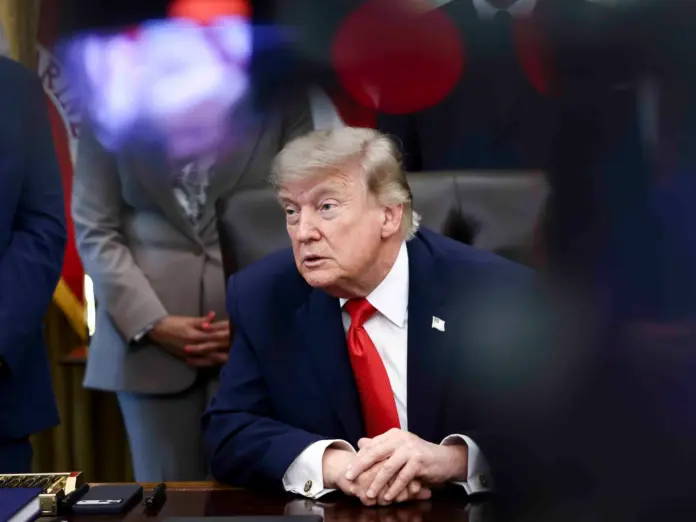
Donald Trump declared on his Truth Social platform that an initial agreement was ‘scheduled to get signed tomorrow,’ framing the anticipated accord with characteristic bluntness as ‘A WALL TO NO NUCLEAR WEAPON!’ The announcement, posted on what also happened to be Trump’s 80th birthday weekend, promised that the Strait of Hormuz would be reopened to all shipping immediately upon signing and that ‘no money would exchange hands’ under the terms of the deal.
Iran Nuclear Deal — Iranian officials moved swiftly to temper expectations. Esmaeil Baghaei, spokesman for Iran’s Ministry of Foreign Affairs, stated that no memorandum of understanding would be signed on Sunday and that negotiators had no immediate plans to travel to Geneva, Switzerland, where a signing ceremony had been anticipated. A formal agreement, Baghaei said, could materialise ‘in the coming days.’
Recommended Reading
The divergence in messaging underscored the fragile and deeply distrustful nature of the negotiations. Iranian officials have repeatedly cited profound mistrust of Washington as a central obstacle to reaching a durable settlement — a sentiment rooted, in part, in Trump’s unilateral withdrawal from the 2015 Joint Comprehensive Plan of Action in 2018. That agreement, negotiated under former President Barack Obama, had committed Tehran to limiting its nuclear activities and accepting international inspections in exchange for sweeping sanctions relief.
Iranian Foreign Minister Abbas Araghchi sought to clarify Tehran’s position in remarks broadcast on Press TV on Friday, describing the prospective memorandum of understanding as merely a starting point — a framework from which substantive negotiations over Iran’s nuclear programme would then proceed. Araghchi confirmed that signing the document would trigger an immediate pause in hostilities, but stressed that critical issues, including the lifting of foreign sanctions and the unfreezing of Iranian assets, would only be addressed in subsequent rounds of talks.
On the question of the Strait of Hormuz, Araghchi’s account diverged sharply from Trump’s. While Trump suggested the waterway would be fully opened upon signing, Araghchi stated that Iran and Oman would continue to jointly administer the strategically vital strait, through which roughly a fifth of the world’s oil supply passes.
Trump also addressed Iran’s stockpile of enriched uranium, writing that ‘at the appropriate time, when all is calm, we will go in and get the Nuclear Dust’ — a phrase that appeared to reference a future US operation to secure or remove Iran’s fissile material. He offered no further elaboration. In a separate, ominous aside, Trump warned that if a deal failed to materialise, the United States retained ‘the ultimate alternative, hopefully never to be used again,’ without specifying what that threat entailed.
Iran Nuclear Deal: The Nuclear Dimension
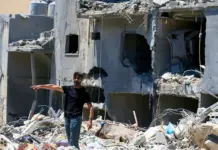
The war, launched jointly by the United States and Israel on February 28, 2025, entered its 106th day amid a fragile and repeatedly tested pause in major hostilities. That pause, which had held since April 8, was threatened earlier this week when the two sides exchanged strikes over two consecutive days — a sharp reminder of how quickly the conflict could escalate. Fighting has also continued in Lebanon, complicating the broader regional picture.
Trump insisted that his administration’s relationship with Iran represented a fundamental departure from past US policy. ‘Our relationship with Iran is a much different and better one than previous Administrations have had,’ he wrote, adding that any agreement reached would be more stringent than the JCPOA he abandoned seven years ago. Iran has long maintained that its nuclear programme serves exclusively civilian purposes and that it is not pursuing a nuclear weapon.
The coming days will test whether the gap between Trump’s optimistic proclamations and Tehran’s more cautious posture can be bridged. Negotiators on both sides face the challenge of translating a fragile ceasefire into a durable framework — one that satisfies Washington’s demand for verifiable nuclear constraints while addressing Iran’s insistence on meaningful economic relief and respect for its sovereignty over its nuclear infrastructure.