Eu Accession Talks Ukraine — The European Union has officially launched accession negotiations with Ukraine and Moldova, marking a significant step forward in both nations’ bids to join the bloc after months of political obstruction. Ambassadors from all 27 EU member states gathered in Luxembourg on Monday to formally open the ‘fundamentals’ section of the accession process — a chapter covering core principles including the rule of law — following a preparatory meeting in Brussels on Friday.
The breakthrough came after Hungary’s new government, which took power in May, agreed to abandon the veto that had paralysed the process under former Prime Minister Viktor Orban. Orban, widely regarded as sympathetic to Moscow, had blocked progress for months following the EU’s historic decision in December 2023 to open accession talks with both Kyiv and Chisinau. A largely symbolic formal opening of entry negotiations with Ukraine had taken place in June 2024, but substantive talks remained frozen until now.
The shift in Budapest’s position was cemented last week when new Hungarian Prime Minister Peter Magyar struck a deal with Kyiv addressing the rights of Ukraine’s Hungarian ethnic minority — a long-standing and deeply contentious issue between the two countries. The agreement cleared the final political obstacle to Hungary’s participation in the resumed negotiations.
Recommended Reading
Magyar, however, has been careful to temper expectations. He has stated that Hungary does not support a fast-track procedure for Ukraine’s EU membership, and has indicated that Budapest will hold a national referendum on Ukrainian accession only if Kyiv successfully closes all 33 accession chapters — a process he estimates could take between 10 and 15 years.
For both Ukraine and Moldova, the stakes extend well beyond trade and economic integration. EU membership is viewed in Kyiv and Chisinau as a critical security guarantee against further Russian aggression, particularly following Russia’s full-scale invasion of Ukraine in 2022. Moscow, for its part, has consistently maintained that preserving influence over what it terms its ‘near abroad’ is a cornerstone of its national security doctrine — a position that places it in direct opposition to the EU’s eastward expansion.
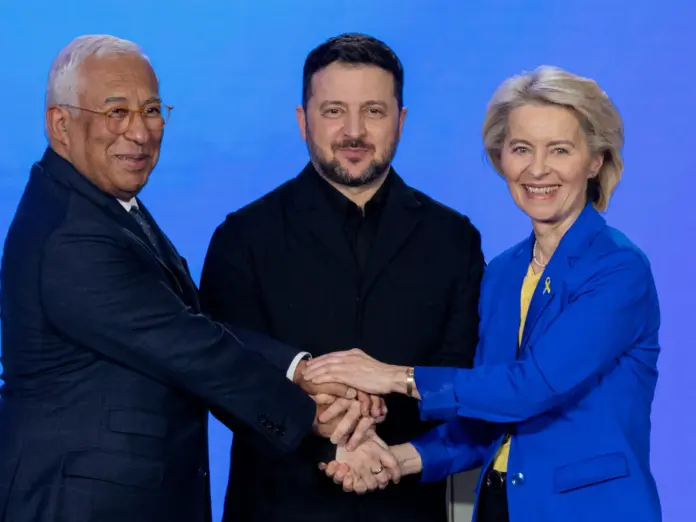
European Council President Antonio Costa and European Commission President Ursula von der Leyen have both championed the enlargement process as a geopolitical imperative, framing Ukraine and Moldova’s integration into European structures as essential to the continent’s long-term stability. The accession process itself is extensive, encompassing negotiations across dozens of policy areas ranging from agriculture to judicial reform.
The opening of the ‘fundamentals’ cluster is a deliberate starting point. Under EU accession methodology, this section is typically addressed first and last, given its centrality to the bloc’s core values. Progress here will be closely watched as a barometer of both countries’ reform trajectories and their readiness for eventual membership.
Eu Accession Talks Ukraine: The Wider European Impact
The resumption of talks represents a diplomatic victory for those within the EU who have pushed for a robust response to Russia’s war in Ukraine. It also signals a meaningful realignment in Hungarian foreign policy under Magyar, whose government has moved to repair relations with both Brussels and Kyiv after years of friction under Orban’s tenure.
The road to full membership remains long and technically demanding. Yet Monday’s opening in Luxembourg carries weight beyond procedure — it is a reaffirmation that the EU’s door remains open, and that the political will to keep it so has, at least for now, prevailed.