Us Naval Blockade Iran — A sweeping US naval blockade on Iranian ports has reduced the country’s crude oil exports to a fraction of pre-conflict levels, inflicting a devastating financial blow on Tehran and reshaping energy flows across the Persian Gulf region.
The United States commenced the blockade on April 13, deploying naval assets to enforce what the Trump administration describes as a maximum-pressure strategy designed to compel Iran to accept terms for a peace agreement. The consequences for Iranian oil revenues have been swift and severe.
Data from commodity intelligence firm Kpler shows Iranian crude oil and condensate exports plummeted from close to 2 million barrels per day in the weeks before the blockade to below 300,000 barrels per day in May — the lowest export volume recorded in at least six years. Iran is now shipping less than one-sixth of the oil it was exporting before the conflict began.
Recommended Reading
The financial damage is stark. In March, Iranian exports averaged 1.84 million barrels per day, generating an estimated $165.6 million per day — approximately $5.13 billion over the month. By April, as the blockade took hold, that figure had already declined to an average of 1.34 million barrels per day, yielding roughly $3.62 billion for the month. In May, with exports reduced to around 300,000 barrels per day at a price of approximately $90 per barrel, daily revenues fell to an estimated $27 million — generating just $837 million across the entire month. Iran’s oil revenues in May were approximately 84 percent lower than they were in March. If Tehran had anticipated revenues on the scale of its March returns, it lost an estimated $5.8 billion across April and May combined.
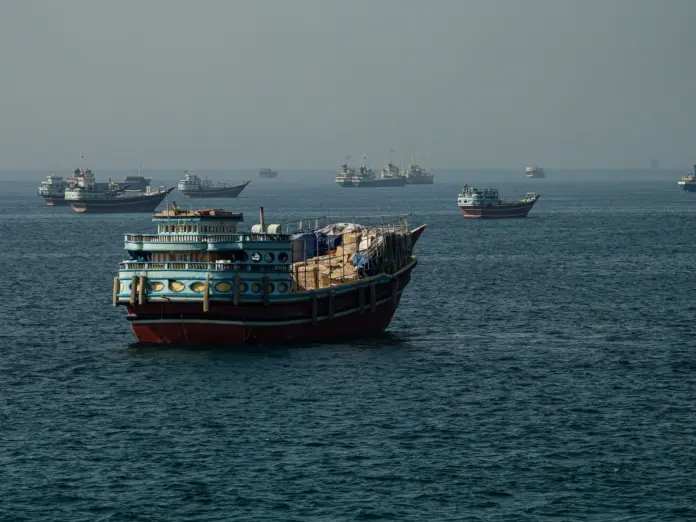
The crisis has been compounded by Iran’s own retaliatory measures. Following the onset of US-Israeli military strikes on February 28, Tehran closed the Strait of Hormuz to vessels from most countries. The strait is one of the world’s most critical energy chokepoints, normally carrying approximately 20 percent of global oil and gas supplies. For Iran itself, exports through the strait account for roughly 80 percent of total export volume, making the closure a double-edged decision that has further constrained its own ability to move crude to market.
The result is a growing glut of stranded oil. Approximately 147 million barrels of Iranian crude and condensate are currently held in floating storage. Of those, around 67 million barrels remain trapped inside the Gulf and Gulf of Oman, unable to transit past the US naval blockade line. A further 300,000 barrels per day were still managing to evade the blockade in May, though the mechanisms for doing so remain limited.
The scale of the logistical challenge facing Iran is underscored by the constraints of alternative transport options. A conventional oil tanker carries more than 600,000 barrels, while a Very Large Crude Carrier can transport upwards of 2 million barrels in a single voyage. By contrast, a typical rail shipment carries between just 60,000 and 70,000 barrels — roughly one-thirtieth of a VLCC’s capacity. Iran and China, its largest oil customer, have invested years in developing overland trade corridors to reduce reliance on maritime routes, but the sheer volume of crude that previously moved by sea cannot realistically be redirected by rail at comparable scale.
Us Naval Blockade Iran: Regional Implications
Geography adds another layer of difficulty. Most Iranian oil fields are concentrated in the country’s south, while the Chinese refining capacity that processes Iranian crude is largely situated along China’s eastern coast — a configuration that has historically favoured maritime shipping over land-based alternatives.
Iranian crude grades have generally traded above $90 per barrel in recent months, occasionally exceeding $100, meaning the revenue loss reflects a collapse in volume rather than price. Tehran has responded to the blockade with sharp diplomatic condemnation, declaring the US measures illegal under international law and characterising the seizure of vessels as an act of piracy.
The blockade represents the most aggressive economic pressure applied to Iran’s energy sector in years, and its effects are rippling beyond Tehran. The Strait of Hormuz closure has disrupted shipping lanes relied upon by Saudi Arabia, Kuwait, Iraq, and the United Arab Emirates, all of which depend on the waterway to move their own oil exports to global markets. The full economic and geopolitical consequences of the standoff are still unfolding, with no resolution to the underlying conflict yet in sight.