The United States and Israel reached a stark constitutional crossroads on May 1, 2025 — the 60th day of their joint military campaign against Iran — as the legal deadline imposed by the War Powers Act arrived without congressional authorization for the conflict, raising urgent questions about the war’s legal foundation and its future.
US military strikes on Iran began on February 28, 2025, the same day President Donald Trump formally notified Congress of the operations. The 1973 War Powers Act, passed to constrain presidential war-making authority, requires a commander-in-chief to either halt military action or secure legislative approval within 60 days. Congress has not officially declared war since World War II, and the Trump administration has yet to seek formal authorization.
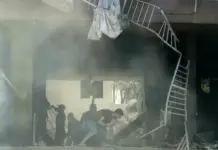
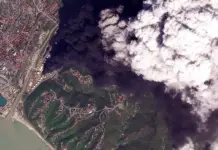
The scale of the campaign has been immense. Before a pause in fighting took hold on April 8, 2025, US forces struck at least 13,000 targets inside Iran. At least 3,300 people have been killed in Iran as a result of the US-Israel assault. Iranian retaliatory strikes across the region have claimed dozens of additional lives, including 13 US military personnel.
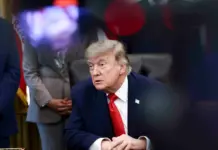
Despite the pause, the conflict remains far from resolved. The US military has maintained a blockade of the Strait of Hormuz, a critical artery for global oil shipments, throughout the ceasefire period. Renewed ceasefire negotiations have stalled. Trump, who has described Iran as being in a ‘state of collapse’, has simultaneously expressed a desire to see the Strait of Hormuz reopened while repeatedly threatening fresh military action — including a statement last week in which he threatened to ‘blow up the whole country’. The administration has also declined to rule out a future ground operation inside Iran.
The Trump administration’s stated objectives are sweeping: to decimate Iran’s military capabilities, dismantle its nuclear programme, and engineer regime change in Tehran. Whether Congress will provide the legal cover to pursue those ambitions is now the central political question in Washington.
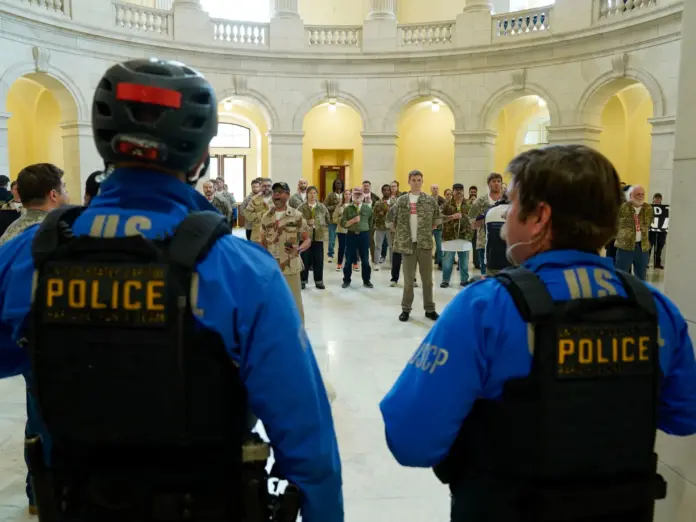
Senate Majority Leader John Thune and Senator James Risch, the chairman of the Senate Foreign Relations Committee, have given no indication they intend to bring forward legislation authorizing the war. Republicans hold slim majorities in both chambers, making any vote precarious. At least two Republican senators — Thom Tillis and Susan Collins — have signalled they would not vote to approve continued US military action beyond the May 1 deadline. Senators John Curtis and Jerry Moran have publicly voiced unease over the administration’s failure to adequately brief Congress on the conflict’s scope and objectives.
Senator Lisa Murkowski is working on an Authorization for Use of Military Force, known as an AUMF, that could provide a legal pathway for the war to continue. However, the timeline and prospects for such legislation remain unclear.
The constitutional tension is not without precedent, though previous administrations have tested the limits of the War Powers Act in different ways. President Bill Clinton’s military operations in the former Yugoslavia in 1999 extended to 79 days without congressional authorization. The Obama administration argued in 2011 that its air campaign in Libya did not trigger the act’s requirements at all. The Trump administration has not yet publicly articulated its legal theory for the Iran campaign.
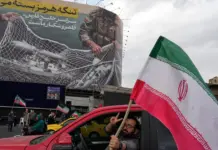
The geopolitical ripple effects of the war are already significant. Gulf leaders convened in Saudi Arabia for their first summit since the conflict began, signalling regional anxiety over its trajectory. The United Arab Emirates announced its withdrawal from both OPEC and OPEC+, a dramatic move widely linked to the economic and strategic disruptions caused by the war. Global energy markets remain on edge as long as the Strait of Hormuz blockade persists.
As the 60-day deadline passes, the Trump administration faces a choice that will define both the legal character of the conflict and the limits of executive war-making power in the modern era: seek congressional blessing, halt the campaign, or press forward and dare lawmakers to act. With Republican unity already showing cracks and ceasefire talks in disarray, none of those paths appears straightforward.