President Donald Trump has vowed to maintain a sweeping naval blockade of Iran‘s ports indefinitely, declaring the economic siege more potent than military strikes and dismissing Tehran’s preconditions for renewed nuclear talks. The standoff is sending shockwaves through global energy markets, with Brent crude surging to $119 per barrel on Wednesday — its highest point this month — as the Strait of Hormuz remains effectively closed to commercial traffic.
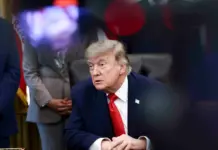
Speaking to Axios on Wednesday, Trump said he had no intention of lifting the blockade, describing it as ‘more effective than the bombing’ and claiming Iran was ‘choking like a stuffed pig.’ In a separate post on Truth Social, he urged Iranian leaders to ‘get smart soon,’ writing that Iran ‘couldn’t get its act together’ and did not know ‘how to sign a nonnuclear deal.’ The White House confirmed Trump had instructed aides to prepare plans for an extended blockade of Iranian ports.
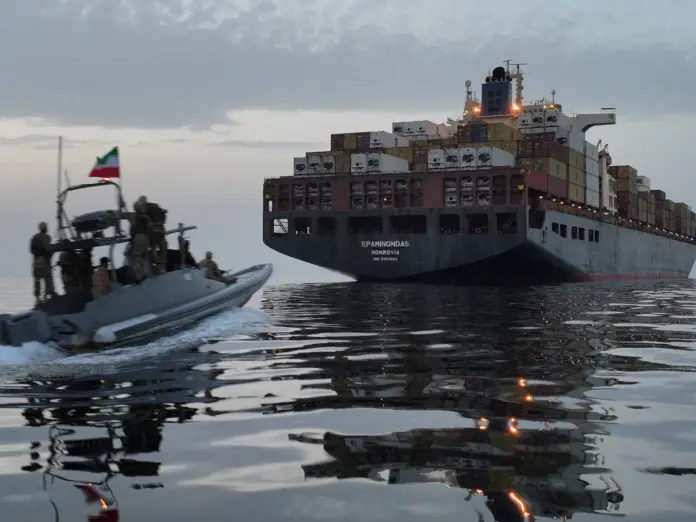
The US military has redirected 39 vessels in regional waters over recent weeks, and at least two commercial ships linked to Iran have been seized as part of the operation. American forces have announced they will intercept or turn back any vessel travelling to or from Iranian ports, a policy that has drawn fierce condemnation from Tehran. Iran, for its part, has seized vessels it accuses of violating maritime regulations and warned earlier this month that any ship approaching the Strait of Hormuz would be targeted.
Iran this week put forward a limited proposal: it would end its own blockade of the strait in exchange for the United States lifting the siege on its ports. Tehran has simultaneously set the removal of the blockade as a precondition for returning to nuclear negotiations — a demand Washington has flatly rejected. Trump’s position remains that Iran’s nuclear programme must be fully dismantled, while Iranian officials insist on their sovereign right to enrich uranium domestically and have ruled out any limits on missile and drone production or an end to support for regional allies including Hezbollah and Hamas.
An unidentified senior Iranian security official warned through state media on Wednesday that the blockade would soon be met with ‘practical and unprecedented action,’ while Iranian Parliament Speaker Mohammad Bagher Ghalibaf accused Washington of attempting to ‘activate economic pressure and internal division’ inside Iran. Despite the bellicose rhetoric, Iranian officials said Tuesday the country could endure the blockade by using alternative trade routes.
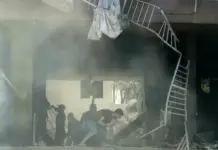
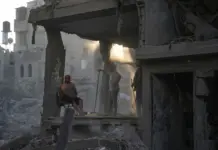
The human cost inside Iran is mounting rapidly. The Statistical Center of Iran reports annual inflation has climbed to 53.7%, the rial has fallen to a record low, and the Iranian government estimates approximately two million citizens have lost their jobs as a direct or indirect consequence of the conflict. Iran’s Foreign Ministry has condemned US and Israeli strikes on civilian infrastructure, including schools, hospitals, and cultural sites, while Foreign Minister Abbas Araghchi met with Mirjana Spoljaric, president of the International Committee of the Red Cross, to discuss the humanitarian situation.
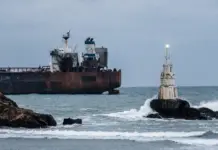
![Ships and boats in the Strait of Hormuz, Musandam, Oman, April 29, 2026 [Reuters]](https://world-tension.s3.us-east-2.amazonaws.com/articles/676/060000f5f63549b4a04184d3b918110a.webp)
Diplomatic channels remain active, if fragile. US and Iranian officials held one round of talks in Pakistan following a ceasefire reached earlier this month — the US announced a pause in attacks on Iran on 8 April. Trump also spoke by phone with Russian President Vladimir Putin on Wednesday, two days after Putin had met Araghchi in St Petersburg. The Kremlin said Russia had put forward ‘a number of proposals designed to resolve the disagreements surrounding the Iranian nuclear program,’ though no details were disclosed.
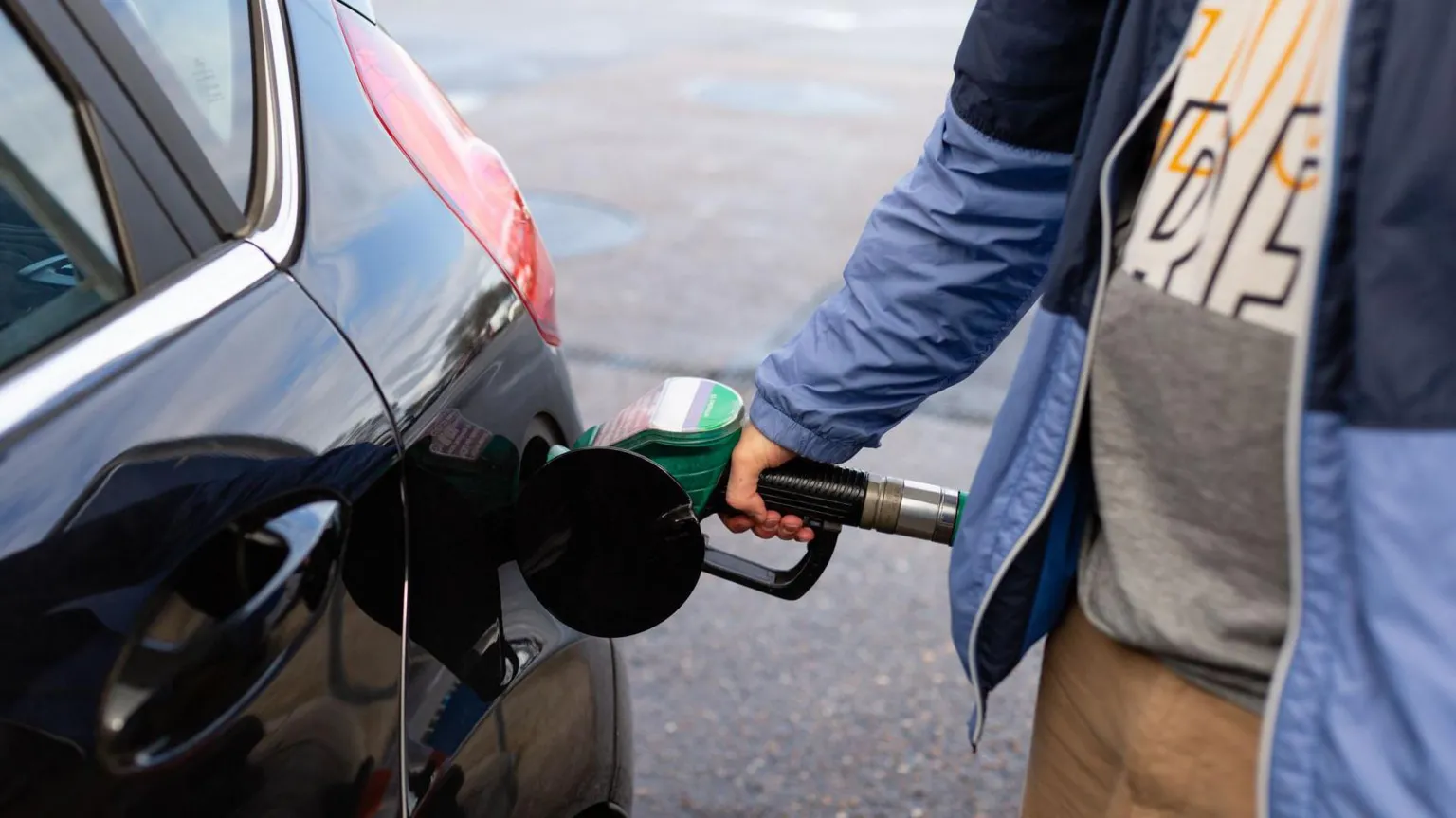
The conflict’s impact on global energy markets has been severe and widening. The Strait of Hormuz, which under normal conditions carries roughly a fifth of the world’s oil and liquefied natural gas supply, has been closed for weeks. Oil prices jumped nearly 7% in a single day following reports of a planned extension of the blockade. American consumers are feeling the pressure directly: the average price of a gallon of petrol in the United States has surpassed $4.22, up from under $3 before the conflict began. European equity markets also retreated on Wednesday, with the FTSE 100 closing down 1.2%, the pan-European Stoxx index falling 0.7%, and Germany’s Dax and France’s Cac each posting modest losses.
Energy industry leaders met Trump at the White House on Tuesday in an effort to limit the fallout for American consumers. Attendees included Chevron chief executive Mike Wirth. The World Bank warned on Tuesday that if acute disruptions stemming from the Iran conflict persist beyond May, energy prices could surge by 24% in 2026.
The conflict traces its origins to US and Israeli strikes on Iran that began on 28 February. Brent crude had briefly retreated to $90 per barrel on 17 April following a ceasefire announcement between Israel and Lebanon, but prices have since rebounded sharply as the naval standoff in the Persian Gulf intensifies. With both sides hardening their positions and global markets increasingly exposed, the path to a negotiated settlement appears as narrow as the strait at the centre of the crisis.