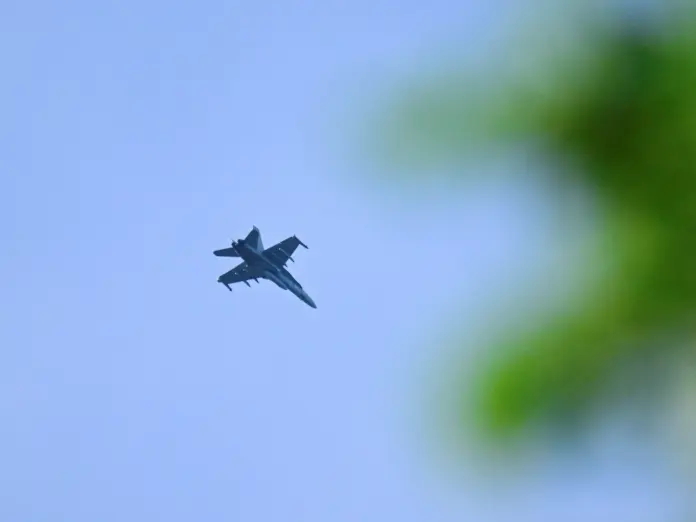
Helsinki — Finland mobilised its air force and shut down its main international airport for nearly three hours early Friday after suspected drone activity was detected over the Helsinki region, underscoring the widening security consequences of the war in Ukraine for Nordic and Baltic nations.
Baltic States Drone Spillover — The Helsinki City Rescue Department issued an urgent warning to approximately two million residents of the Uusimaa region at around 4am local time, instructing them to remain indoors. Fighter jets were launched and Helsinki Airport was closed as authorities assessed the threat. By Friday morning, defence forces confirmed the situation had been resolved and that the suspected drone activity no longer posed a danger.
President Alexander Stubb framed the episode as a demonstration of national preparedness. "Authorities have shown their readiness and capacity to react," he said. Kimmo Kohvakka, director general for rescue services at the Ministry of the Interior, described the response as a precautionary measure rather than a confirmed attack.
Recommended Reading
Defence forces operations chief Kari Nisula indicated that Finland had received intelligence from Ukraine suggesting drones may have drifted across the border. The disclosure points to a recurring vulnerability: in March, two drones crossed into Finnish territory, crashing after flying low over the sea and southeastern Finland.
Finland is not alone in confronting this challenge. Estonia, Latvia and Lithuania have all reported suspected Ukrainian drones — intended for targets inside Russia — entering their airspace. The spillover has already claimed a political casualty in Latvia, where Prime Minister Evika Silina resigned Thursday after a coalition partner withdrew support, and the country’s defence minister was ousted following a drone crash at a fuel storage facility.
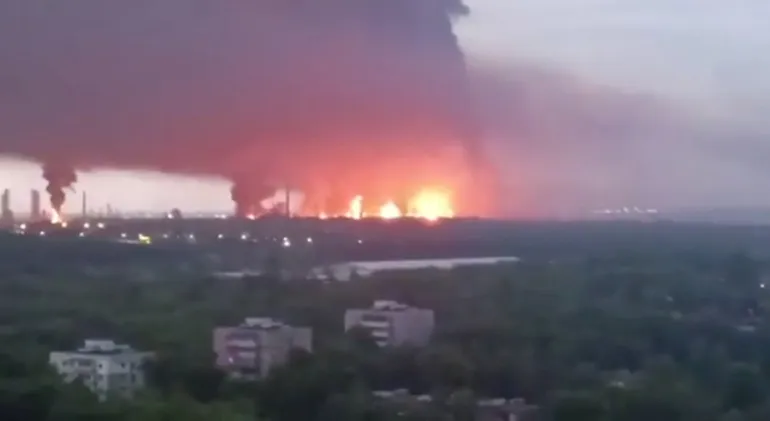
The drone incidents across the Baltic region coincide with a dramatic escalation in the air war between Russia and Ukraine. Russia’s Ministry of Defence claimed it intercepted 355 Ukrainian drones targeting Moscow overnight, as well as border regions including Belgorod, Bryansk and Kursk. A Ukrainian strike on an oil refinery in Ryazan — roughly 200 kilometres southeast of Moscow — killed three people and wounded 12, according to regional Governor Pavel Malkov. Debris from the attack struck two high-rise apartment buildings and an industrial facility.
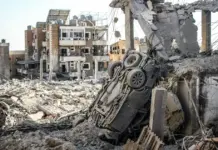
Russia’s own strikes have continued to exact a devastating toll on Ukrainian civilians. A Russian barrage on a residential apartment building in Kyiv on Thursday killed at least 24 people, among them three children, and left 48 wounded — one of the deadliest single strikes on the capital in recent months.
Against this backdrop of intensifying violence, both sides took a rare step toward humanity. Russia and Ukraine completed a prisoner exchange Friday, with 205 prisoners of war repatriated on each side. The swap is part of a broader agreement that aims to ultimately return 1,000 individuals to each country. In a parallel exchange of the fallen, Russia handed over 526 bodies to Ukraine and received 41 in return.
Baltic States Drone Spillover: The Wider European Impact
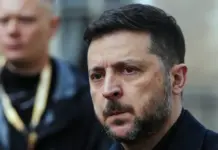
President Volodymyr Zelenskyy noted that most of the Ukrainian prisoners returning home had been held in Russian captivity since 2022, the year Russia launched its full-scale invasion. Both Kyiv and Moscow extended thanks to the United Arab Emirates for mediating the exchange — a rare instance of diplomatic cooperation amid one of Europe’s most destructive conflicts in decades.
The events of Friday illustrate the war’s increasingly porous boundaries. What began as a conflict between two nations has steadily drawn in neighbours through airspace violations, political instability and refugee flows. For Finland, which joined NATO in 2023 after decades of military non-alignment, the drone alert served as a live test of its new security posture — one that President Stubb suggested his country passed.
The broader question facing the alliance is how to manage the unintended consequences of Ukraine’s long-range drone campaign, which, while strategically aimed at degrading Russian infrastructure, continues to create friction with the very partners whose support Kyiv depends upon.