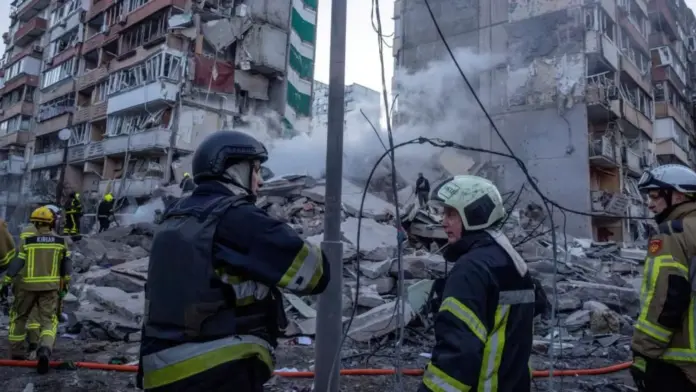
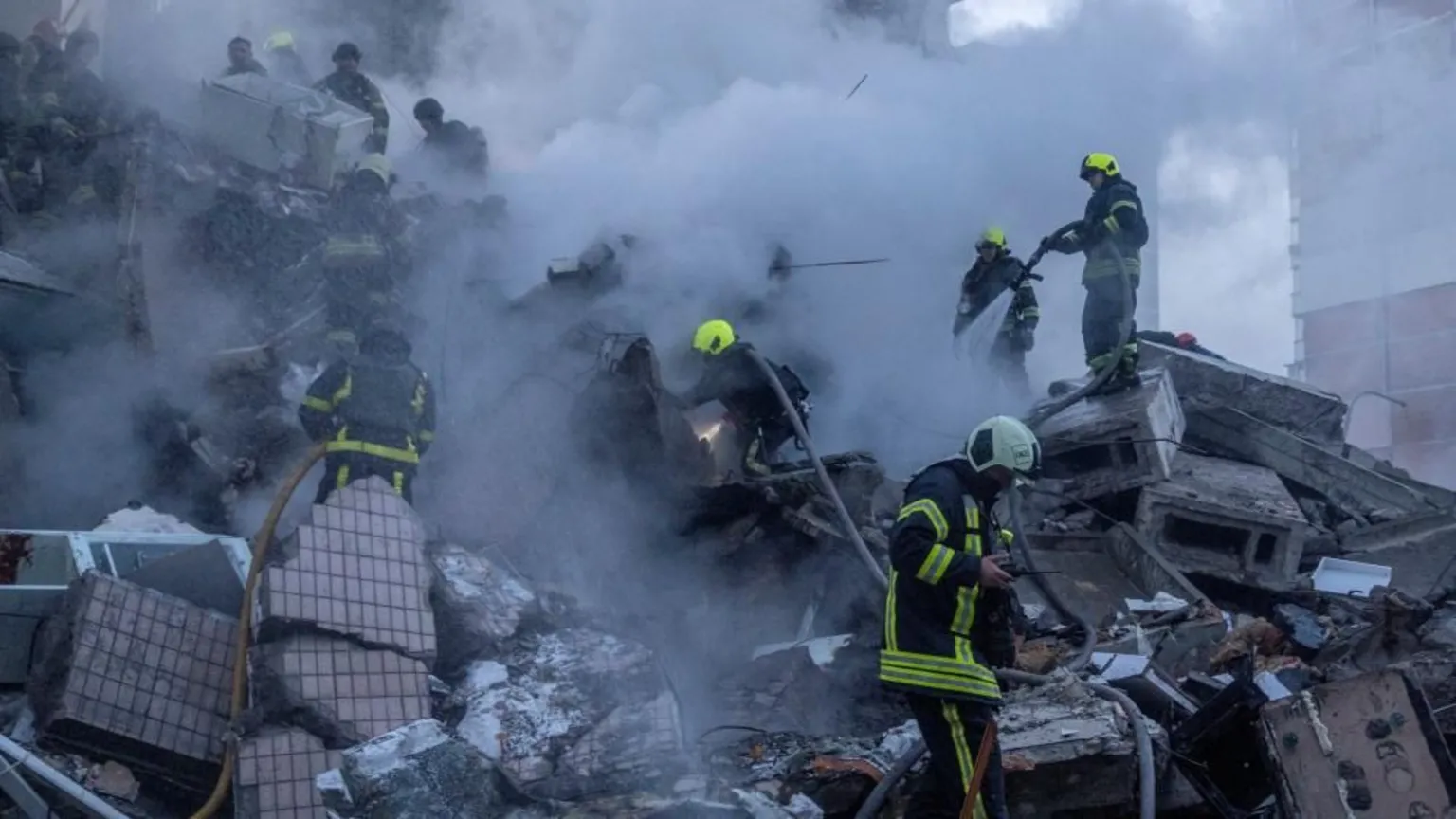
Kyiv Ceasefire Collapse — A Russian missile and drone strike tore through a nine-storey residential apartment building in Kyiv overnight, killing at least one person, wounding dozens more, and triggering emergency search and rescue operations that stretched into the early hours of Thursday morning. The assault, which Prime Minister Yulia Svyrydenko described as an "especially difficult" night for the capital, represents a dramatic escalation following the collapse of a short-lived ceasefire brokered by the United States.
Mayor Vitaliy Klychko confirmed that 18 apartments were destroyed in the stricken building. President Volodymyr Zelensky said dozens of residents had been pulled from the rubble, while damage extended well beyond the apartment block — residential buildings, a school, and a veterinary clinic were among the structures hit across the city. The strikes also disrupted Kyiv’s water supply, compounding the humanitarian toll on the capital’s civilian population.
The overnight attack on Kyiv was part of a broader assault that struck the regions of Kremenchuk, Bila Tserkva, Kharkiv, Sumy, and Odesa. Wednesday alone saw Russia launch 892 drones within a 24-hour window — one of the largest single-day drone barrages recorded since the full-scale invasion began in February 2022.
Recommended Reading
Foreign Minister Andriy Sybiha condemned the strikes in unequivocal terms, calling the campaign "barbaric" and accusing Moscow of choosing "aggression and terror" over any genuine pursuit of peace. The language reflects a sharp deterioration in the diplomatic atmosphere that had briefly flickered to life last week.
A three-day ceasefire, negotiated under US pressure, expired late Monday. Both sides reported multiple violations during the truce, primarily along the front line. Russia resumed large-scale attacks on Tuesday, killing nine people across Ukraine. Six more died on Wednesday before the overnight strikes added further casualties to the toll.
The timing of the intensified bombardment carries geopolitical weight. The attacks unfolded as US President Donald Trump held high-stakes meetings with Chinese President Xi Jinping in Beijing — a summit already shadowed by tensions over Taiwan and concerns about a potential conflict involving Iran. Xi warned that mishandling the Taiwan issue could lead the US and China to "come into conflict," according to Chinese state media. With Washington’s attention divided across multiple global flashpoints, Kyiv faces the renewed Russian onslaught with uncertain diplomatic backing.
Adding to the turbulence within Ukraine’s own government, a Kyiv court on Thursday ordered 60 days of pretrial detention for Andriy Yermak, President Zelensky’s chief of staff and one of the most powerful figures in the Ukrainian administration. Yermak has been named as a suspect in a money-laundering scheme connected to a luxury construction project valued at approximately £7.5 million outside Kyiv. He could be released on bail set at £2.35 million — roughly $3.2 million — subject to electronic monitoring.
Kyiv Ceasefire Collapse: The Wider European Impact
Yermak denied the allegations and said he would appeal the court’s decision. His lawyer dismissed the accusations as "baseless." Yermak acknowledged he did not currently have the funds to meet the bail threshold but said he would seek financial support "among friends and acquaintances." The case threatens to distract Ukraine’s leadership at a moment when the country faces its most intense aerial bombardment in months.
The renewed Russian offensive underscores the fragility of any diplomatic progress achieved in recent weeks. Despite the brief ceasefire, Moscow’s military posture has not moderated — if anything, the scale of Wednesday’s drone campaign signals a deliberate intensification. For the residents of Kyiv’s shattered apartment block, and for the millions of Ukrainians living under the threat of nightly strikes, the prospect of a durable peace remains as distant as ever.