The European Union formally unlocked a 90 billion euro ($105 billion) loan to Ukraine on April 23, ending a prolonged political impasse after Hungary agreed to drop its veto — a concession tied directly to the restoration of Russian oil flows through the Druzhba pipeline.
The breakthrough arrived on the same day oil began moving into Slovakia again, capping a dispute that had paralysed EU financial support for Kyiv and exposed deep fractures within the bloc over energy dependence, wartime obligations, and the future of Ukrainian membership.
The Druzhba pipeline — whose name translates as ‘friendship’ — had been dry since January 27, when Ukraine reported that a pumping station was struck in a Russian air raid. Hungary and Slovakia, the two EU members still reliant on the pipeline for Russian crude, immediately demanded answers. Together, the two countries received 9.25 million tonnes of oil through the route last year, a supply chain valued at more than $4 billion.
Hungarian Prime Minister Viktor Orban escalated the standoff in March, reversing his December approval of the EU loan package and writing to European Commission President Ursula von der Leyen to demand enforcement of what he described as Ukraine’s legal obligation to keep oil flowing. A Hungarian inspection team travelled to Kyiv on March 14 but was denied access to the damaged site. A European Commission team that arrived three days later faced the same refusal.
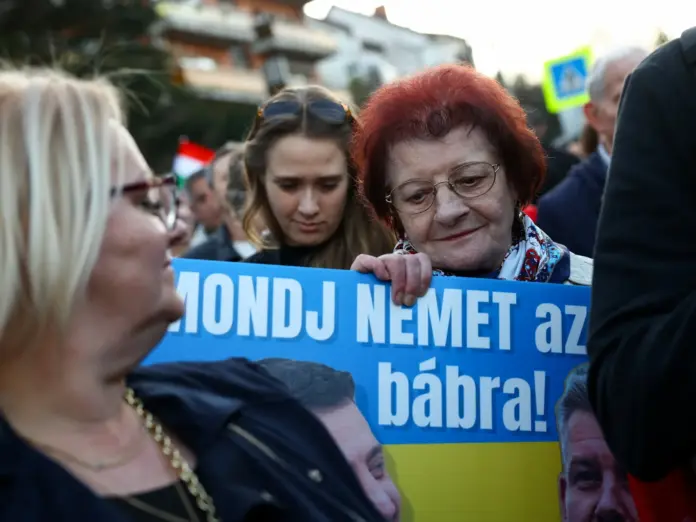
The political landscape shifted dramatically on April 12, when a Hungarian general election unseated Orban, ending his grip on power. His successor, Peter Magyar, has signalled a markedly different approach to both the EU and Ukraine, including a pledge to hold a fresh referendum on Ukrainian accession — a reversal of Orban’s own plebiscite, in which 95 percent of returned ballots opposed Ukrainian membership.
Orban’s tenure had been defined by sustained friction with Brussels. The European Parliament moved to strip Hungary of its Council voting rights as far back as 2018 and formally declared the country a ‘hybrid regime of electoral autocracy’ in 2022 — even as Budapest assumed the EU’s rotating presidency in 2024. In June 2025, Orban formally blocked Ukrainian accession talks alongside Slovak Prime Minister Robert Fico.
Fico’s own trajectory has been more volatile. He was the only EU leader to attend Russia’s May 9 Victory Day parade and visited President Vladimir Putin in Moscow in December 2023. He also blocked an 18th EU sanctions package against Russia. Yet by September, Fico and Ukrainian President Volodymyr Zelenskyy had patched up their relationship at a meeting in Uzhgorod, where the two leaders jointly inaugurated a newly built section of European-gauge railway track. Fico subsequently said he would support Ukrainian EU accession.
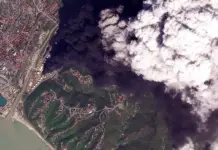
Beneath the diplomatic manoeuvring, Ukraine’s security services were conducting an aggressive campaign against the very infrastructure at the centre of the dispute. On February 23, the Ukrainian Security Service (SBU) set fire to the Kaleykino oil pumping station in Russia’s Republic of Tatarstan — roughly 1,000 kilometres from Ukrainian territory — a facility that channels Western Siberian crude into the Druzhba system. On April 21, just two days before the EU loan was released, the SBU struck the Transneft-Privolga pumping station in Samara, damaging five 20,000-tonne crude storage tanks that feed the same pipeline.
The cumulative effect on Russian energy exports has been severe. Strikes on Druzhba infrastructure deprived Russia of an estimated 40 percent of its total export capacity, forcing a production cut of half a million barrels per day compared with late 2025 output levels.
The EU had already moved to curtail Russian energy revenues, banning seaborne Russian crude in January 2023 and refined petroleum products two months later. Pipeline crude was carved out as an exception, pending a decision by EU leaders — an exemption that Hungary and Slovakia leveraged to maintain leverage within the bloc. Austria, Czechia, Germany, and Poland have all since weaned themselves off Druzhba supplies, leaving Budapest and Bratislava as the pipeline’s last significant EU customers.
With oil flowing again and the loan released, attention now turns to Magyar’s incoming government and whether Hungary’s posture toward Ukraine — and toward Russia — will undergo the fundamental realignment that his election campaign implied. His promise of a new referendum on Ukrainian accession will test both domestic opinion and the patience of EU partners who have spent years navigating Budapest’s obstruction.